Introduction
The Marathi (phonetic: Maraatthi) people have a storied history in the medieval era, their ancient origins have been a matter of recent debate. Part of it is due to its place as the first desa in Dakshinapatha, and as a crossroads of North and South (North thinks they are South and vice-versa), but also because history has been tampered with of late.
In most places of the world, history is a competitive sport, but in India, it is a full-combat, gladiatorial contest. It is as though rather than the truth, each side seeks to impose its narcissism on the other. But as they say, it is the truth that sets you free.
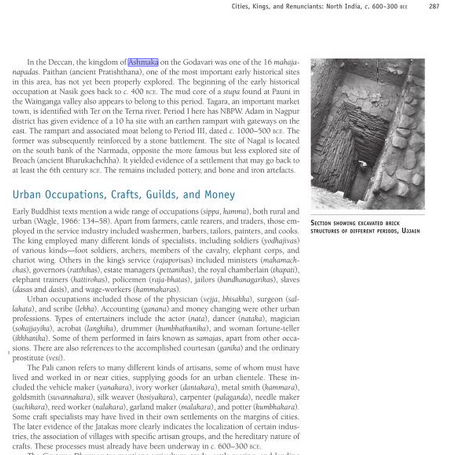
Maharashtra as an entity is a relatively recent concept. In truth, it is the amalgamation of primarily 2 ancient desas (Vidarbha and Asmaka), with some contributions from Anupa, Kunthala and Laatha. It is for this reason there are controversies around Belgaum/Belagavi and separate Vidharbha. But sometimes, the status quo is the best means of preserving the local culture. Maraatthi as a language serves the descendants of both Vidharbha and Asmaka. Indeed, the greater goal should be to reassert Maharashtra’s legitimate claims over Asmaka desa itself.
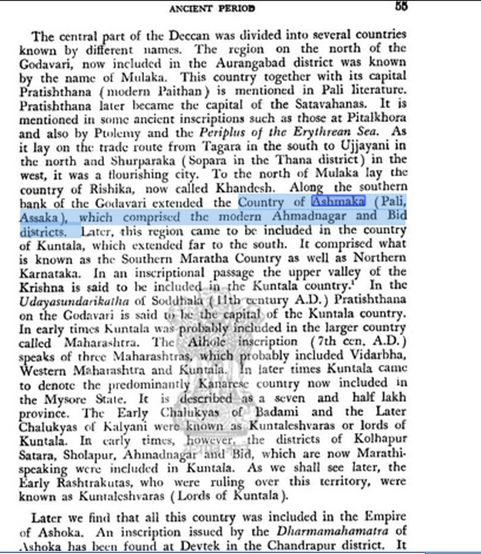
Cartographical aggression is not unknown in the post-modern era. However, sometimes it occurs sub rosa. In recent years, the 16 Mahajanapaadhas have seen some circulation around to different regions to suit the agendas of modern politicians (many of them videshi with videshi agendas). However, none stand more obvious that Asmaka desa. Its central import to the Maraatthi identity cannot be gainsayed and should not be surrendered to neophyte political formations.
Spelling is a contentious issue, particularly with non-abugida languages. It is for this reason we favour the spellings of Maraatthi and Maraattha, rather than the more common conventions, which rely on irritatingly limiting diacritic marks.
Legendarium
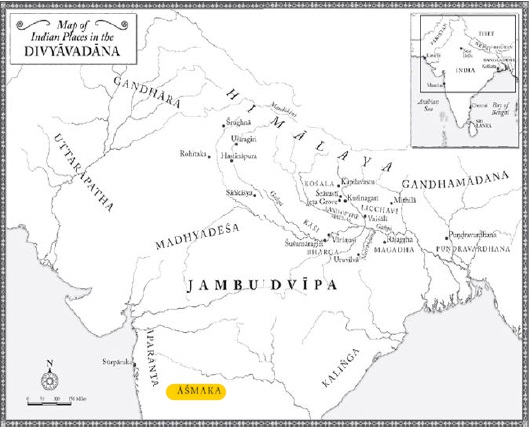
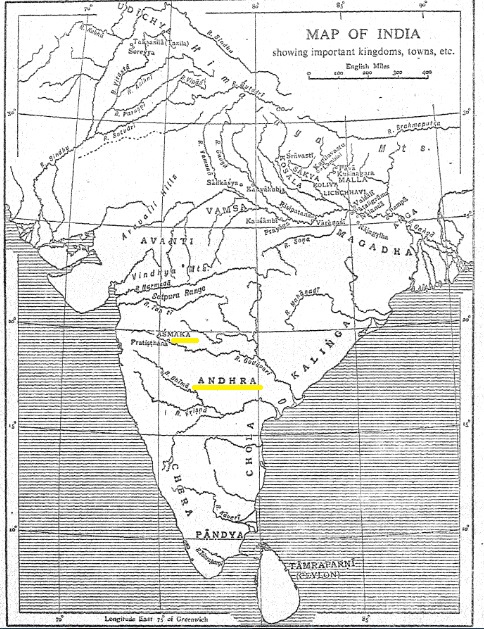
The 16 Mahajanapadas (Great-Clan-Feet) refer to the countries of Ancient India. This period is often referred to as the Classical Age as many of the political formations would make a massive impact on their own. The only one south of the Vindhyas was Assaka/Asmaka.
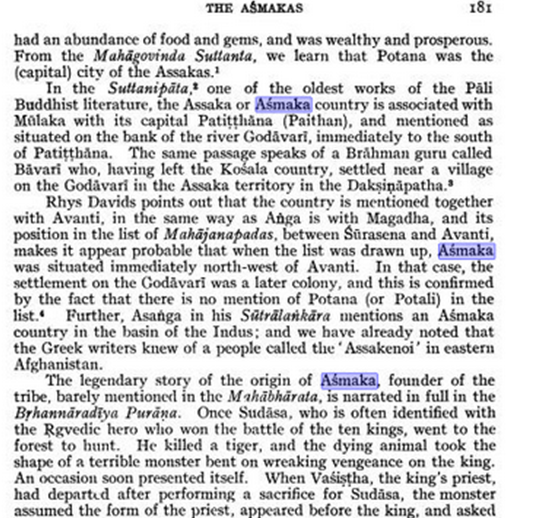
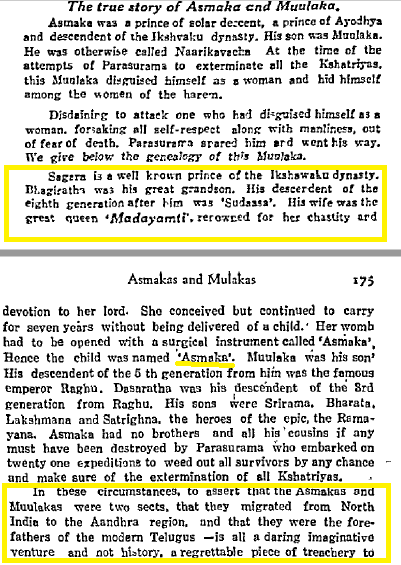
There have been some questions about the origins of Asmaka. As usual, speculative reconstruction has done its damage and conflation of Asmaka-Andhra has led to confusion about respective identities. Here is Pandit Chelam on the topics.
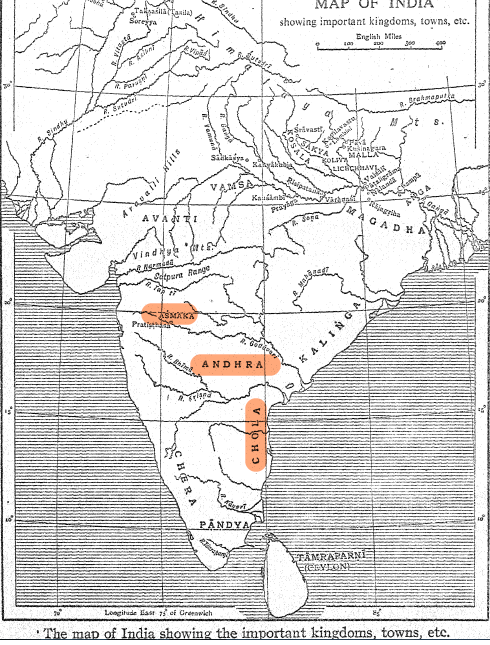
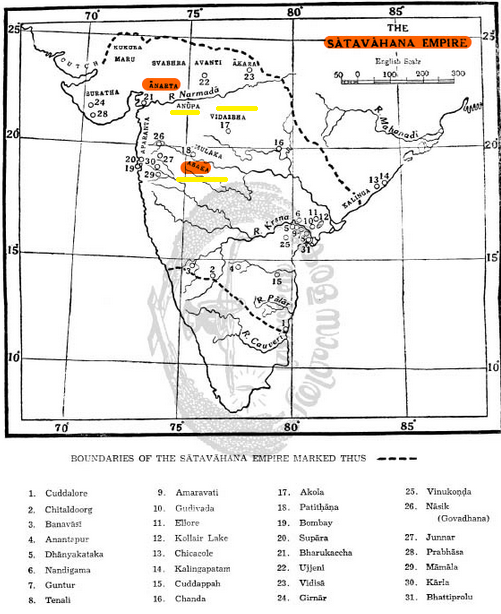
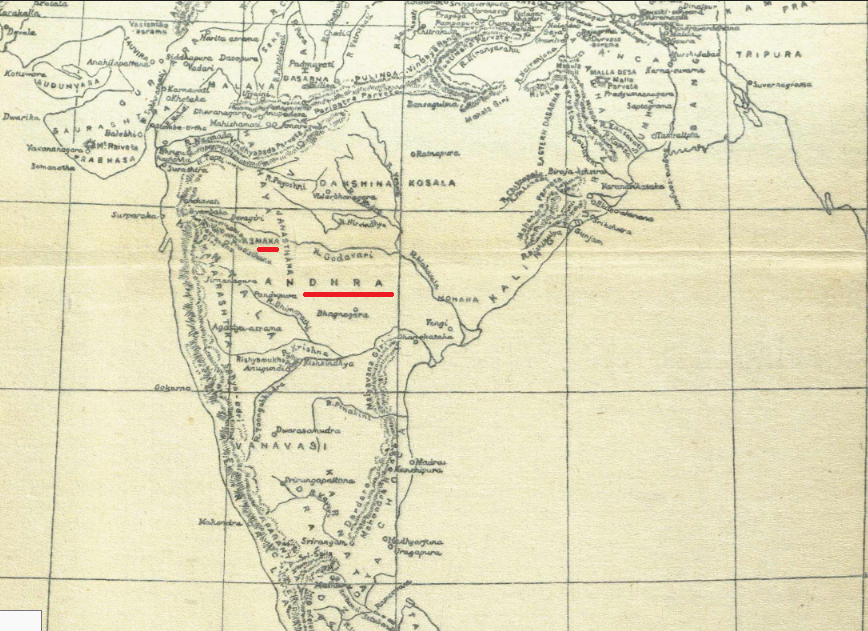
The capital of Asmaka was Pratishtana, as the city of Potana was on the edge of the kingdom and unfit to be the capital for most of its history. Here is the map:
Naysayers argue saying that Potali/Potanapura of Buddhist times must certainly have been Bodhan in modern Telangana—but it just as easily could have been the Pali corruption of Pratishtana (just like the Buddhists called Asmaka as “Assaka” or Nirvana as Nibbana). Prathishtaana (that is Paithan in Maharashtra) was the historic capital of the Asmakas. That Aandhras such as Satakarni later conquered and ruled it does not change that fact.
To base an whole identity around modern speculation about merely the city of “Potana/Podana” is poor scholarship and smacks of agenda to further transform the Telugu culture of the brave people of Telangana back to “telangi bedangi”. The simple fact that during the Sayudha Poratam, the Hyderabad state Telugu association was called nizam Andhra Mahasabha, goes to show what was actually the ancient name, before foreigners and persianised parvenus began arriving. In fact, records going back to the ancient period only refer to the Aandhras and “their sweet language”, rather than the medieval invention of “Telingana”.
The new state of Telangana has every right to its own distinctiveness, native culture, and political agency within the Indian Union, but no one has the right to corrupt history in order to justify a new colonial nizami identity. The Jatakas themselves are useful for background but are comparatively inconsistent sources of history, unlike the Puraanas and the Mahabhaaratha. As noted in the Jain Gazette of 1925, the location of Podana itself was not known for certain. Subsequent speculation has occurred to connect the entirety of Telugu land to region and name other than Aandhra (the Sanskritic name for the region dating back to before the Mahabhaaratha). [3, 252]
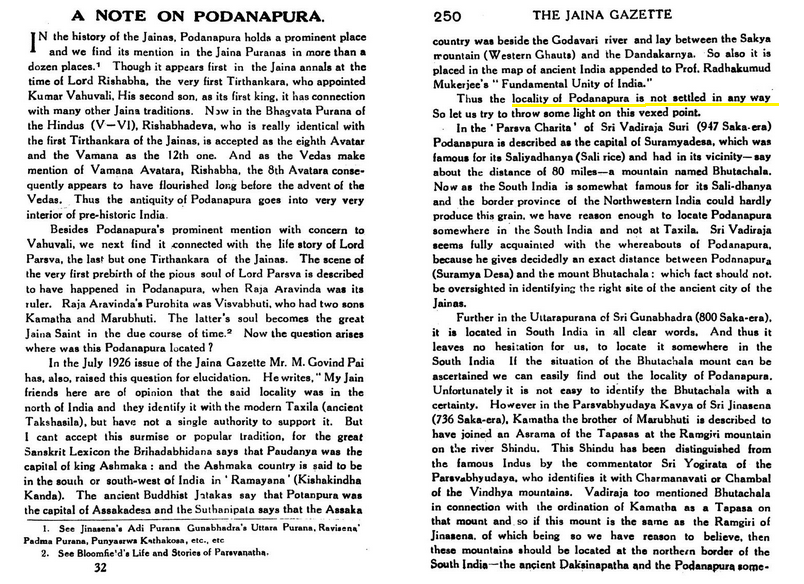
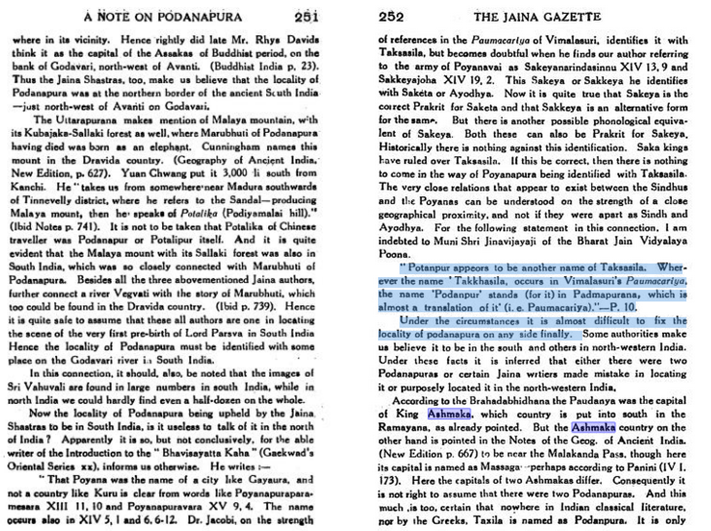
Rather than a committee of “peers” (confederacy of dunces?) it is important to rely on traditional astika pandits who are competent to actually interpret the meaning of pauranic texts. As Pandit Chelam asserted, Aandhra=Telugu, ergo Asmaka must mean Maharashtra.
Ancient History
The concept of Tri-Maharashtra or Maharashtra itself has a comparatively less ancient history. The first accepted reference is to Mo-ho-lo-chi by Xuan Zhang.
The cultural unit of Maharashtra actually consists of 3 distinct desas. Much like Andhra Pradesh state, which is a combination of Andhra desa and the border districts of Kalinga (Uttarandhra), Chola desa (Thirupathi), and Karu desa (Rayalaseema), modern Maharashtra pulls from the following: Asmaka desa at the core, Vidarbha, and Anupa desa. Portions of the Konkan, Kunthala, and Laatha desa are also included.
This land has produced many famous princesses and queens, such as Lopamudra (consort of Rishi Agasthya), Rukmini (consort of Sri Krishna), and Naganika (consort of Gautamiputra Satakarni). So brave were they that the invading turks once asked after sally of women warriors, “if the females of this land fight so bravely, how brave must the men be?“. Its kings of course need no introduction, the most famous of which is the Bhonsle dynasty.
As mentioned in the previous section, Asmaka (like its capital Prathishtaana) was located in the UPPER Godavari Valley. As a result of this, its proximity to Nashik means it can only be located in Maharashtra proper (as opposed to anywhere else).
Interestingly enough, Asmaka/Assaka the king is mentioned in the Jaathakas itself:
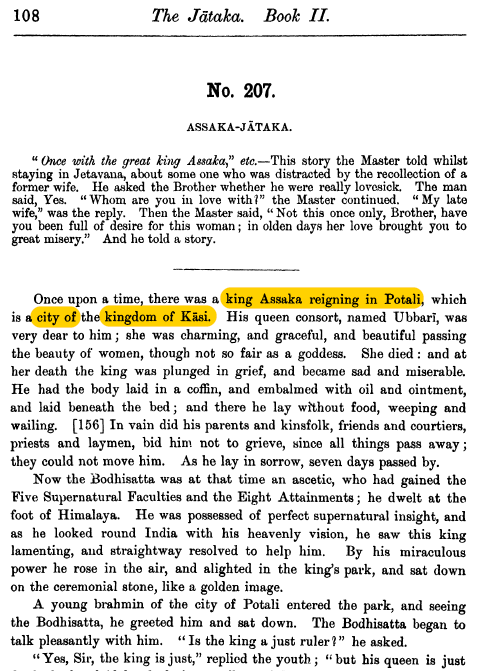
It is also why references to Assaka and Potali must be taken with a grain of salt. Assaka-Jataka clearly refers to Potali as a city in Kaasi (Kashi) kingdom, with Assaka as its king.
Culture & Religion
Maraatthi originates from ancient Maharashtri Prakrit. This dialect of Praakrtham was very much in fashion South of the Vindhyas. It is considered by many to be the best (others being Sauraseni & Ardha-Magadhi) being en vogue in the North. This dialect was not only the administrative language of the Satavahana (Saathavaahana) Empire, but was also the language commonly used in poetry (Gatha Saptasati) and prose (Brihat Katha).
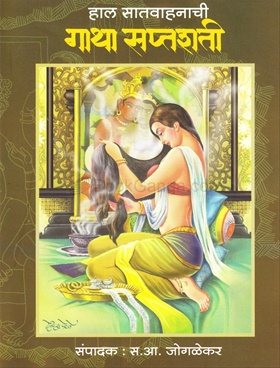
The Gatta Sattasai and Brhath Katha by Gunaadhya aside, Asmaka, that is Maharashtra, has produced much cultural impactful work throughout the ages. However, since most of this is in the Maraatthi language, it is better to move on to other topics.
Art
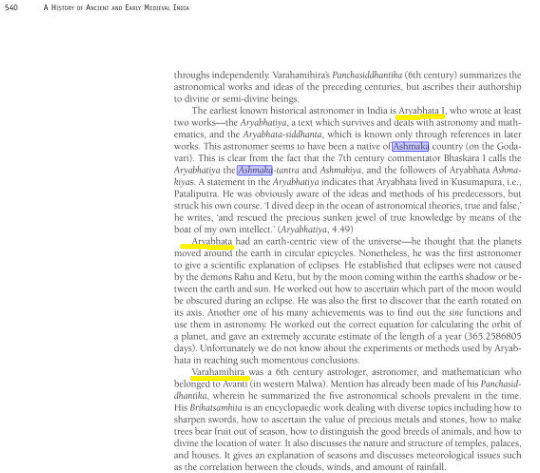
In addition, some historical figures have been attributed to this cultural agglomeration with tangible cultural impact. One such is Aryabhatta (also Aryabhata).
Conclusion
As mentioned previously, compradors of colonisers have been inventing new identities. Those who rejected the pauranic association of Andhra with Telugu now are rejecting Telugu itself for an apparent “Telangana bhaasha”. One can only presume what bhaasha they call it next… “telangi bedangi”? Such shameless people do a disservice to the land of such greats as Pothana Mahakavi and Mallinatha.
The capital was Prathishtaana (and this mentioned in the Suttanipaata itself). Theories of people like Hemchandra Roy Choudhury show only speculation that Potali referred to modern “Bodhan”. Those who wish to link native identities to foreigners such as the nizam and the qutb shahs only betray their cultural loyalty—or lack thereof.
All this reiterates the dangers of speculation as there was both a northern Potana and southern Potana. In fact the Jain writer Vimalasuri takes the name Potanapura as a synonym for Takshasila (Taxila), as Kusumapura was a synonym for Paataliputra.
In such an environment, it is imperative that mighty Maharashtra in general and Maraatthis in particular, reclaim their claim to ancient Asmaka desa (also known as Assaka/Ashmaka). This land is clearly connected with ancient Ayodhya, and its founders hail from the Suryavamsa via Moolaka, and through him, Asmaka and Sagara himself.
References:
- Law, Bimal Churn. Tribes in Ancient India.Bhandarkar Oriental. 1958
- Kota, Venkatachalam Paakayaji (Pandit). The Chronology of Kashmir. Guntur: Sri Ajanta. 1955
- The Jaina Gazetteer.Madras: Oriental Conference. 1924
- Singh, Upinder. A History of Ancient and Early Medieval India. Pearson.2016
- Maharashtra State gazetteers: Bhandara District. Bombay: Govt of Mahrashtra. 1979