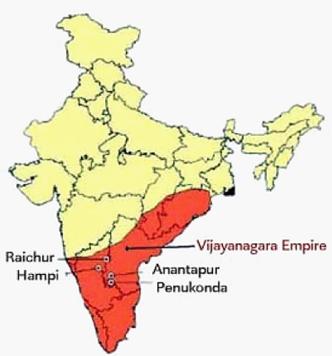
Writing on the History of Vijayanagara, or any empire that evokes such emotive passion, requires more than just one article, or even two. After all, there are not only the historical aspects, but the also military aspects, the cultural aspects, the artistics aspects and above all, the personality dynamics that rules the hearts of men and women. Although technically the Series began with our Post on Emperor Krishna Deva Raya and continued with Princess Gangadevi we will be exploring various aspects of the Imperium over a number of articles in the coming times. Rather than ramble on aimlessly, we will aim in this article to concentrate on the key historical episodes with a measure of concision so as to draw historical insight relevant to the present.
Introduction
Vijaya-nagari, Vidyanagari, Virupaksha-nagari, City of Victory, City of Rayas, Citadel of Dharma, Capital of the Karnatas, Realm of Andhra-Bhoja, all are names of this most magnificent of medieval cities. Referred to by Domingo Paes as “large as Rome and beautiful to the sight“, it is estimated by Western Historians to be second only to Imperial China’s Peking at its peak.
This legendary city of “Dharma and Defiance”, of uncountable wealth and illustrious power, of warlike men and gemlike women, of Vedic learning and sacred duty is one that is forever etched in the hearts of the South. Like a shooting star it had a scintillating rise, a sparkling crescendo, and a cataclymic fall. But like that end, its origin too is subject of much controversy. Was it at Telugu Empire or a Kannada one? Was Krishnadeva Raya from those 2 regions or was he a Tulu? And many others of recent, and frequently foreign imposed fashion.
The City of Vijayangara is undoubtedly in traditional Kannada territory (post-independence delimitation debate aside). It is quite obviously quite deep in the traditional Karnata desa.
What’s more, the ferocity of Kannada warriors is widely-known and recorded in historical texts, and largely powered the great Pan-India Karnataka Expansion of Late Antiquity and the Early Medieval Period. The Chalukyas, Rashtrakutas, Senas, and Western Gangas are all held to have had Kannada origins, though there is some dispute here and there). The Rashtrakutas being the once paramount power of North and South India are all too understandably claimed by other regions. Nevertheless, this soldiery was further powered by the Telugu Nayankara system that had its origins in the Nayaks of the Grand Kakatiyas of Warangal, and their united Andhra Kingdom.
This institution de-centralised power, allowing effective resistance long after the central node fell. The history of the Musunuri Nayaks of the successful Andhra Liberation War evidences this efficacy. And lastly, though Sanskrit was the language of learning, Telugu was the court language, and Kannada was the predominant idiom present in most inscriptions. For this reason, we prefer to style Vijayanagara as it truly was: a Telugu & Kannada condominium. And with that, we begin.
Background
Vijayanagara’s founding was precipitated by the volcanic vidharmi rise of the Delhi Turks. The Khiljis had managed to disrupt the Dakshinapatha itself and laid most and eventually all of it to tribute at some point. Andhra Desa’s Kakatiya dynasty was disrupted by 5 Wars (though local records indicate 8 wars and many Telugu victories).
Interestingly, a number of records have shown that Krishna Nayak was in fact the son of Kakatiya Prataparudra II.
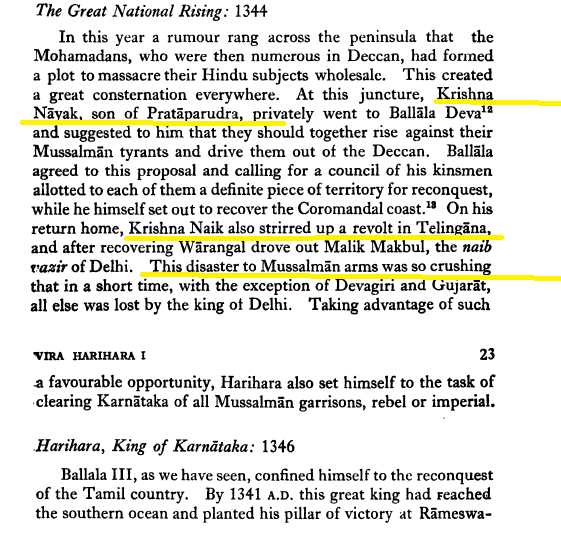
Such identity conflations have a history among self-proclaimed “traditional historians”. Another such glaring mistake was that of confusing Sayana’s brother Madhava with Madhava Vidhyaranya himself.
“On the identity of Vidyaaranya with Maadhava, there appears a doubt, for there is an indication of a contrary view that Saayana and Maadhava composed Vedabhaashya and other works at the behest of Vidhyaaranya.” [4, 228a]
Karnataka Samraajya is erroneously credited to Madhava Vidhyaranya. Indeed, modern historians such as Sewell condemn Sringeri for manufacturing history in its archives. But the british themselves were some of the all-time greatest corrupters of history, taking forgery of documents and coins to the next level—even manufacture and destruction of inscriptions per Pandit Chelam‘s protestations. Nevertheless, Vidyaranya Svami, is indeed Vijayanagara-sthapanacharya, that is, the Founder of the City of Vijayangara—but not the Empire.
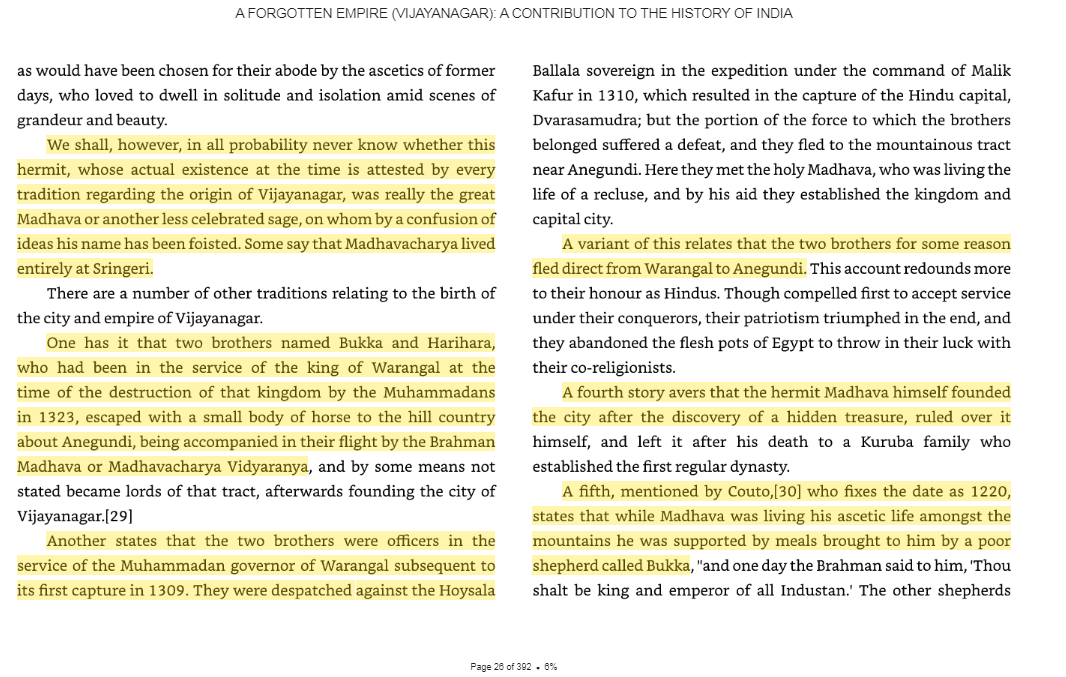
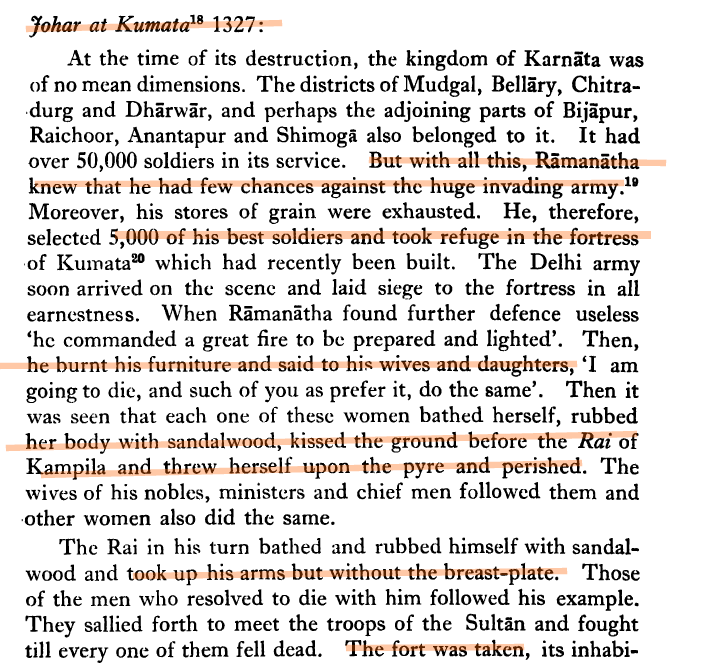
“Vidyaranya accordingly stopped at Hampe where he met later Harihara and Bukka, who had been defeated by the Ballala king. With his blessings they attained success. The spot for the construction of a capital city was indicated by a hare turning on hounds during a royal hunt south of the Tunga-bhadra. Vidyaranya after careful study and calculations built a city there and installed Harihara and the throne there. He also foretold the history of that city and kingdom, its rise, fall, and revival under Vira Vasanta to Harihara and this account compiled under orders by the ascetic Bharatikrishna. The first three kings at Vijaya-nagar ruled with his favour. The first thirteen Kings were devotees of god Virupaksha and had deep reverence for Vidyaranya and his disciple Kriyasakti…Kriyasakti was a Salva teacher of the Kalamukha School. Madhava-mantri, Governor of Chandagutti, etc., speaks of him as his guru in 1347.” [4, 228c]
Thus, from the very beginning one can see the seeds of Vijayanagara’s rise and fall being sown. The Shankaracharya of Sringeri, Vidhyaranya on the one hand, and the Kalamukha adviser to Saayana and Madhava Manthri (thereby explaining questionable bovine interpolations of Dharmasaasthra).
Dynastic History
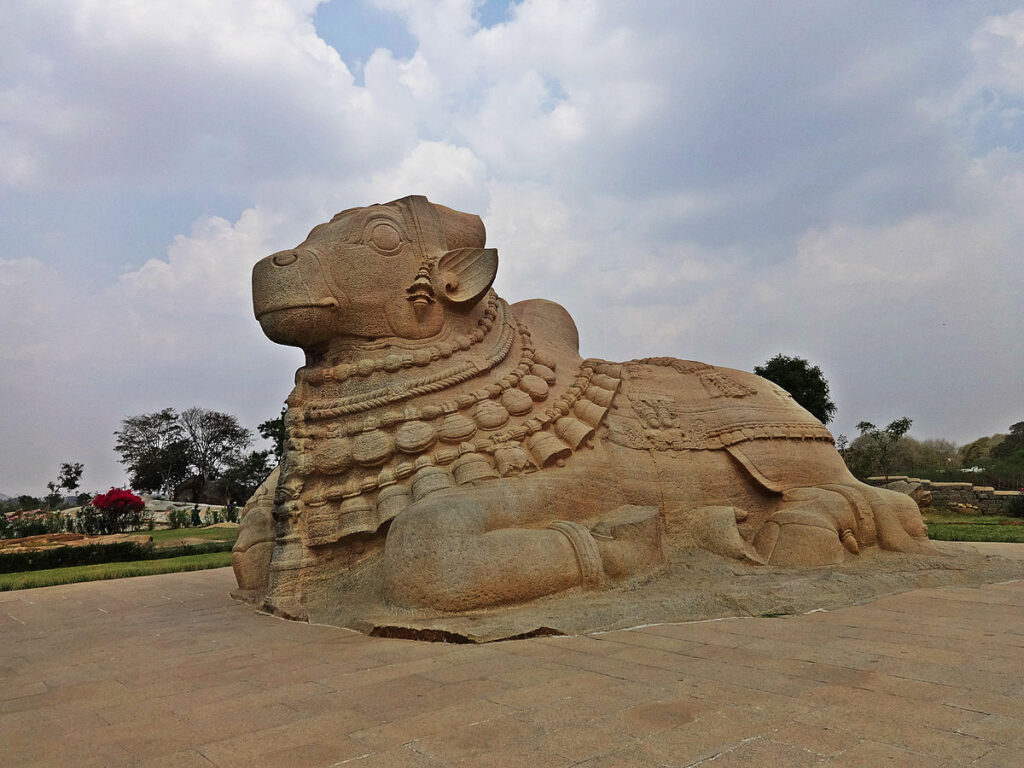
Sangama Dynasty
- Harihara Raya I 1336-1356
- Bukka Raya I 1356-1377
- Harihara Raya II 1377-1404
- Virupaksha Raya 1404-1405
- Bukka Raya II 1405-1406
- Deva Raya I 1406-1422
- Ramachandra Raya 1422
- Vira Vijaya Bukka Raya 1422-1424
- Deva Raya II 1424-1446
- Mallikarjuna Raya 1446-1465
- Virupaksha Raya II 1465-1485
- Praudha Raya 1485
Saluva Dynasty
- Saluva Narasimha Deva Raya 1485-1491
- Thimma Bhupala 1491
- Narasimha Raya II 1491-1505
Tuluva Dynasty
- Tuluva Narasa Nayaka 1491-1503
- Viranarasimha Raya 1503-1509
- Krishna Deva Raya 1509-1529
- Achyuta Deva Raya 1529-1542
- Sadashiva Raya 1542-1570
Araveedu Dynasty
- Aliya Rama Raya 1542-1565
- Tirumala Deva Raya 1565-1572
- Sriranga I 1572-1586
- Venkata II 1586-1614
- Sriranga II 1614-1614
- Ramadeva 1617-1632
- Venkata III 1632-1642
- Sriranga III 1642-1646
Rise
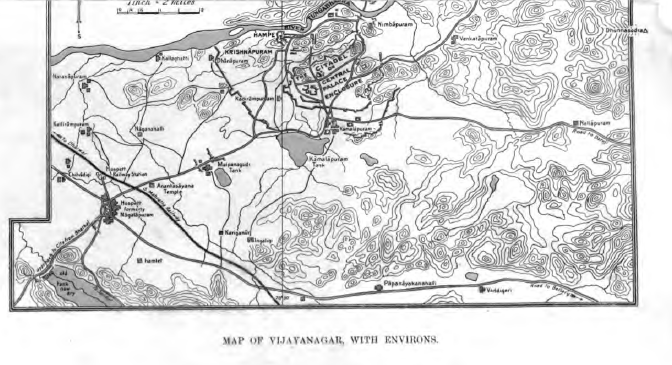
Sangama
The Sangama Dynasty signaled the arrival of new power on the Indian Subcontinent. The resident powers in the North and East would now have to contend with an Imperial Contender that could reckon with the ideological fanatacism of foreign invaders. Armed with multiple granite walls, an oceanic military, and a navy that would lay tribute throughout the seas, Vijayanagara would become at its peak, the greatest power on the Subcontinent (noted by Niccolo Conti & Babur in successive eras).
“The kings of Vijayanagar, Harihara I and Bukka I of the Sangama dynsastry, claim to be Candravamsa Ksatriyas-Ksatriyas of the lunar race; they, therefore were justified in assuming the title of mahaamandalesvara from the beginning of their independent rule.” [13, 90]
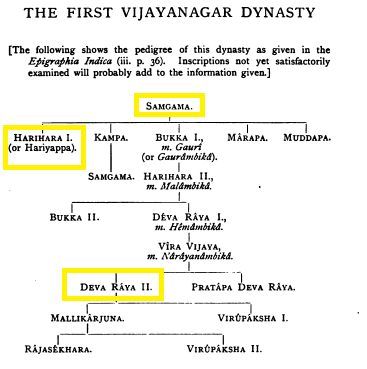
Harihara’s father was stated to be Sangama and his mother Kaamaambika. As stipulated, though there are multiple theories about their origins, epigraphy indicates the dynasty started as kshathriya treasurers at Warangal, then shifted to Dvarasamudra of the Hoysalas before finally entering the service of Kampili. It is not clear whether the 5 brothers were taken captive, and even the alleged conversion/re-conversion story appears specious.
Although they had established themselves by 1334 CE, it would be almost a decade before their full stature would be acknowledged in the South. the Great Uprising of the Karnatas and Telugus together distracted Veera Ballala III. He would be later slain treacherously after snatching defeat from the jaws of victory at Madurai. His successor would slink back to Dvarasamudra only to find the nascent Sangama dynasty ensconced surrounding areas. By 1344, Harihara would take royal titles.
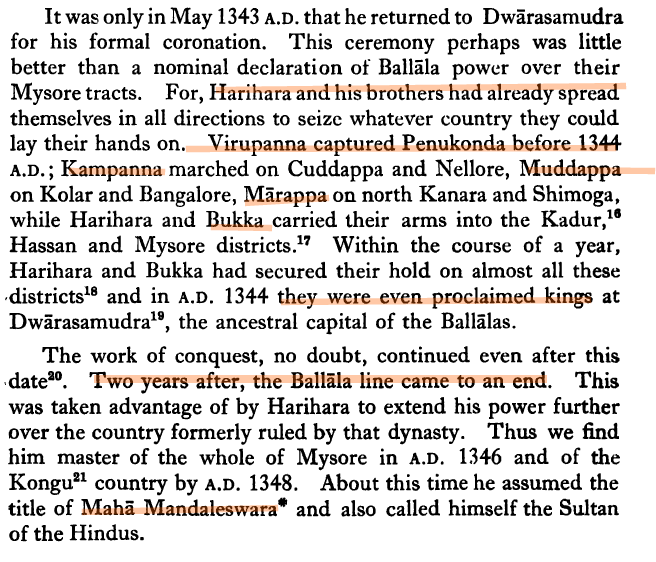
Bukka
Following the passing of Harihara, his brother Bukka as heir apparent since 1337 CE, took the throne. He set about putting down nearby challengers and chastising the marauding Ma’abar rulers, and taking their petty fiefdom.
Following the death of Allaudin Bahman Shah, his successor Mohd. took the throne but found himself tested by the allied rulers of Telugu Warangal and Vijayanagara. As at Madurai, the Hindu ambassadors waited excessively long for reply (said to be 18 months) during which time the rulers of Kulbarga (Kalaburagi) were preparing for war (for which they had not previously been ready ). Warangal was worsted and Vinayakadeva (son of Krishna Nayak) was cruelly slain). The subsequent treaty destroyed the latter’s prestige resulting in the breaking up of the great Andhra Confederation, courtesy the Recherlas of Rachakonda.
Vijayanagara did not fare too much better. Intense diplomatic activity on its part during the 3-4 years, led to a 3rd Bahmani War specifically directed at it. Bukka cleverly struck first and took to the offensive at Mudgal. Mohd Shah then heard of sudden rains hitting the region catching Bukka at disadvantage. He made the most of the opportunity, defeated the latter and slaughtered all the camp followers of Vijayanagara. This battle of Mudgal was then followed up at Sirugappa. Although favourable at first, the death of a key Vijayanagara commander led to a drop in morale followed by a massacre of not only the fleeing army but non-combatants, even women and children. Bukka then retreated to the Capital’s stout walls. A frustrated Mohd. followed him, laid siege, then raised the siege in a feint to draw him out. While it worked, only 10,000 men were slain in the sally, leaving Bukka secure again in his capital. Frustrated, Mohd. then began massacring the civilian population, which Ferishta’s numbers at 500,000. Bukka then paid a ransom to end the atrocities, causing Mohd. to return with the treasure. [9, 30]
Madura Vijayam
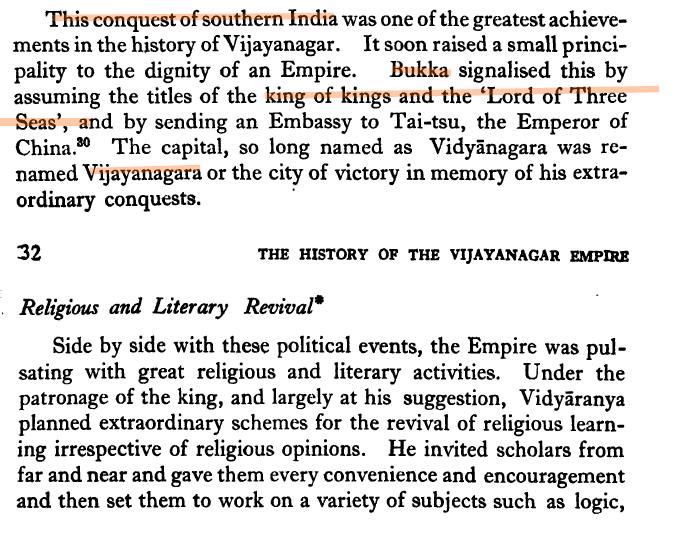
All was not lost however, further to the South, Prince Kumara Kampana was able to liberate the city of Madurai. Said to have been inspired by a dream from the Goddess herself, Bukka’s son would free the long oppressed people from the half century tyranny of this far flung outpost from Delhi Turk depredations. His exploits were recorded by his wife, Princess Gangadevi. [9, 31] He also slew Sambuvaraya in this campaign between 1368-1371 CE.
The kingdom was now a proper empire, and Bukka took Imperial titles befitting his new stature.
 Fourth Bahmani War, 1378
Contrary to claims of regarding the 3rd Bahmani War, both the rulers of Kulbarga and Vijayanagara were dissatisfied. Mohd. made claims on new forts in the Krishna-Tungabhadra Doab, while Bukka claimed the whole tract by ancestral right. This see-saw tug-of-war between the two polities would continue for the duration of their existence. This set the stage for the Fourth War. The Bahmani ruler split his army into 3 divisions, while Bukka chose to play a cat-and-mouse game in the nearby forests.
Finally, the latter retired to Vijayanagara after 6months, and the two set in for the Second Siege. True to his name, the third Bahmani ruler was fanatically charged with a desire to take the City and destroy its places of worship. He entered a suburb and destroyed the fortifications and famed temple there. However, this move met with stout resistance and soon he and his army found themselves cutoff from reinforcements. His relatives were soon slain and with great difficulty he extricated himself from this mortal situation.
After this resounding victory for the City of Victory, Bukka Raaya soon passed. The throne would then go to Harihara II. Although the braggart Feristha sough to to cast this war as a victory, it is clear the terms were favourable to Vijayanagara.[9,33]
Sangama Harihara II
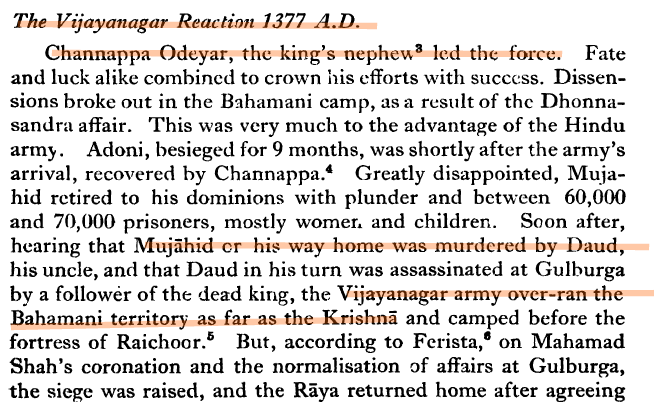
Emperor Harihara II would then follow this up with 2 Konkan Expeditions (the latter completely successful) and one desultory one to Warangal in 1383 CE.
Fifth Bahmani War
The success on the Western Coast would be capped off by the fall in Kulbarga’s fortunes. 3 sultans would rise to the throne in rapid succession. Seeing this instability as opportunity, Harihara II, per Ferishta, declared war to recover Mudgal and Raichoor. Bahmanis were in a dangerous situation.
However, the Hindus were distracted by naach-gaana when the focus should have been victory. An assassin hid himself amid dancing girls and then slew the Emperor’s son before him. This was then followed up in due course with a surprise attack. In the resulting confusion, thousands of soldiers and civilians were slaughtered alike.
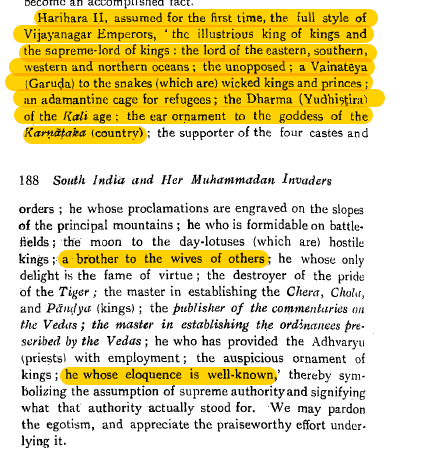
This unfortunate result saw Harihara pay large ransom for the many prisoners, particular civilians. This was followed in due course by annual subsidies, which were ceased at first opportunity. Harihara himself was remembered as soldier, scholar, and Rajarishi. [9, 41] He was called Raajaadhiraaja Raaja-paramesvara. His successors would call themselves ‘Lord of 4 Oceans’. [10, 75]
He was succeeded by Virupaksha and then Bukka Raya II in quick succession.
The former claimed to have planted a victory pillar in Sri Lanka and capped off the conquest of the Tamil country. The latter, called Abhinava Bukka, was more a scholar than soldier. He wrote a medicinal work called Vaidya Vallabha, and ruling little more than a year, found himself overthrown by Deva Raya I.
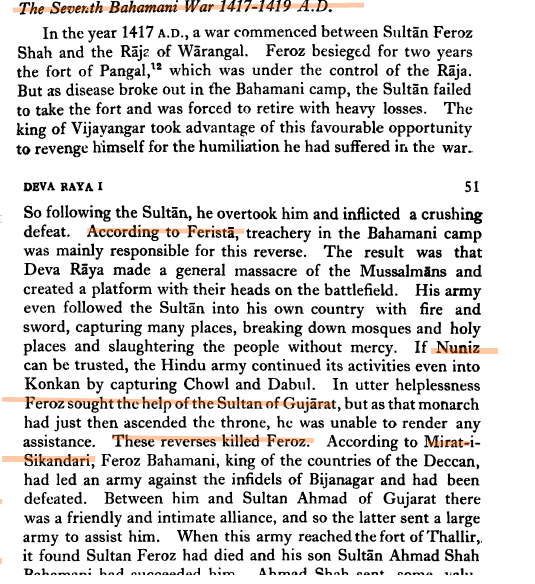
The War of Succession would invite Bahmani rapacity for a Sixth War. As usual Ferishta seeks to trump up a provocation citing some apocryphal story over a girl and her family escaping into Bahmani territory, with a Vijayanagara detachment on their heels. Ferishta then proclaims a third siege of Vijayanagar. Though it was unsuccessful, the usual atrocities are committed by detachments of the sultan’s army. Casualties are said to have reached 50,000, upon which Deva Raya I asks for terms. It is here that both Ferishta and so-called “traditional scholars” injure both the truth and the native cause. Alone in falsely claiming that a Deva Raya I’s daughter was sent, Ferishta’s untruths are today amplified by modern day distorians. If an event occurs, it should be admitted however humiliating, but facts must be corroborated not blindly swallowed from hostile sources accused by Hindu and British historians alike as prevaricator and exaggerator. Moreover, P.R. Rao notes that Nicolo conti (present during Deva Raya I, did not mention any princess like Ferishta). [3, 106] This claim may then be safely set aside until either side might bring better evidence.
Indeed, the crushing victory inflicted by Deva Raya I himself a mere 9 years later indicates motive to defame a hated religious foe.
Deva Raaya I would be succeeded by his son Bukka III. The latter was his son by Hemaambika. He was Viceroy at Mubagal, then Emperor for a few months. His daughter would be married to Saluva Narasimha’s ancestor. Bukka III would in turn be followed by the illustrious Emperor Deva Raya II. [9, 54]
Deva Raya II
Undoubtedly the greatest of the Sangamas was Deva Raya II. Indeed, his imperial shadow cast its sway from Goa to Sri Lanka to Burma (Pegu).
Bukka III’s son by Queen Naaraayanaambika, he would almost immediately face war from Ahmad Shah. The same set-piece approach followed, with attempt at open battle, followed by siege, then the usual atrocities by the Bahmani army. This time, the civilians murdered were said to reach 20,000. Though Ahmad Shah narrowly escaped a well-deserved death at the hands of 5,000 Hindus sworn to avenge the civilians, he is said to have again won terms against Vijayanagara. [9, 57]
In 1423 CE, this would be followed by a region wide famine. Ferishta claims the Bahmanis worsted Vijayanagara again in the Eighth War. An exasperated Deva Raaya II then began studying his situation, re-organising his army, and adapting to the reality of facing central asian horse archers and artillery in the field.
What is notable that unlike today’s intellectuals-yet-idiot who proclaim a king must be humbly “guided by” spiritual preceptors complete clueless of ground realities of strategic nature, the Emperor himself studied the various issues facing the traditional chaturanga-bala. It is precisely why one cannot simply teach to saastra, but adapt it to the present realities.
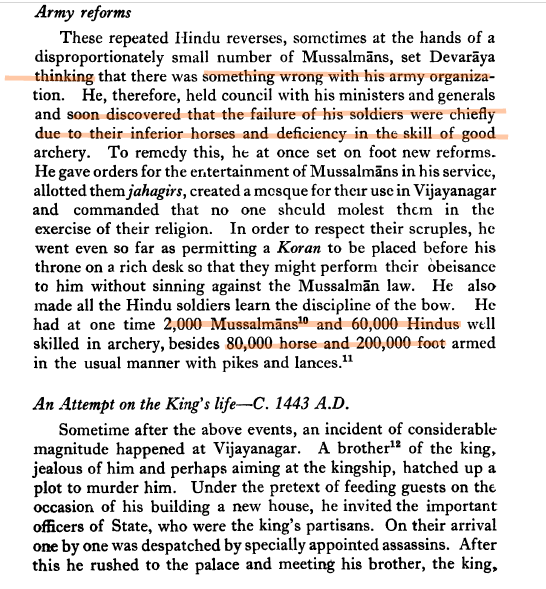
“Among the kings of Vijayanagar, Devaraya was second only to Srikrishnadeva Raya. He was a brave commander and had the foresight to modernize and re-organise his army to meet the threats from the neighbours. On ascending the throne he examined the causes for the failure of the Vijayanagar army in their engagements with the Bahminis. He felt that artillery of the Vijayanagar forces was weak. So he took steps to improve this division. He improved cavalry also by recruiting Muslim archers and importing horses from West Asia. Unlike many Indian rulers, he did not neglect the Navy. His admiral Lakkanna could launch a successful expedition on Sri Lanka.” [3, 107]
Further crediting this Emperor, was the change not only in military administration but in civilian administration as well.
“Besides strengthening the army Devaraya re-organised the administration to guard the empire from the enemies. The outlying areas of the empire was divided into six provinces. They were (1) Udayagiri Rajya (Nellore), (2) Penukonda Rajya (Anantapur and Chandragiri), (3) Rajaghambira Rajya (Tamil districts of kanchi, Srirangam and Madurai), (4) Muluvayi Rajya (Kolar and Mysore), (5) Tulu Rajya (Goa and Managalore), and (5) Mela Rajya (Malabar). “ [3, 107]
By 1443 CE, a very different Vijayanagara Army stood before the sultan of Kulbarga. Equipped with better artillery and now employing central asian horse mercenaries, open battle would now be a more even contest. Though the 10th Bahmani War was recorded again by the one-sided Ferishta, it shows Vijayanagara on the offensive and a more even contest.
Achievements
Despite the hostile accounts from the Bahmani Wars, Deva Raaya II saw unquestioned success nearly everywhere else.
“The notable achievement of Devaraya was the conquest of Kerala. The Vijayanagar army subjugated the ruler of Kollam (Quilon) and other principalities in Kerala. The Zamorin of Kozhikode (Calicut) was allowed to remain independent” [3, 106]
“Another notable achievement of Devaraya II was the successful naval expedition against Sri Lanka under the leadership of Lakkanna. The Sinhala ruler paid huge indemnity to Devaraya. For this achievement Lakkana was given the title Dakshina Samudradhiswara.” [3, 106]
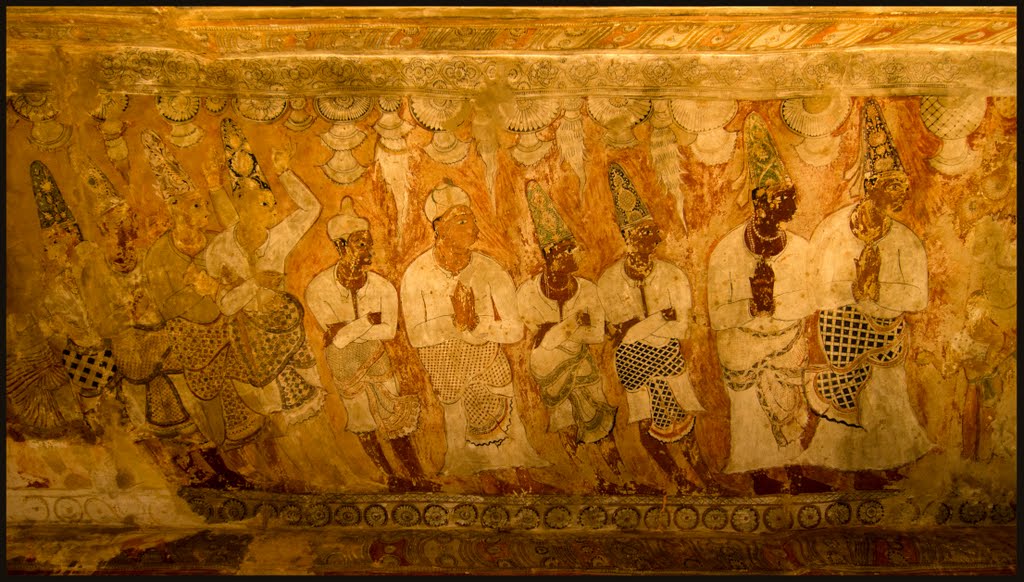
“The exquisite Hazara Rama temple was built during the reign of Devaraya. Devaraya was noted for his skill in hunting and took the title Gaja Vetakara (Hunter of elephants). Abdur Razzack, the Persian Ambassador to the court of Zamorin visited Vijayanagar in 1443. According to him Vijayanagara empire extended from Sri Lanka to Gulbarga and from Orissa to Malabar.According to Nuniz, a Portuguese merchant, Devaraya received tribute from the rulers of Quilon (Kerala), Sri Lanka, Pegu and Tenasserim (Myanmar, Burma)”. [3, 108]
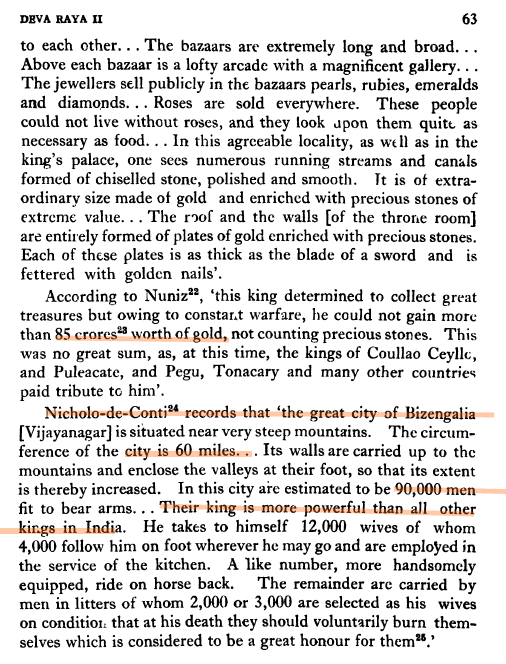
“The city is such that eye has not seen nor ear heard of any place resembling it upon the whole earth,” says Abdur-Razaak, a Persian ambassador who visited Vijayanagar in 1443 AD during the reign of Deva Raya II.” [3, 106]
There were a number of weaker rulers subsequent to Deva Raya II: Mallikarjuna Raya 1446-1465, Virupaksha Raya II 1465-1485, Praudha Raya 1485.
Mallikarjuna had a mixed bag for a rule. He found initial success in the 11th Bahmani War. Accounts here in fact betray Ferishta’s narrative as it was initiated by the Bahmani himself on account to wipe out the disgrace of his former defeats. As one can read here, therein lies the danger of one-sided accounts of history:
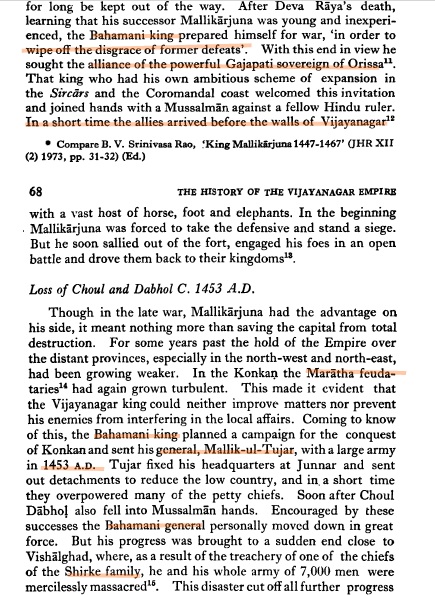
Special mention is due to the Shirkes of Marathwada (much maligned by the impudent peshwai cabal) who inflicted a signal defeat and wipeout of the sultan’s contingent (and its commanding general). The Shirkes it should be noted, would claim to be vassals of Vijayanagara.
If Mallikarjuna in particular was noted for his limitation, Praudha was for his debauchery. As a result, the Sangama dynasty that founded the Empire would find itself extinguished of the requisite utsaha to keep it together.
“Mallikarjuna was weak and incompetent so that, from his accession, there began a period of dissension, decline and confusion until the strength of the empire was restored, over forty years alter, by the martial ability and statesmanship of Saaluva Narasimha. The interval is marked by much agitation, discontent, and opposition to the members of the old royal family, several of whom met with violent deaths. At the start of his reign, the Velamas made a new home for themselves in Velugodu (Kurnool district) when their capital Raajakonda was seized by the Baahmanees and the neigbouring princelings then disturbed the peace and weakened the realm—a situation of which both Ala-ud-din II and Kapilesvara Gajapati took advantage.” [2, 247]
Indeed, the sordid episode of the Gajapathi collusion with the Bahmanis has been discussed elsewhere.
“They laid siege to Vijayanagar, but, true to its name, that city defied all their efforts to capture it and the invading armies had to retire without accomplishing much. Kapileshvara, however, kept up the war, capturing Rajahymundry and Kondaveedu before 1454, before being aided in his enterprise by the Kshatriya and Velama chieftains of Telengana. His conquests extended up to Sreesailam and included a large part of the Kurnool district. He sent his son Hambar against Mahmud Gawan, whom he defeated, to capture Waarangal in Telengana, and later, on Humayun’s death in 1461, Bidar. He then conquered Udayagiri in Nellore, and Kaanchipuram and Trichinopoly in the southern provinces of the empire of Vijayanagar (1463).” [2, 247]
Nevertheless, Udayagiri appears to have remained the southernmost outpost of the Odias.
“The Odda empire reached its greatest extent at this time, its influence being felt from the Ganges to the Kaveri. But unlike the Telugu districts, which became part of the empire of Orissa for some years, the southern lands did not pass out of the control of Vijayanagar, and the Oriya invasion of the south was only a sudden raid followed by speedy withdrawal. The sovereignty of Vijayanagar was upheld by its powerful nobles ruling in almost complete independence of the emperor Mallikaarjuna, such were Saaluva Gopa Timma, also known as Tirumalaideva Maharaaja who held Trichinopoy, Tanjore and Pudukkottai, and Saaluva Narasimha, equally prominent in the centre and in the eastern parts of the empire.” [2, 247]
The moors, who had sided openly with their co-religionists in delivering the finest horses to the Bahmanis (causing glaring strategic advantage to them), drove Narasimha to demand his vassal destroy them. The result moorish merchant death is numbered in the thousands (though a drop in the bucket compared to Bahmani massacres of hapless Hindu civilians (half a million).
Regardless, the steady loss of territory (Goa and Belgaum) under Mallikarjuna and Praudha left Saluva Narasimha with no choice but to consolidate power. The 12th Bahmani War (exaggerated as usual) saw the capital invested again (with conflicting claims of extent), but the Bahmanis quickly left due to threats elsewhere. The time was ripe for the Saluvas (Hawks) to rise.
Saluva
In order to appropriate historical figures, many self-anointed “traditional scholars” have managed to occlude or even cast aspersion on the origins of dynasts and historical figures. For example Baddena is one figure that had been appropriated. There is an ongoing effort to appropriate Rajput Pratiharas. Another such tactic is to reduce a dynastic name to a mere title. However, it is clear that the Saluva Dynasty had a long-standing history that can be traced back to the Kakatiyas. They, like Kolanu Rudradeva, were Andhra Kshathriya Rajus per the Nellore Inscription:
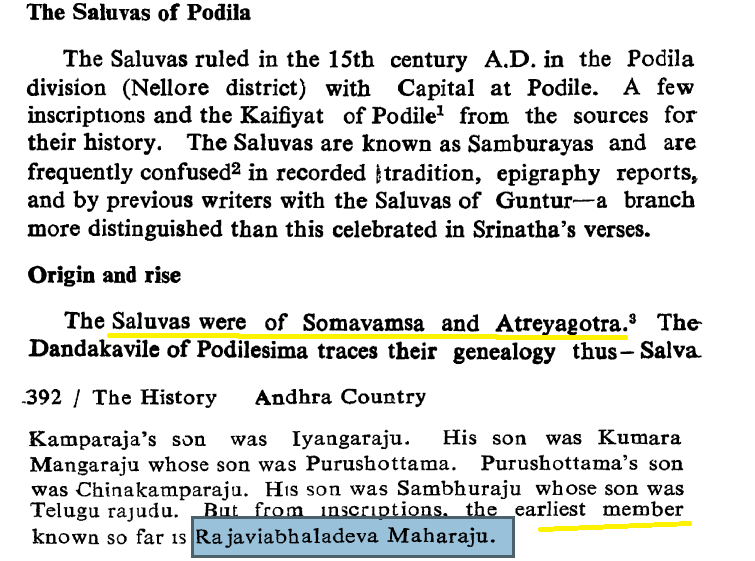
Saluva Narasimha
The Saluva clan would rise to dynastic prominence after a century of notability and intermarriage with the incumbent Sangamas. Be it their presence (Saluva Mangu) in Kumara Kampana’s campaign down to the dynastic alliances, they remained a regular feature of the Imperial Court and Army. Nevertheless, Saluva Narasimha would be their most famous contribution and commander in the Annals of the Citadel of Dharma.
He carried out a coup d’etat in 1459 CE, and relinquished the imperial insignia to the now home imprisoned Mallikarjuna (consigned to Penukonda). There was some conflict of nominal succession with Mallikarjuna’s claim being contexted by Virupaksha, who is said to have murdered the latter’s son and all other rival claimants. By 1470 CE, Saluva was firmly and openly in charge.
Finally, in 1486 CE, Saluva extinguished the Sangama dynasty by despatching last nominal rulers. He officially took to the throne as Emperor, and sent Tuluva Narasa Nayaka to secure the city for him. By this time, most of Narasimha I’s actual reign of power had actually been concluded. He officially ruled for only a few more years, but presided over a fortuitous occurence over at rival Kulbarga.
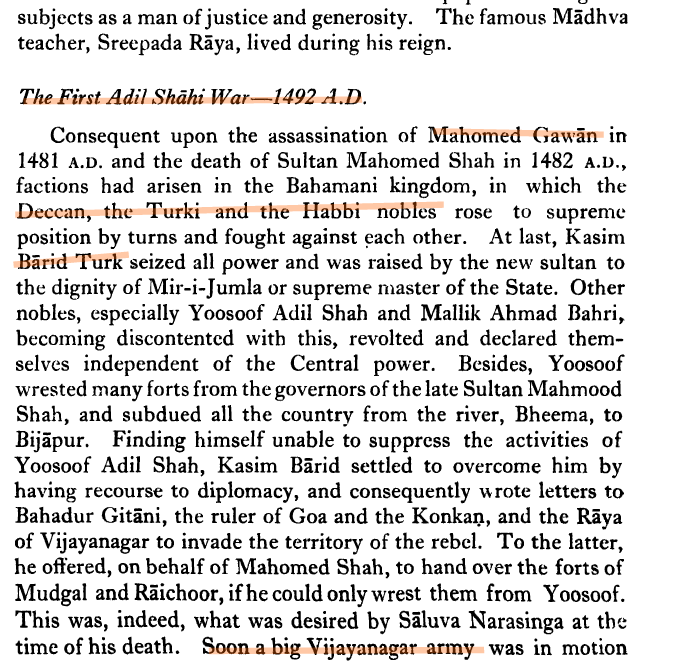
The breakup of the Bahmani kingdom into 5 sultanates would presage a respite to the near existential threat that Vijayanagara faced versus the united polity. Indeed, the treasonous alliance of the Gajapathis with the Bahmanis threatened to destroy Vijayanagara at the midpoint of its existence. This breakup shifted the balance of power in favour of the “Lord of Men”. Both the “Lord of Horses” and “Lord of Elephants” would soon find themselves on the defensive.
The murder of Mohd. Gawan, the vizier and statesman of the Bahmanis set the stage for the break up into 5 rival sultanates. It has often been questioned which was less dangerous for Vijayanagara; however, it should be noted that these 5 would often united declared jehaad, whilst Vijayanagara and the Gajapathis were easily pitted against each other.
Regardless, even before the final Bahmani Wars, the breakup of the state was underway, and the 1st Adil Shahi War began, when Yusuf Adil Shah attacked Vijayanagara. Finding himself in a pincer between a rival bahminid army and Vijayanagara itself, he chose terms and returned to his capital Bijapur (Vijayapuri). [9, 90] This victory would also see the passing of Saluva Narasimha I.
Saluva (Immadi) Narasimha II
Officially called Saluva Narasimha II, he is better known as Immadi Narasimha. Some refer to him as Thirumala (Thimma) Bhupala. Indeed, this period proved to be confusing not only to portuguese Chroniclers who arrived in 1498 CE, with Vasco da Gama, but to anyone trying to keep track of all the “Narasingas” and “Thimmas”, no doubt creating the exaggerated composite kautilya character “Thimmarasu”. As such, the traditional Hindu (and East Asian) convention of placing last name or dynastic name first proves its efficacy here to help us easily distinguish between Saluva Narasimha & his son Immadi, as well as their lieutenant Tuluva Narasa Nayaka and his son Veera Narasimha.
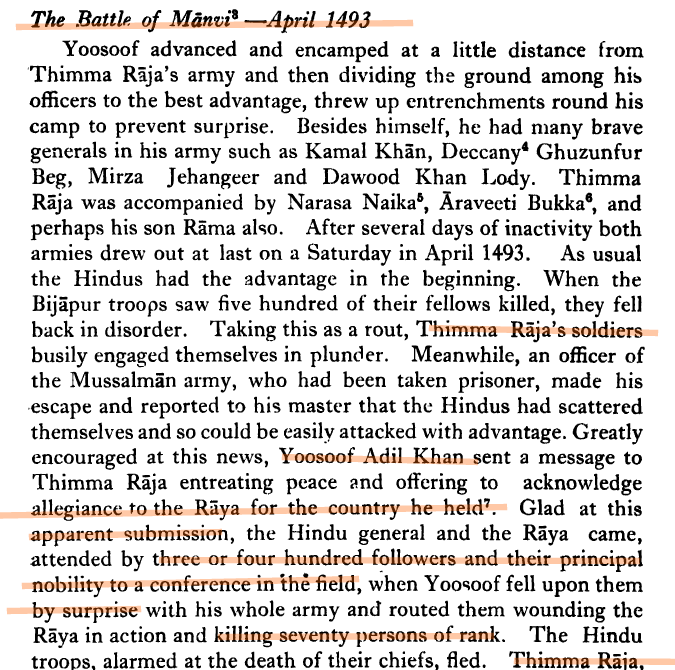
The 2nd Adil Shahi War showed how many of these Sultanates effectively wielded treachery and surprise attack. Having been defeated in the initial engagement, the Bijapur army returned to its capital while the commanding Vijayanagara general engaged in camp plunder. Bijapuri commanders reported this to Yusuf who then pretended submission to Vijayanagara at an open field conference. The result was predictable and needlessly buoyed the heretofore dented prestige of Bijapur. It is also evidence of the danger of Hindu self-satisfaction and lack of discipline.
Seeing no other recourse, Narasa Nayaka gathered his strength at Penukonda, then surrounded Vijayanagara. He informed the new Raaya that the unscrupulous Thimma Raaja was the cause for the murder of his predecessor and that the latter merely sought him punished. The siege was successful, causing a downcast youthful Raaya to agree to terms. Thimma Raaja was executed, and Narasa Nayaka entered the capital triumphantly, in 1494 CE. [9, 94]
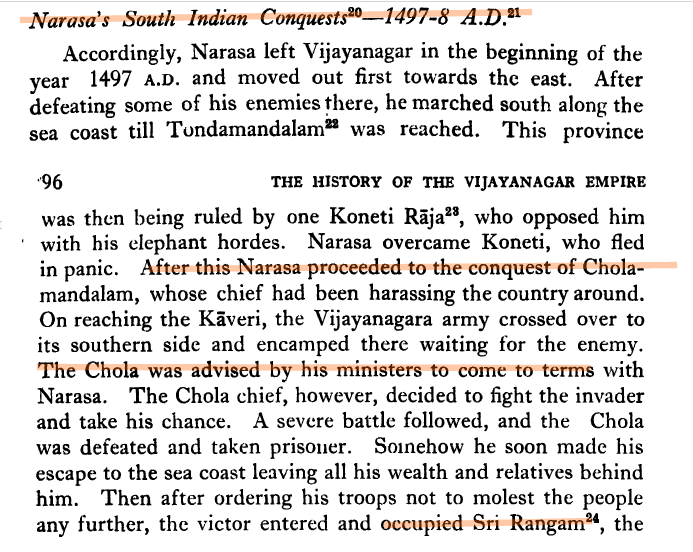
After initial beneficence, Narasa knew there was no turning back. The young Raaya was then sent to Penukonda to be kept under house arrest, in 1496. Although things were favourable at Kulbarga, the feudatories began questioning Narasa’s de facto rule, and rebellions began. This led to his Southern Campaign in 1498 CE, to put down refractory vassals. [9, 95]
Arrival of the Portuguese
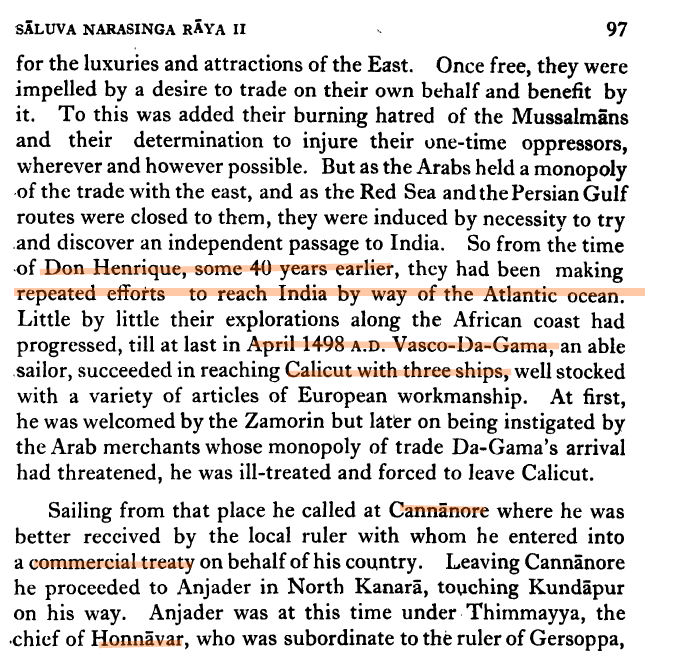
The Arrival of the Portuguese signaled the age of European Colonialism. Contrary to popular opinion, this was not a simple affair. In fact, the Portuguese, despite having a better ship and cannon, were initially rebuffed. Despite their cruel bombarding of Kerala ports (much like Commodore Mathew Perry bombarding Yokohama), they could not make a proper dent. It was only after the Bahmanis had taken Goa, that Vijayanagara finally granted an audience to the Phirangis. Rather than risk them allying with the former, Vijayanagara would eventually enter into commercial relations, which logistically made it possible for the Portuguese to take Goa from the equally colonising Bahmani turkics. Whatever the merits of this alliance (more tactical than strategic), it allowed Vijayanagara to finally gain access to central asian bloodstock (horses), which evened the heretofore lopsided cavalry odds. The Arab traders had been naturally biased to their co-religionists, causing an untenable strategic advantage. This was now addressed.
Noontide
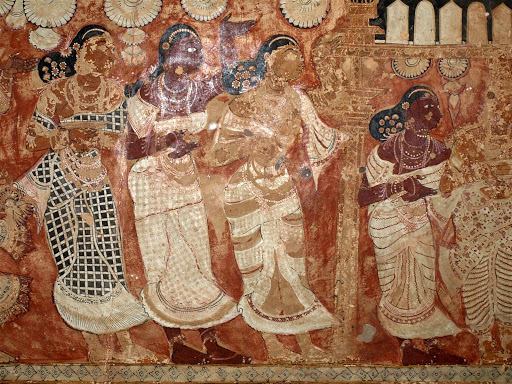
Vidhyanagari would attain its noontide in the 3rd of the great Dynasties of Karnataka Saamraajya.
Tuluva
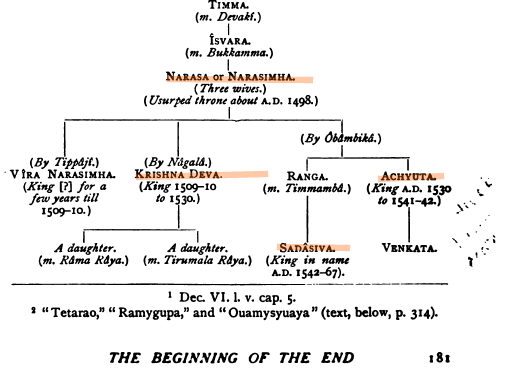
Tuluva dynasty gets its name not from Tulu, but from Turvasu→Turuvasu→Tuluva. This is the claim of the dynasty itself. Krishnaraaya was son of Nagamamba, w/o Narasa. Narasa was s/o Ishvara, who claimed to be Yadava Turvasu descendant, hence Tuluva. Tuluva Ishvara Nayak’s wife was Lakkamamba.

This claim is validated in contemporaneous chronicles and poetic literature:

Tuluva Narasa Nayaka (Narasimha IV)
The Tuluva Dynasty was closely associated with the Saluvas. Though Narasa’s father was placed in command at Shimoga district, the family is not thought to hail from there. His father’s name was Ishvara and his mother Bukkaambika. Through military service he would eventually rise to be Commander-in-Chief and Prime Minister. This dual role was on account of his nomination as ‘protector’ by the first Saluva ruler.
The 13th Bahmani War saw a brief patch up of the various polities contained within that dominion. Having declared a religious war, they appear to have gotten the better of Narasa in his waning days, exacting the usual terms. However, one only has the biased accounts of Ferishta from which to elucidate facts. Regardless, he left behind a solidified and secured Imperial state for his sons (of which he had 4).
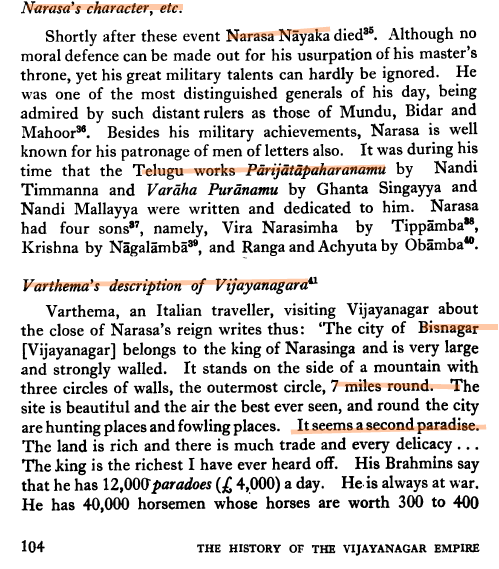
The first of Narasa’s sons to take the throne, Veera saw a number of sea changes during his reign.
He would see the Fourteenth and final Bahmani War as a complete Victory for Vijayanagara. 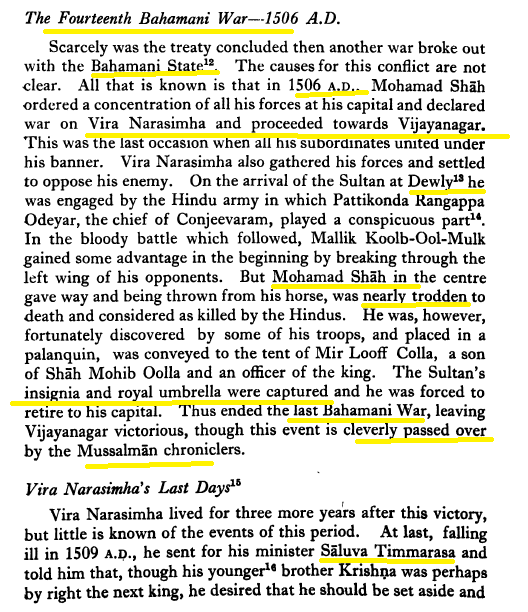 Next, the Portuguese began backing their hectic diplomacy with naval threats to the coast. Though the coastal batteries mostly held their own, it soon became clear that they were the rising Naval power in the region and would soon exact cartaz (or card toll) on Indian Ocean ships, secure in their coastal fortresses. Though most Indic polities held out, the signal defeat the Portuguese inflicted at the naval Battle of Diu, put every Saracenic state on notice. Though the terms are not clear, it appears Emperor Veera decided it was prudent to no longer ignore this new force and signed an equal treaty with them. The supply of horses would prove to be a boon to Vijayanagara.
Tuluva Krishna Deva Raya
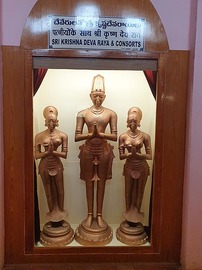
It should be noted that scholars adumbrate that “Tuluva Nrsanayaka had three wives—Thippaji, Nagalamba and Obamamba. Krishnaraya was born as Nagalamba’s only son.” [8, 20] However, despite the calumny against KDR, his mother actually was a noblewoman herself and was duly married to his father.
Krishna Raya in turn had 3 primary wives: Thirumala devi (Chief Queen), Chinnadevi, and Nagadevi (his concubine-lover from youth).
“Krishnaraya has been eulogised for over a century now by historians as a brilliant military strategist. Less known and much less appreciated is his prowess as a political strategist.” [8, 31]
In time tested fashion, KDR first measured swords with the incipient and insolent Bijapuri state. After crushing them in this first engagement, he then turned to the usual refractory nobles of Ummattur (the term “chiefs” is often applied to them to lower the sophisticated feudal hierarchy in place). Then Krishnaraaya had to treat with the 2nd Portuguese Embassy. The 1st one was sent to his brother, and we only have the portuguese account of it (also filled with Ferishtan level exaggerations). Given its lack of mention elsewhere, and complete Portuguese military failure against the Zamorin (Samoothiri) of Calicut, Almeida sent a second one to KDR. The offer seemed beneficial, but the request for a factory at Bhatkal seemed questionable, and a pleasant but noncommittal answer was given. The Portuguese then turned to feudal Vijayanagara chiefs of questionable loyalty. At Honawar, they found their man (a pirate) who would assist them in taking Goa (under Bijapur rule), in 1510 CE. [9, 116]
The Third Portuguese Embassy cemented the Alliance with Vijayanagara. From then on, the supply of horses would flow in, and the piratical portuguese would flow out to hit the foreign invader turkics (ensconced for barely 2 centuries). They would also come in handy at the Battle of Raichoor. His run of victories include the 1st Bijapur War, the 1st and 2nd Golkonda Wars, 2nd Bijapur, with the 3rd and 4th resulting in Kulbarga’s destruction, a Southern Rebellion, 3rd Golkonda, but above all, the signal victory over the treasonously competitive Gajapathis in the Odia War. Adil Shah sent as many as 3 embassies after his defeat, each one more submissive than the next. There was even the famous episode where KDR demanded Adil Shah pay personal submission. Though the latter agreed, he never showed up. So powerful had he become that the other 4 Shahi kings, who rooted for the humiliation of their arrogant Bijapuri rival now feared for their own lands. Due to poor supply of water KDR could not drive into their lands in response to their veiled threats. For logistical reasons, he pulled back. It should also be noted that during KDR’s reign itself, there were some minor conflicts with the Portuguese. Though they soon patched up, it was a sign of things to come.
Contrary to popular opinion, Tenali Ramakrishna was not his court jester but Vikata Kavi. As we have demonstrated elsewhere, it is no doubt due to power-hungry pens-for-hire masquerading as “traditionalists” that the achievements of Krishnaraaya were attributed to others. Ministers and Amaathyas and Preceptors all have their role, but it is the King who has skin in the game, and is the Wheel-turner of the Empire. Those who seek to exceed him (either in reality or in literature) are branches that will be cut down. Krishnaraaya did precisely that when Thimma Manthri (alleged Thimmarasu) had to be imprisoned by him, and his sons later executed for rebellion.
Though successful as a military & political stategist, his personal life was more checquered. Gajapathis again betrayed Vijayanagara & Dharma, by violating the Treaty. Rumour has it that the daughter of Prataparudra Gajapathi (Jaganmohini) was plotting against Krishnaraaya, so he abandoned her at a temple where she lived out her life. The second plot was against Krishnaraaya’s beloved son Thirumala, whom he placed on the throne before passing to secure the succession. Upon his murder, an inconsolable Krishnadeva then nominated Achyutha as Yuvaraaya. Although KDR was bracing for more campaigns against the 5 bahminids as well as a punitive campaign versus the recalcitrant Odias, he would leave his mortal coil in 1529 CE, after a reign of 20 years.
- Expanded Vijayanagara to its maximal limits
- Presided over the Noon-tide of the Empire in Politics, Culture, & Commerce
- Master Military & Political Strategist
- Cunning Diplomat who applied the Shaadgunya effectively
- Physically & Mentally strong ruler who was committed to a daily fitness regimen
- Patron of the Arts & Literature, sponsoring the Golden Age of Telugu Literature
- Composed as many as 6 Sanskrit Works, and 1 Telugu Work (Aamuktamalyada)
- Beloved by Kannadigas as “Raaja Ramana” and by Telugus as “Aandhra Bhoja”.
Tuluva Achyutha Raya
Despite leaving a strengthened Empire behind him, KDR also left a divided Court. Though the heir-apparent Achyutha had a smooth rise to the crown, he, his wife Varadaambika, and son Venkatadri had to face the formidable formation of Araveedu Rama and his brothers. The Araveedus married the two daughters of Krishnaraaya. To tackle the myriad threats facing Vijayanagara, its ruler had to balance disincentive with incentive. The Araveedus started off as talented commanders, but soon commenced on the track of being ambitious generals. Left with a choice of destroying them or marrying them to his daughters, KDR chose the latter. This set the stage for disobedience among powerful lieutenants, which would plague Achyutha’s reign.
This state of affairs practically invited the 5th Bijapur War, which saw no serious resistance offered by Achyutha, out of fear of Araveedu Raama’s pretensions and plots. Raichoor was taken and even the suburb of Nagalapura was destroyed. But reasonable terms were given and Ismael Adil Shah returned a pleased man. [9, 172]
Nevertheless, Achyutha proved an able ruler, and he stamped out dissension among his southern nobility. The death of Ismael and dissensions among the feudals there provided Vijayanagara to wrest back the Doab. He took Raichoor and Mudgal and was preparing to invest Bijapur itself. In the mean time Asad Khan, a feudatory of Bijapur, sent word of his desire to switch sides. Though he was treated well at Mahanavami and offered a few towns in return for allegiance, he soon reverted back to the new Adil Shah. This change of arrangements led a peace treaty with Mudgal in the hands of Vijayanagara and Raichoor in the hands of its rival. [9, 174] Seeing this distraction, the Qutb Shah of Golkonda attacked Kondaveedu (under a Vijayanagara lieutenant) and took it after much resistance. This further dented the prestige of the Maharaaya of Vijayanagara.
Achyutha passed in 1542 CE, a weakened ruler beset by internal dissension. With the Thirumala brothers on one side and the Araveedu brothers on the other, Achyutha was treated as a figurehead in his waning days. It was almost proof of how much circumstances may rule men.
Succession Crisis
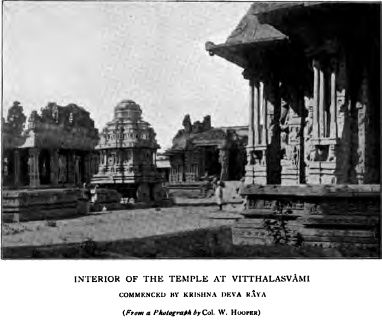
No sooner did Achyutha die than the dignity of Vijayanagara with it. The unseemly episode that followed would demonstrate just how low the so-called aristocracy could go in order to secure the throne and its pleasures. On the one-hand was the politicking Araveedu Raama who was steadily increasing his power day-by-day, now serving as veritable commander-in-chief. On the other were the brothers of the Dowager Queen Varadaambika who ostensibly took up the cause of their nephew, young Venkatadri. In the initial stages the Araveedus began supporting the son of Tuluva Ranga (Sadashiva). Incidentally, Sadashiva had been selected as protector of Venkatadri. This intersection of interests demonstrates precisely what happens when Dharma goes for a toss.
What’s worse, in her desperation to save her son’s life, Varadambika sent a letter to Adil Shah, asking him to save her son in return for favourable financial terms to him. Adil Shah only sought to increase his wealth and did so by camping his army before the walls of the City. Disgusted by this, the nobility switched sides to Aliya Raama, and collectively they defeated and drove away Adil Shah. [9, 181] However, within a few years, the same episode repeated when Araveedu Raama was away. The Thirumala brothers then took advantage and re-invited Ibrahim Adil Shah to vouchsafe the throne of Venkatadri. Seeing the situation turn adverse Araveedu bided his time and sent messages asking the Thirumalas to send away Ibrahim so as to prevent Adil Shahi rule and oppression to the masses. Temporarily seeing the light and satisfied by promises of allegiance, the elder Thirumala paid off Adil Shah and sent him away.
No sooner did this take place then the Mad Thirumala brothers then strangled their own nephew, to the sorrow of their royal Sister, and embark on a brief but bloody career of wiping out rival candidates. Seeing opportunity, Araveedu Raama then returned to besiege Vijayanagara. Disgusted nobles then flipped to the Araveedus, resulting in the immediate slaying of the idiotic elder Thirumala followed by the suicide of the younger one. In a sign of the spoilsport behaviour of power-drunk aristrocracy, the younger Thirumala is said to have blinded many royal elephants and ground up ancient royal jewels to deny his rival, Araveedu Raama. And with that died the insanity of the late Achyutha’s in-laws.
The sad result of this is a tragic lesson for ladies as well. Even sacrificing the dignity of the empire cannot save the life a prince. It is better for all, therefore, to remember the rules of Rajadharma, even if one’s loved ones are at risk.
Tuluva Sadashiva Raya
Now secure in power Araveedu Raama could then return his favoured candidate to the throne, while he himself went about administering the Empire. Tuluva Sadashiva, the son of Tuluva Ranga, was raised to the raajasimhaasana and ruled only in name. [9, 183] Although, Aliya Raama appeared to have greater sense than the mad Thirumalas, it should be remembered that he and his bloc were the cause for destabilising the rule of Achyutha to begin with. The Araveedus had a great ancestor in Chalukya Somadeva, but had a spotty service record subsequent to that. He did however immediately trounce the invasion of Adil Shah, in 1542 CE. [9, 186]
Aliya Raama then managed to position himself as ally of Golkonda, Ahmadnagar, and Berar versus Bijapur and Bidar. This arrangement nearly resulted in the destruction of Bijapur in the 6th War. However, due to Golkonda’s faint-heartedness, the death blow was not delivered, and the remaining 2 parties were bought of by Bijapur. Though Araveedu Raama did not regain the Doab, he did manage to settle scores with Adil Shah. Similar proceedings followed with the 7th Bijapur War. To his credit Araveedu did his best to hamstring and bring about the end of Adil Shah—to no avail. The 8th saw a Bijapur defeat, but he was saved again by rains. The 9th was a near disaster for Bijapur as it saw the Ahmadnagar king waltz through his territory to meet with Araveedu Raama personally. They drew up an agreement to simultaneously attack Bijapur and divide the territory. While Vijayanagara took the Raichoor Doab rapidly, Ahmadnagar was slow to take Gulbarga. During this time, Adil Shah induced Jamshed Qutb Shah to join his side. The latter chose to join no side and took a share of treasure in return for his non-involvement. Seeing his plans getting upset, the Nizamshahi ruler returned to his capital. [9, 203]
Burhan Nizamshah would die soon after and this changed the calculu of Araveedu Raama, as the successor was not as favourable to him. What’s more, although Vijayanagara had given refuge to Ibrahim Qutb Shah, who then was assisted to retake his throne 7 years later—his allegiance proved shifty. All this eventually led to the 1st Nizam Shah War. This switch in arrangements would prove fatal to Vijayanagara. It was the 2nd Nizamshah/Ahmadnagar War that would end up hoising Araveedu Raama by his own petard. His forces proved overly zealous in what should have been a lazy campaign by token detachments. The net result was sealing the hate of the Nizam Shah for Vijayanagara and raising the eyebrows of his own allies. It did not matter that Ibrahim Qutb Shah and Ali Adil Shah was seen as adopted sons of Aliya Raama, in the end politics is politics. Although the battle went ill for Nizam Shah, the weather again determined the outcome. The Siege of Ahmadnagar had to be raised.
Nevertheless, the latter asked for terms from Araveedu Raama. The ARR sought to take an opportunity to meet with him. This overeager attitude resulted in Hussain Nizam Shah subtly insulting him, causing Araveedu to openly insult him in return. Both kept calm and implemented terms of the agreement (namely delivering the fort of Kalyan). The bad blood was sealed, and it soon congealed in a jehaad against Vijayanagara. [9, 212] What irked Ahmadnagar soon touched Bijapur. The lesson here is perhaps not to overeagerly take up the cause of others, in this case Ali Adil Shah’s against Nizam Shah, as occured in the 3rd War of Ahmadnagar. Via marriage alliance, Ibrahim Qutb Shah switched sides to the Nizam Shahs. This provoked an ill-advised 4th Qutb Shah War. This turned Ibrahim from neutral to overt enemy.
Downfall

Talikota and all that…
The year 1565 CE was fateful in the Annals of Vijayanagara. Indeed, the fate of South India itself was to be decided. Fought between the villages of Rakkhasi-Tangadi, the Battle of Talikota, like Bunker Hill, would take it’s name from a more prominent place. Regardless, it is etched in the minds of military historians today as an example in not what to do. Araveedu Raama Raaya, never truly crowned Emperor, ruled as de facto Emperor. Though he was very cunning, his ambition is ultimately what undercut him, the Empire, and even the august city of Vijayanagara itself.
Personal pride may be one thing, but public haughtiness quickly angers adjacents, leave aside opposing. When facing opponents of the same religion with allies of the same religion, one must be cautious of the conduct of one’s forces in foreign lands. No doubt, foreign invaders and their court historians will find any cause to insult and incriminate an “infidel”, but a wise ruler must be exceedingly cautious of his own conduct, or better still, not get involved in the troubles of others. After all, the most famous maxim of all time is “when the enemy is destroying himself, don’t get in the way“. Araveedu Raama Raaya did exactly that. The now septuagenarian ruler held on to power ’til the bitter end. One might argue it might have been necessary given the treacherous imperial politics of the The City, but who asked him to be field commander? Vinaasha kaale, vipareetha buddhi.
And this is precisely the lesson that individuals must learn—when to get out of the way. Better discussed with precision in another post, this anchor article will focus mainly on the significant occurences here.
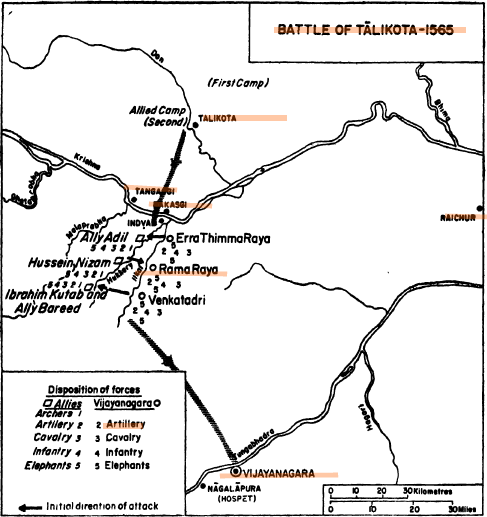
The battle at first seemed favourable to the City of Victory. After all, Vijayanagara forces were more numerous, better provisioned with shorter supply lines, with high morale powered by the narcisissim of Araveedu Raama Raaya. The septuagenarian commander divided his forces under his brothers, and himself took to the centre. It was half a million vs 300,000.
The jehaadi army of the Shahi sultanates were not discouraged. They retained a better artillery under Turkish gunners and were not facing extinction like other side.
Interlude
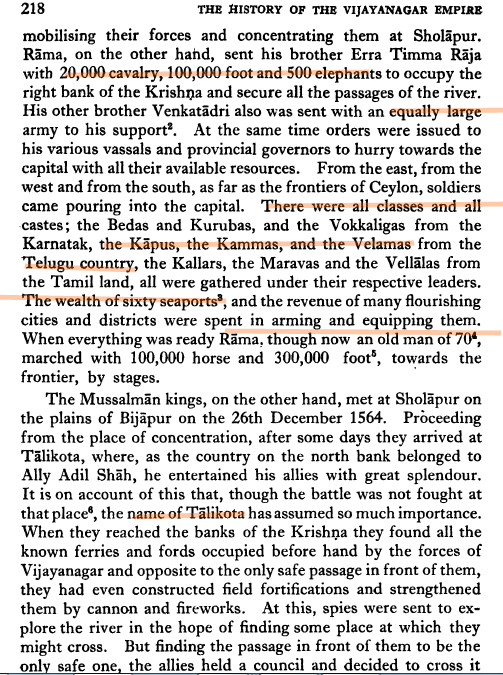
Though featuring fewer artillery pieces, as at Panipat III, the central asian shaturnals proved to be highly effective. However, it was the turkic cannon that fired makeshift grapeshot via copper coins, that proved the most devasting. Rather than the usual Thurushka envelopment on the wings via cavalry, the artillery smashed the van and the centre—leaving 5,000 troops on the defending side dead. This was worsened by the betrayal of the Gilanis who then chose this moment to decamp with their divisions to the side of their co-religionists.
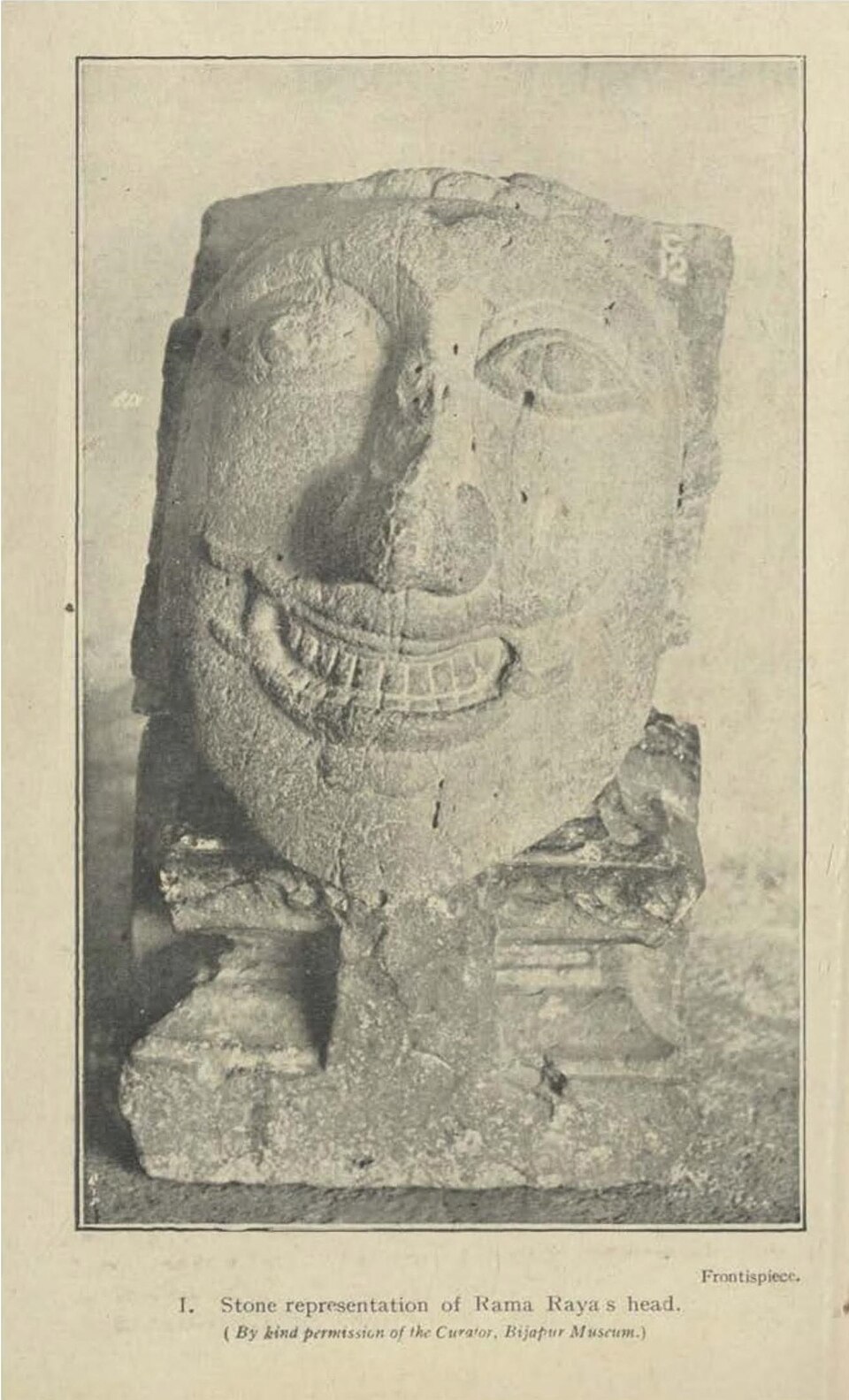
Aged Araveedu Raama was now exposed. The old man now had to face an Ahmadnagar cavalry charge, and he soon came into the hands of Hussain Nizam Shah. Unlike Golkonda and Bijapur rulers who mostly desired to curb the pride of the Araveedus, the fanatic Hussain desired to wreak what he saw as religious vengeance on the Vijayanagara ruler (ironic given all the atrocities of the Turkics against Hindus over the centuries). The haughty high ruler of the greatest city of the world now found his head detached from his body. Oddly enough, he is said to have smilingly accepted his fate.
Delugue
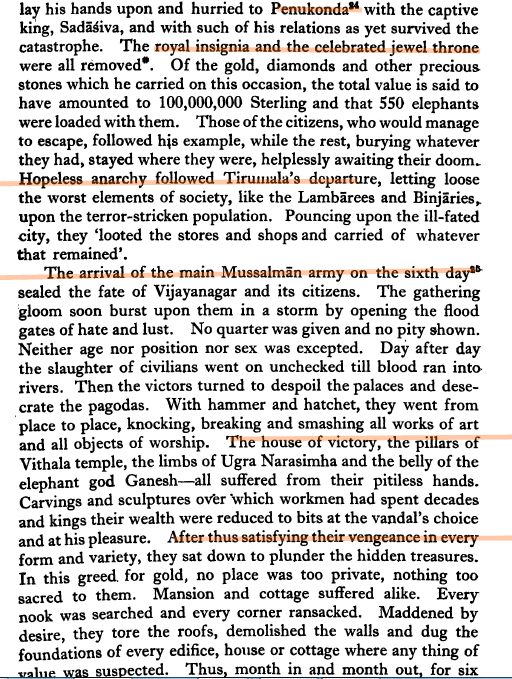
The Destruction that followed the taking of Vijayanagara was exceeded only by the pusillanimity of the dynasty that failed to even afford it a token defence. Unlike the Byzantine Emperor Constantine XI who gave the City a grand farewell, the fall of Vidyanagari was not even worthy of song. Indeed, the rapine and ferocity with which it was destroyed and denuded was only exceeded by the bovine response of aristocrat and inhabitant alike to the impending doom. It did not take place all at once, but there is such a thing as reading the room. Panic did not take place until it was too late. Having destroyed the city with their ambition the remaining 3 Araveedu brothers then amscrayed for Penukonda—taking with them the nominal Raaya.
Only the temple of Virupaksha was left in some dignity, due to the protestation of Veershaivas who had been alienated by Sringeri’s politicking. The royal palaces, the market places, myriad temples and mansions, all were destroyed and set to flame. Such is the price of petty pride, which ails caste-obsessed Hindus to this day. Due to base ambition of aristocrats the hapless population had to pay the price, via slaughter and slavery. A City of Dharma had forgotten its prime purpose: to protect its populace. It was only on the sixth day that the city would face its fate.
Araveedu Thirumala need not be condemned for leaving the city—he should be condemned for failing to leave an in-charge for its defence or evacuation. [9, 222]
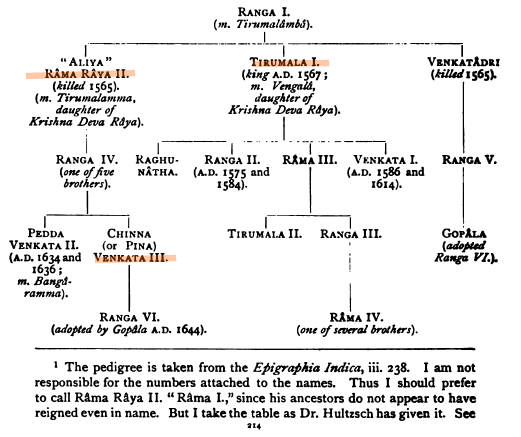
The Araveedu Dynasty was a mixed bag for Vijayanagara. Rather than see it as a cause it should be seen as it was: a symptom. The fickle politics of the period, the frequent change of allegiances not only by Nayakas, but even by Generals and higher Noblemen, and above all, the treacherous zero-sum lust for the throne by various proxy rulers, sealed its fate. Aged hubristics like Araveedu Raama Raaya were proof of a body politic gone bad. Seeing the occasion for what it was, the Araveedus finally chose to despatch the last Tuluva from the throne officially. The first of the Araveeti Raayas would now officially rule.
Araveedu Thirumala Raaya
Such was the idiocy of the Araveedu family that even within a year of Vijayanagara’s sack & disastrous pillage, they applied for aid from their own destroyers against each other.
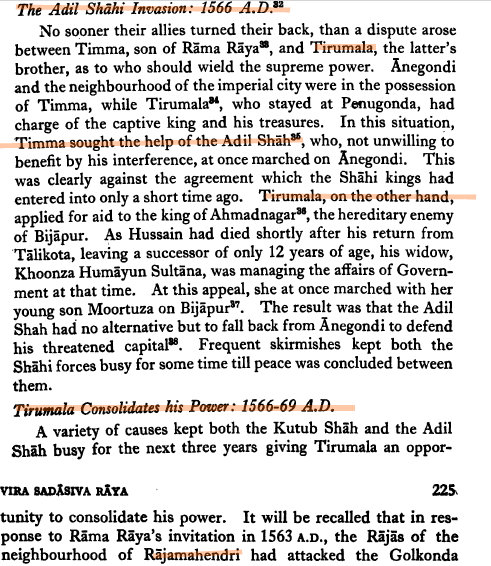
Even the most generous court historian cannot spin such shameless, vain ambition. Nevertheless, the brother of Araveedu Raama Raaya won the occasion and consolidated power.
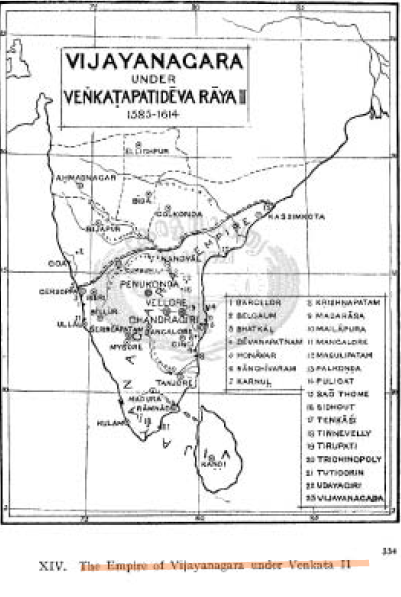
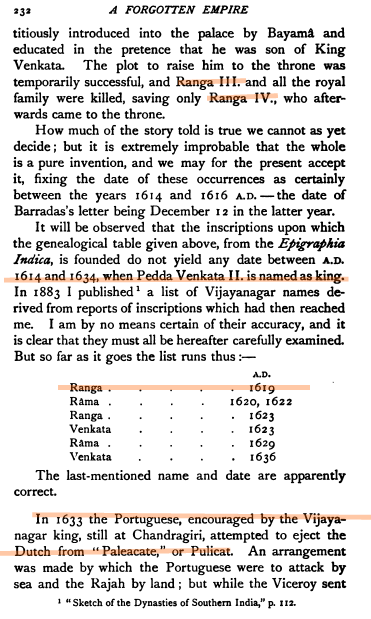
Thirumala was then followed successively by Ranga II (his second son), then Venkata I, who ruled from 1586-1614 CE. [sewell, 218] He is better known to us today as Venkatapathi Deva Raaya.
Araveedu Venkata I (Venkatapathi Deva Raaya)
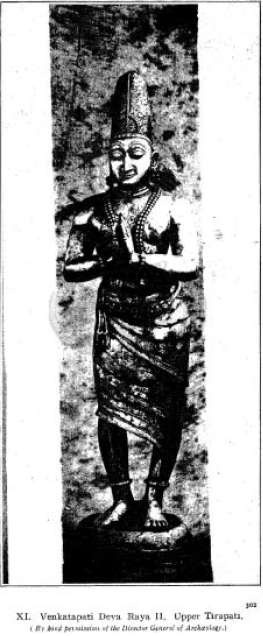
The prominance of the Nayak kingdoms in this period meant that the fate of the empire rested on their loyalty. The Tanjore Nayak remained so and provided crucial aid against Bijapur, which was defeated at Penukonda in 1592. He then moved to take Gandikota and sent a detachment to chastise a Golkonda general who was destroying temples. In fact, the Ramarajjyamu credits Venkatapathi with re-establishing the Krishna river as the border between the two realms. To many, this would seem to be a grand revival.
After the terrible civil war that followed (and stomach-churning bloodshed), the throne would be claimed by Ranga III.
Epilogue
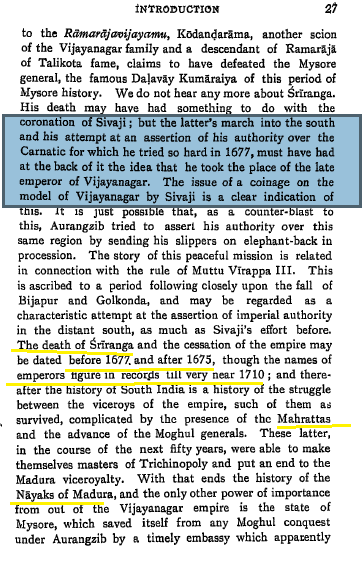 Sriranga III would be the last titular Emperor of any repute. He would switch from Chandragiri to the final capital at Vellore. He resolutely attempted to rally his lieutenants against the dual invasions of Bijapur and Golkonda–little avail. Soon even the heretofore loyal Wodeyars could see the writing on the wall. Though the King List would continue until the 1700s, there would be rival claimants (primarily 2 main lines). One under the Rajah of Anegondi (initially a “guest” of the Maharaja of Mysore) and the traditional one ensconced in Tamil Nadu. Regardless, for all intents and purposes, the Empire itself ended in 1648 CE, with the independence declarations of the Wodeyars of Mysore and the Nayaks of Madurai successively.
Successor states include the aforementioned as well as the Nayaks Kings of Thanjavur, Jinji, Ikkeri, and Kandy. The true successor however, was one that did not owe direct allegiance but was moulded in its image: the Maratha Empire. Chh.Shivaji issued coinage on the model of Vijayanagara. Sriranga III d.1677. King lists end 1710CE. Some assert that Sriranga III was in fact the IV. Here is an alternate listing:
Conclusion

It is not a simple task to condense 320 years (1334-1648) of Imperial History down to 10,000 words. But in a world of verbosity, Bhaaratheeyas must keep their eyes on the big picture. It is often erroneously asserted that “North saved the South!“. Nothing could be further from the truth. The Hindu Shahis should be credited for their energetic patrolling of Bhaarathavarsha’s frontiers, and the Rajputs for forming a Confederacy with them against Sabuktigin. But this desultory defence proved ultimately doomed in the face of the smaller resource base and cavalry archer armies of Afghani Turkics. In contrast, Southern India in the time of the Khiljis and Tughluqs had to face the gigantic resource-base of the North deployed against it. It is possible to give credit where it is due without minimising contributions of others.
There is no doubt that instability that caused the eventual downfall of the City and the Empire of Vijayanagara itself. Self-appointed “digital dharmrakshaks” of today, should take note. The time for playing kapalikacharya and svengali-amaathya is over—the stakes are too great for Samraajya and Sabhyatha itself. In fact, there is precedent for this type of orthodox ministerial insolence. Emperor Krishnadeva Raya blinded his minister Saluva Thimma ( manufactured as composite kautilya character Thimmarasu) due to suspecting his complicity in the murder of his son and heir Thirumala Raaya. Thimmarasu’s sons later raised a rebellion against Krishnadeva Raya—who swiftly crushed it and executed them. Following that, Araveedu Rama Raya was able to rise up, marginalise Krishnadeva’s successor Achyuta Raya, and usurp the throne from the Tuluva Dynasty. This fool-emperor would prove to be the disaster behind the catastrophe at Talikota, through his two-clever-by-half foreign policy.
The greatest men and women of the medieval era would rather eat grass and burn themselves than trade themselves or their daughters—but today’s data dalals feel no such compunction for doing the same. It is time these perma-bureaucrats and who write hagiographies of mere colonial bureaucrats have the lights shone on them. They say that “success has a thousand fathers and failure is an orphan“, is it any wonder therefore that whatever a victory or success of a king or a general, there is always a many-fathered kapalika ready to take or assign credit? Casteists who celebrate colonial collaborator officials have no right to write our history.
There will always be a chance to critique, carp and cavil at the kings of old for their failures—it is time the real termites of society face the spotlight and have their sins shone before all. It is then and only then the the true history of Vijayanagara and many other august Empires and Kingdoms with histories of valiant resistance and reconquest will shine forth, rather than the mealy-mouthed mantras of mere manthris.
If there is a lesson to the see-saw in fortunes, not just person from person or ruler to ruler, but even kingdom to kingdom, it is that one is generally better off doing what is right. Irrrespective of whether one wins or not, one will be thought of well. From the Thirumala brothers to Araveedu Raama to the Gajapathis, those who thought their most unscrupulous behaviours (to be omitted from court histories, of course) would be successful only brought downfall upon themselves—and worse their subjects. It is true that the overly good and overly honest rulers find themselves being taken advantage of or even routinely defeated. It is therefore not “vinayam” as some murkhapandithas assert, but a balance between Niti and Dharma—as exemplified not by common braahmanas and devathas, but by Paramathma himself as Sri Krishna (he is the only one, one need by “guided by” in this world). That is the political exigency of the period.
References:
- Rao, Venkata Gutty (Prof.). “Vijayanagara Empire”. CH.16 of Vol. 5 of ‘ A Comprehensive History of India’. New Delhi: People’s Publ. House. 1970
- Sastri, K.A.Nilakantha. A History of South India. New Delhi: Oxford. 2015
- Rao, P. Ragunadha. History and Culture of Andhra Pradesh: From the Earliest Times to 1991. New Delhi: Sterling Publishers, 2012. 1-23
- Krishnamachariar, M. History of Classical Sanskrit Literature. Delhi: MLBD. 2016
- Mittal, J.P. History of Ancient India. Vol I. New Delhi: Atlantic. 2006
- Kusuma Bai, K. Dr. Music-Dance and Musical Instruments During the Period of the Nayakas (1673-1732).
- Rao,Adapa Ramakrishna.Makers of Indian Literature—Krishnadevaraya. New Delhi: Sahitya Akademi. 1995
- Gopal, Dr. R. (Ed.). Life and Achievemments of Sri Krishnadevaraya. Mysore: Directorate of Archaeology. 2010
- Sharma, M.H. Rama. History of Vijayanagara—Beginning & Expansion. Bombay: Popular Prakashan.1956
- Sewell, Robert. A Forgotten Empire (Vijayanagar): Contribution to the History of India.
- Yashoda Devi, B. History of the Andhra Country.
- Heras, Henry (Rev.). The Aravidu Dynasty of Vijayanagara. Bombay: St. Xaviers.
- Malampalli, Somasekhara Sarma. History of the Reddi Kingdoms.Delhi:Facsimile Publ. 2015
Loved reading this piece. One of my favorite part of reading such articles is that when I converse with my fellow Telugu Bharatheeyas, despite having roots in the North, I can better connect with them, and helps break the ice quicker!! So thank you for that!
Also despite coming from a Rajput family, I 100% agree with you on being against blanket statements such as “North saved South”. By that token you could also say that because of the “South”(Vijayanagara), the sultanates in the upper Deccan Area/Maharashtra remained divided, giving not just Chhatrapati Shivaji Maharaj valuable breathing room to rise, but also an inspiration on how to model his Empire, which was the biggest detriment to the Mughals(which helped liberation efforts in the North).
But my biggest issue with such statements is that they help create a divide among Bharatheeyas, when we are one people. Many of the Kshatriya (and other warrior samudays) who are settled in the North, had spent such time in the South. We know from your articles that Raja Rajendra Chola helped Raja Bhoja, Vishnukundins helped the Gupta Kshatriyas defeat the Huns, etc.
There is a lot I can write, I really could and perhaps that is better saved for another time. But one thing I can definitely write right now is that what is not just heartwarming but should also be eye-opening, is that the most successful liberation efforts across Bharat came when Bharatheeyas among all varnas/samudays worked together.
Vijayanagara despite being led by Raju Kings, had nobles/commanders from many communities (I think majority would be Reddy, Kamma, Kapu and Velamas)
Ch. Shivaji Maharaj’s Marathas empire had a strong Maratha base, but everyone was included such as Tanhaji Malusare ji from the Koli community.
Maharana Pratap heavily incorporated his respected and incredible Brothers, the Bheels, as warriors and archers in his army, and used their practical thinking to protect him from Mughals.
This is not to demean or denounce Rajput armies which despite having and respecting warrior from all samudays, perhaps compared to others , had a higher percentage of generals being Kshatriyas themselves (nothing wrong in that and this also has its many positives that we can discuss later)
But when Rajputs (this is a generalized statement), despite their patriotism were stuck in a bit of ritualistic thinking, it was Maharana Pratap who helped Rajputs realize the importance of strategy again. And I feel Guru Ravidas Ji (from the Brave Dalit Community), who Maharana Sanga honored as Chief Guru of Mewar (his Chattri is still their in Mewar’s Kumbha Shyam Mandir), who helped fight against a lot of “Evil Ritualism” that was pervading society, deserves a lot of credit for that.
As by fighting against “Evil Ritualism”, he made people realize again that Bhagavan is not separate from us, but within us, and once you realize that, you recognize the importance of doing what is right, and not being bound by so called “rituals”. Something the Vijayanagara and Maratha Kings understood and implemented to better effect than Rajputs, especially post 1192.
I do not mean to talk about the North so much, especially when its an article appreciating the culture and valor of the South. But I felt as someone from the North, it would be good to recognize the common good factors between all our various regions in Bharat that made us successful. And nothing is more important than being united!
Jai Vijayanagara, Bharat Mata ki Jai!