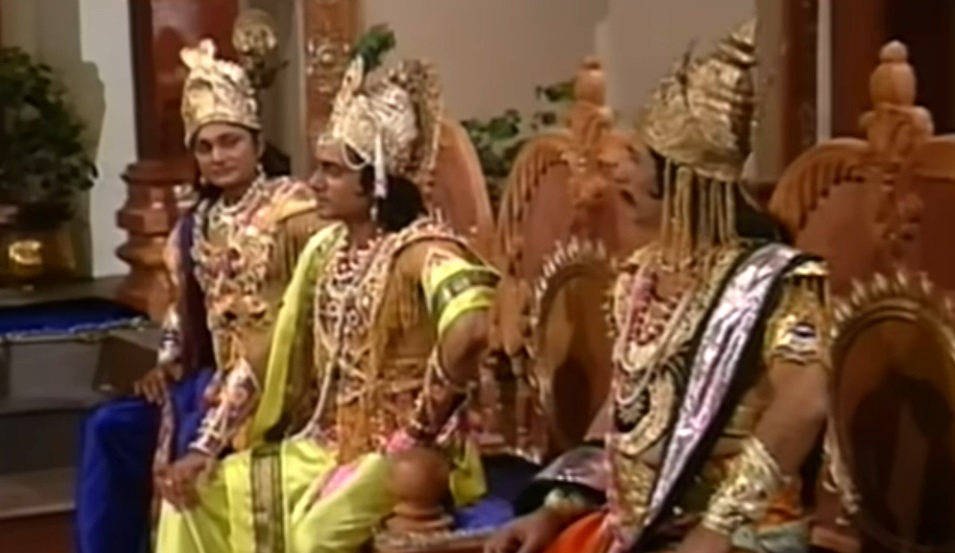
After a long hiatus we return the topic of Rajadharma. A topic that is far more than just subsidiarity and universality, it is, at its essence, how to govern a population. And to govern a population means understanding it at its most essential even atomic level. The point of this is not to split hairs and be atomistic as most Hindus are today. Rather the point is to understand the building blocks of society so that Raajadharma is achieved at every level. This means not merely governing as a governor or a king, but understanding the civic spirit that ought to administer a democracy or a republic.
Introduction
There has long been a question about whether ancient India had republics and democracies. Often, these questions are answered by those neophytes with little knowledge of political philosophy or government. The answer to every great question is “We had it too!“. Failing to distinguish between parliamentary and senatorial, unitary and confederal, our bigmouths all speak with a certitude even ivy league professors might envy. But in order to properly understand these institutions one must properly understand the history around it—best done in another article. The focus of today, rather, is around the topic of the civic spirit of democracies (jaanaraajyas) and republics (ganaraajyas). To do so, one must study the essential building blocks of these forms of government.
Ancient scriptures make mention of various units of society. While the individual (jana) often features, it is truly the clan (also jana, but more correctly kula) that features as building block of various tribes (vis). The vispathi (popular/tribal chief) is best known leader of a political unit. Indeed, visaya (zilla/district) takes its root from that word. But how did a vis govern itself? —through consensus under the leadership of said vispathi and his varga (council). For caste obsessed psychopaths, organic ethnic units governing themselves across class/caste can be unthinkable. But they were possible, as such tribes featured various classes, governed by the ruling/aristocratic class: kshathriya.
From the consensus of the aristocratic class, tyranny could be simultaneously stemmed. After all, a tribal chief who could be elected could also be removed from office. Indeed, that is often considered to be the “historical” origin of the Classical Indic Republic: The Raja of Videha was chased out of Mithilanchal, and the remaining aristocrats ruled according to consensus (much like the Roman Republic and Tarquinius Superbus).
Regardless, the Groups of tribes formed provincialities (i.e. Sindhu, Sauveera, Anga, Vanga, Oddhra, Andhra), and these tribes/provincialities then formed a nation (Bhaaratha/Vaidhikaarya).
Terminology
- Vyakthi—Individual
- Dhampathi—Couple
- Kutumba/Parivaara—Family
- Kula—Clan/Group of Families
- Orasa—Distant Relatives
- Gothra—Descent Group/Lineage
- Gana—Group/Host
- Vamsa—Dynasty
- Samudhaaya/Samooha—Community/Municipality
- Varna—Class
- Vis—Tribe
- Desa—Country
- Jana—Person/Clan
- Janaah—People/Ethnos
- Sabhyatha—Civilization
- Gana—A corporate body, an association or a group of the republican community. The term also signifies the republic itself. It denotes the form of govt. run by the whole community together without any king or chief.
- Janghaakaarikas—Those earning their living far away
- Krosa—2 miles
- Kosha—Treasury
- Annakoshta—Granary
- Koshtagaara—Storehouse
- Goshta—Stable
- Maandalikaa/Mandaleshvara
- Khasvaa—Township/Borough
- Shaakaanagara—Satellite town/Suburb
- Sanaddha—Close Associate
- Vamsakraam-anugaami—Hereditary Line
- Vis—Tribe/People
- Visaya—Territory
- Visayapathi—Governor
- Vispathi—Chief of Vis
- Upachaara/Smaranalikhitha—Protocol
- Anvaya-praaptha-saachivya (ministership-by-heredity)
- Vishuddha—Integrity
- Arjava—Straightforwardness
Civic Spirit of Democratic Republics
To steep a society in the civic spirit sorely lacking in modern India today necessitates properly understanding the proper ancient spirit in monarchies.
“The King is the shepherd and the people are the sheep.” Sanghis and their ancestors who desire the king as sheep are the ones who undercut hindu society by emasculating & sabotaging rulers (as did Madhav Mantri and Nanasaheb Peshwa). No wonder it produces cowardly ministers as rulers even to this day—still under the sway of an Italian barmaid and her duncecap son.
As stated previously, Ministers (manthris) and even employed Councillors (amaathyas) cannot have the Sattvic authority of Veda Brahmanas, who are very rarely punished and that too are traditionally immune from mrthyudhand. Therefore, those seeking to exempt their community from capital punishment should ask whether they should be employed as ministers and generals in the first place. Anyone in the royal service can and will be punished—and in extreme scenarios, will receive mrthyudhand. If you aren’t willing to be held accountable, don’t demand political power. Sukra niti emphasizing the punishment of ministers Ministers do not rule, whether as one or as group. The King does.
Similarly, in a republic, it is not the bureaucracy or ministerial appointments that rule, but legislators and the chief executive.
Our country was an example for the world, in its morally upright citizens. This was due to our Kings' faith in Scriptures & power to punish.
— Sage of Kanchi (@haraharasankara) April 24, 2017
As a result, we conclude the first Set of Raajadharma articles by discussing:
How is a Ganaraaja or Jaanaraaja different from a Raaja?
The term Raaja was famously appended not only to the chief executive of a kingdom, but occasionally also to a leader of a republic or what one might call a democracy. So what then are the differences?
Monarchy, top-down. A monarchy functions as a top-down system of organisation. This makes it quite easy and efficient to implement tasks and projects (as all dictatorships attest). This might be ideal in a war or a survival situation. However, it also is subject to caprice and tyranny.
Democracy, bottom-up. Democracies are known to be bottom-up and quite ponderous. The slow-moving task of subjecting every major decision to a vote or oversight makes it difficult to respond to the challenges of the day. Indeed, there is a class of people today in almost every nation that specialises in bureaucratic in-fighting. They would be better termed as fifth-column. However, a democracy is often seen as ideal in peace-time. The imprimatur of consent of the governed whether through representation or direct assent through the public assembly (samithi) adds legitimacy to government action.
Republic, in between. Republics, typically defined as a system of government lacking a king, come in many forms, the most common of which is a civic/constitutional republic. Often called representative democracy, it features an elected executive (vested in 1 or more individuals), consensus-building, voting, and multiple legislative and judicial bodies. Like democracies, it often features a strong sense of civic pride and identity, rather than pride vested in royalty.
When these political units grow, they often become sanghas (confederacies) or empires (saamraajyas/sarvabhumi).
“This is a variety of a large monarchy which is based on territory as opposed to nationality (e.g., Janarajya of the Satapatha Brahmana). It however claims the whole area (sarva-bhumi) within the natural boundaries, the country with ‘natural frontiers. The ‘natural frontiers’ notion is expressed by Kautilya in his chaturanta sovereignty (‘an empire up to the four limits’) and he defines it to be the imperial field as lying between Cape Comorin and the Himalayas, i.e., the whole of India.” [5, 346]
The root of all these agglomerations however is the concept of a people (janaah) across class and caste.
“The term jana occurs 234 times in the Rig Veda. It means people, band or tribe. No other term in this sense appears in the earliest Veda so many times. The term vis, which means tribe or dwelling occurs 170 times. Probably the jana was a wider and the vis, a smaller unity. We repeatedly hear of five peoples that is Anu, Yadu, Druhya, Puru and Turvasa. They are frequently called pancajanaah (Aspects, 160. VI, I, 467) or sometimes pancakrstyah. The late term indicates that some tribal people practices agriculture.” [5, 346]
“The Mahabharata states that the king should have thirty-seven sachivas, four of whom should be brahmanas, eight kshatriyas, twenty one vaisyas, three sudras and one suta.” [7, 109]
Sacheevas, as stated previously, came in 2 forms (karma-sacheeva and mati-sacheeva) the latter merely gave advice and were termed amaathyas and included brahmins; however, the former were called manthris and did not include brahmins (on account of executive functions) and were typically drawn from kshathriyas and mixed varnas. Historically, the system was more unitary than feudal. In later periods, the constant total warfare enhanced the need for a strong society in the wake of a weak state. As a result, dynastic and clan bonds increased in relative importance over civic participation.
Monarchy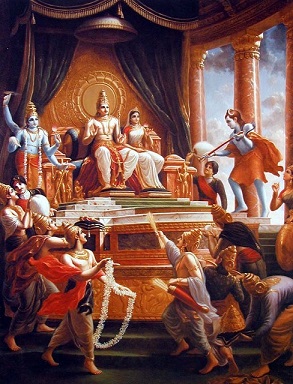
“Jugglery in the divine name of the creator was not possible for the Hindu king as the race never allowed the craft of the priest to be united in the office of the Ruler…the matter of constitutional powers of the king, in fact, lay beyond the province of the ritualist and the priest.” [4, 43]
The power of the Monarch has been noted in preceding articles. However, there has been some confusion and conflation of the role of purohith with manthri. The 2 are distinct and should not be invested in the same individual or those of the same class. The governance function is quite different from the clerical function. Indeed, questions of dharma, statecraft, and war are separate specialities, the latter 2 of which require actual field competence.
The only job of a Brahmin is to study and chant Vedas and then to teach Vedas to others. He should not earn money.#Periyava
— Sage of Kanchi (@haraharasankara) January 17, 2017
Nevertheless, elections were not unknown in monarchies.
“In the first book of the Mahaa-bhaarata we actually find a free election of an emperor by a collec-tion of kings and his consecration to that position.” [5, 347]
Sabha
The Sabha (court) has often been confused with a Varga (council) or Parishadh (Minister’s Cabinet). In truth, it had no function for check and balance. It was merely the ceremonial array of ministers, advisers and nobles, in full public view at the Aasthana (Hall of Public Audience) vs Antharaala (Hall of Private Audience).
“Ministers came and went but the king remained.” [5, 340] “It was perfectly un-derstood that all ministers including the mantrinah served at the king’s pleasure, and the latter was not bound to accept their advice. The monarch indeed headed the sys-tem and was in full charge of the civilian administration, armed forces, and the legal system. All appeals for justice, from the lowest level of the village up through the hierarchy of officials, lay with the king.” [8, 75]
Unlike today’s spirit of bureaucratic in-fighting, this was original notion of ombudsman or lokapaala.
“A very distinct appointment was that of kanta-kasodhaka (literally, ‘remover of thorns’), who could not only help eliminate bu-reaucratic bottlenecks in
specific cases but also bring matters of importance or of severe neglect directly to the attention of the mantrinah or the king.” [8, 75]
These lokapaalas would in turn typically preside over the administrative court, versus dharma court. Dharmasthaaniya (civil court) Kantakasodhana (criminal court). [4, 67]
Excessive emphasis has been placed in recent centuries on “ministers guiding kings”. But ministers and councillors are mere servants of the king. They deserve basic respect, but he is free to ignore their advice. Even “Kautilya holds different views. He says the amaatyas with vices can be easily replaced by those who are destitute of those vices. The king being the chief among all the seven organs of the state can make them virtuous.” [4, 66]
As stipulated previously, manthris are distinct from amaathyas, and both are subject to the king and his authority.
“Only those who were found successful in all the tests conducted secretly to test their ability and loyalty were appointed as ministers. Whereas, on the other hand, the man[t]rins were members of the council of ministers, as well as advisers of the king. The rank and position of mantrins were higher than those of the amaatyas.” [4, 68]
“The number and designations of ministers and various other officials (appointed to assist the king in running the administration of the state) of the Mantri-Parishad, actually varied from age to age. The Mahabharata refers to members of the Sabhaa (Sabhaasadas) designated as Sahaayas (the Ministers, Amaatyas, or colleagues), Sabhaayas (or the Ministers with portfolios) and the paricchada amaatyas (who were of native origin, learned, wise and loyal to the state). ” [4, 70]
Samithi
Another institution that is often conflated with a legislative body is the samithi. This a people’s assembly or popular townhall where grievances could be aired, and” succession was generally hereditary but that ‘when a failure of heirs occurred in the royal house, the Indians elected their sovereign on the principle of merit.” [5, 185]
“The king was elected by the people assembled in the Samitee. The people assembled are said to elect him according to rulership unanimously. The Samitee appoints him. He is asked to hold the state. It is hoped that he would not fall from his office. He is expected to crush the enemies.” [5, 186]
The authority of the King was therefore derived from this popular consent.
“According to the last verse of a hymn in the Rig-Veda corres-ponding to the song of election quoted above, he becomes the sole taker of taxes from the people; he becomes the king of the people. The ‘sole taker’ signifies that the regular tax, as a royal due, had already developed. No one else but the king alone was entitled to it. The king is asked to ascend a raised seat which is signi-ficantly described as the highest point of the body of state. It shows the idea of state as organism is realised as early as the Vedic kingship.” [5, 188]
Unlike today wherein Indian politicians seemingly continue their political careers into their 90s, the ancient Vedic principle was rooted in the idea not only of varna but also ashrama.
“The king thus accepted his royal authority for the whole folk including equally the king-makers and the artisans. The king as elected for his whole life.” [5, 189] However, a wise king abdicated before he entered the twilight of his life. He should descend from the throne (unless the kingdom is in peril and needs him) in the last fourth of his life and enter vaanaprastha.
The King was expected to preside over the samithi. It is from this popular body that the democratic will could often be expressed.
“The Chhaandogya Upanishad, one of the youngest Vedic works, relating the visit of Svetaketu Aaruneya Gautama to the Samiti of the Panchaalas, mentions the King (Pravaahana Jaivala) as present in the Samiti.” [5, 13]
Unlike the cacophony of the modern parliamentary system, the goal was euphony and harmony.
“In the Atharva-Veda, VI. 64, which is a prayer-hymn for union and concord, and also in the Rig-Veda (X.191.3) we have a prayer for a ‘common Samiti’ and ‘common policy of State’ (Samaano manthrah samitthih samaanee), a ‘common aim and a common mind’ (samaanam vratha saha vittameshaam). This indicates that matters of state (‘manthra’) were discussed in the Samiti. The King attended the Samiti, and it was thought necessary that he should do so. The Rig-Veda has ‘like a true king going to the Samiti’ (Raajaa na sathyah samitheeriyaanah). ” [5, 13]
Confederacies
https://x.com/haraharasankara/status/1382491360318648321
There is some confusion today regarding the terms Confederacy, Republic, and Democracy. Pontificating pundits among praanth pracharaks ostensibly run their mouths and destroy meaning itself. Today they are inventing all sorts of neologisms and malapropisms. Raajya as one knows is Kingdom, Saamraajya is therefore Empire, this in turn makes Raashtra state (hence their advocacy of “Rashtrawadi” as statism, and not just for tribal “janjatiyas!”—another malapropism for the correct term of girijana/vanavaasi. Sanghis, therefore, are the last people who should be lecturing on “rashtreeya!” and “kshtreeya!”. All the windbaggery in the world won’t change the fact that the terms are correctly pronounced “raashtriya” and “kshathriya“.
Therefore, sangharaajya in fact refers to a confederacy, which is a group of political units that co-govern as a confederal polity, with limited interference in individual units. A Ganaraajya refers to a republic, wherein there is no monarchy. This may come in the form of a democractic republic (i.e. Modern India) or an aristocratic republic (i.e. the republic of the Licchavis). Finally, there are jaanaraajyas/janaraajyas (which are democracies with popular/public rule). These are exceedingly rare because direct democracy is so onerous and time consuming. Even ancient Athens, the consummate direct democracy, only had 300 citizens (and many, many chattel slaves).
Small, petty kingdoms or feudal polities might band together to form a confederacy. The Mallas and Kshudrakas of the Alexandrine period are said to have banded together to oppose invading Macedonian Greeks.
Dynasties existed in the ancient Republics of India, known as Ganas. In later periods, this was adapted into Jina Dharma as the Jain Ganas. Sangha finds its equivalent in Bauddha Dharma as a religious governing body, known as the Buddhist Sangha. Indeed, the Sakyamuni himself hailed from one such eminent Kshathriya Vaidikaarya family: the Sakyas of Kapilavasthu, with its ruler Suddhodhana.
Since ancient times, eminent Noble families had responsibilities beyond their own well-being and luxury. Indeed, with their wealth and influence came responsibility to govern the state, or at least contribute to its governance and administration. The whole wealth of the state did not belong to individual vamsas to plunder or maladminister.
The Sakyamuni, better known as The Buddha, was born to a confederal people. An historical anecdote is illustrative of the efficacy of this form of government. When Ajatashatru, the King of Magadha sent his Chancellor to ask The Buddha whether it would be advisable to invade the Confederacy of the Vrijis (Vajjians), the Enlightened One answered as follows:
- (1) “So long, Aananda, as the Vajjians hold full and frequent assemblies:
- (2) “So long as they meet together in concord and rise in concord and carry out Vajjian business in concord…
- (3) “So long as they enact nothing not already established, abrogate nothing that has been already enacted and act in accordance with the ancient institutions of the Vajjians, as established in former days:
- (4) “So long as they honour and esteem and revere and support the Vajji Elders, and hold it a point of duty to hearken to their words:
- (5) “So long as no women or girls belonging to them are detained among them by force or abduction (i.e., law and not force reigns):
- (6) “So long as they honour and esteem and revere and support the Vajjian Chaityas (sacred monuments)…
- (7) “So long as the rightful protection, defence and support shall be fully provided for the Arhants amongst them…
“So long may the Vajjians be expected not to decline but to prosper.”
Hearing this, the Chancellor murmured ‘the Vajjians cannot be overcome by the King of Magadha’. The only possible policy is to create disunion.” [5, 41]
Beyond the Sakyas, Vrijjis, Videhas, and Licchhavis, other confederal societies included the Koliyas, Mallas, Moriyas (of Pippaleevana), the Bhulis, the Bhargas, the Kshudrakas, and the Arjunaayas. The Sakya council was composed of 500 members, and they were said to have had a law where each citizen could have only 1 wife. [5, 43]
“The Political history of the Lichchhavis is too well known to be repeated here. They were very powerful. They sur-vived the Saisunaaga and the Maurya empires and helped in building up the Gupta empire. They founded a curious const-itution in Nepal” [5, 50] According to the Roman Historian Curtius, “to lead the united army a brave warrior of the Kshudrakas was selected, and that he was an experienced general.” [5, 61] Therefore, generalship (something sorely lacking for most of the past millennium) was something that was emphasised. Kootaniti (strategy) is an essential part of not only ancient war, but a necessary aspect of Governance today.
Republics
“Thus we find Hindu republics existing and flourishing as early as the age of the Aitareya Braahmana.” [5, 113]
The proper republic finds mention in the Mahabharata.
Regarding Sri Krishna and the Yadava clan, “the Vrishni-Andhaka league had a join federal constitution where executive power was vested in two raajanyas, with their respective vargas, representing each division; and this was probably the Raajanyaka of Amara. Kaatyaayana ment-ioning’ the Party (varga) of Akroora’ and the ‘Party of Vaasudeva,’ undoubtedly draws on old literature. Akroora was an Andhaka leader; and it seems that at one time he was one of the two presi-dents of the Federal Council. This explains Krishna’s saying in the Mahaabhaarata that he holds authority or Aisvarya to the extent of one-half only (ardhabhokta).” [5, 36]
Republican formations were common, particularly in the Northwestern portion of India. The Yaudheyas are among the best known.
“The order of the republics as enumerated by Asoka (Yonas to Pitinikas) is from Afghanistan to Gujarat (North-Western), and then it goes out of the India proper of the Hindus, to the Oxus Province which is the region of the Andhras (Northern Andhras) and Paaladas (Paaradas).” [5, 118] The reference to Jalaandhras of Jalandhar vindicates Pandit Chelam. It is these who are in fact the true “Sons of Vishvamitra”, whereas the Southern Andhras are the sons of Nripathi.
“The Andhras of Asoka could not be southern Andhras. Two generations before, in the time of Chandra-gupta, the Andhras were a great kingdom, and second in power only to Magadha.” [5, 118]
It should be noted that these northern Andhras of Jalandhar were republican in nature. These had some decided advantages.
“The Andhras were next to Tukhaara” [5, 128]”These northern Andhras were self-governing (see below) while the Daksinaapatha Andhra, according to the evidence of the Asokan inscriptions and of the Asokan stoopas, noticed by the Chinese pilgrims, seems to have been under the imperial government.” [5, 126]
“...their praise is confirmed by the Mahaabhaarata, some of them, at least, were careful to preserve precedents of decided cases in books. Even their sworn enemy Kautilya says that a republican chief in his state has the beneficial propensity of justice.” [5, 163]
Periodically menaced by Imperial monarchs, these republican formations sought to safeguard their liberty via various leagues and alliances.
“And when they formed an offensive and defensive league they were regarded, as Kautilya ‘invincible’. Hindu Republics were prone to form leagues. The league of the Six-Trigartas of the grammarians, the league of the Kshudraka-Maalavas, the league of the Videhas and Lichchhavis (the federated Vajjis of the Paali Canon), the league of the Andhraka-Vrishnis are examples in point. According to the Mahaabhaarata it was almost impossible for the enemy to crush federal republics.” [5, 163]
Unlike today where money power seemingly dominates politics, varnashrama dharma ensured the opposite arrangement.
“A citizen had the ambition to be the leader of the trade association or of the guild-merchant, failing to be a political leader…The art of peace and the art of war, discipline and perseverance, habits of ruling and being ruled, thought and action, home and state, went hand in hand. A highly practical and keen individual and citizen would have been the result of this life. With these virtues and this culture, there is not wonder that the Mahaabhaarata says that their alliance was courted, and that they took delight in reducing their foes, and saw to their own material prosperity.” [5, 163]
Much like Cincinnatus of the Roman Republic, these eminent citizens of northwestern republics would return to tend to their fields when they were not tending to the matters of state.
“they were not only good soldiers maintaining a very high tradition of bravery and skill in war, but also good agriculturists.” [5, 164]
“Separation of powers and functions, which will be noticed in the data given above, for instance, command of the army and executive government amongst the Patalas, judiciary, military command, and executive authority amongst the Lichchhavis, similarly elective generalships in several states” [5, 164]
“The evidence of the Chatus-Satikaa of Aaryadeva, a frag-mentary manuscript of which was dis-covered by Mahaamahopaadhyaaya Hara Prasad Shastri, establishes that the elected ruler in a Gana was regarded as a servant of the Gana (ganadaasa). The same principle is declared by Krishna in the discussion cited in the Mahaabhaarata. ‘It is the servant’s duty (daasya) which I have to perform under the name of rulership (Aisvarya-Vaadena).” [5, 165]
It should be noted that unlike modern India, most if not all of these republics (despite voting and consensus) were not democratic (i.e. open to most/all free classes) or bearing marks of universal suffrage, but rather, were aristocratic (kshathriya) in nature. This is because per varnashrama dharma, Kshathriyas were not merely warriors, but in fact, the actual ruling class.
Aristocratic Republic
“Hindu literature calls such aristocratic element of Gana a Kula (literally, ‘family’). the Maha-bhaarata treats ‘the Kulas of raajaas’ as belonging to the class of ganas. The Artha-Saastra refers to the raaja-kulas, ‘ruling Kulas’ or ‘Kulas of Raajaas’ as being of the nature of Samghas (Samgha-dharmins.” [5, 72]
This is in line with the martial nature of these formations. Unlike today’s milquetoast, man-teeted ministers, the republicans of ancient ganaraajyas actually kept in shape, much like Krishna Deva Raya of Vijayanagara.
“It seems that the republicans consciously paid attention to physical culture. This the Saubhootas and the Kathas even enforced by the laws of their constitutions.” [5, 74]
“The Jaina Sootra also uses the form Mallak(i). The ‘Vrijikas’ included Vrijis and non-Vrijis owning a common Vriji allegiance, which would include people originally conquered by the Vrijis or people voluntarily amalgamated with the Vrijis. It is thus evident that the republics extended citizenship to outsiders. This will explain the enormous territorial growth of the Maalavas and the Yaudheyas who covered vast expanses of land in early and later centuries.” [5, 100]
The aristocratic nature of the system is again in evidence when one notes the makeup of the judiciary.
“The Kula-Court was presided over by Kulikas or aristocrats. In a mixed constitution of aristocracy and democracy we may find a Kulika-Court. Such a court, as a matter of fact, we do find amongst the Vrijis, where there was a Board of Eight Kulikas to investigate into criminal case. The law books prescribe that an appeal should lie from the Kula-Court to the Gana-Court.” [5, 100]
The Gana (host) of the Ganaraajya (republic) presided over the entirety of the janaah (people) or janatha (nation).
“The disquisition in the Mahaabhaarata makes it clear that ‘Gana’ refers to the whole body politic, the entire Political Community”…”The governing body was composed of Gana-mukhyas and Pradhaana (Chiefs and President) whose jurisdiction it was to conduct affairs of the community (verse 23). Resolutions of State were matters which remained in their hands (verse 24); they held meetings and discussed those Resolutions (25). They also saw to the administration of justice (27). Thus the executive was a distinct body inside the Gana.” [5, 103]
Bheeshma in the Santi-Parva on Ganas:
“Bheeshma said: (10) ‘Greed and Jealousy, O King, are the two main provoking causes of enmity amongst the ganas, as well as amongst the Kulas of Raajaas.'” [kp, 106]…”Ganas, therefore, should always exert themselves through the system of confederacy.” [5, 106]
“In good ganas, Elders-by-knowlege encourage mutual subordination; behaving with com-plete straightforwardness (to on another), good ganas attain happiness all round…ganas prosper because they discipline their sons and brothers (members, along with the younger generation) and always train them, and they accept (only) those who have been well trained.” [5, 107]
“Ganas prosper because they always pay due honour to (their) officers who are wise, heroic, enthusiastic and persevering in the execution of their duties. (21) Wealthy, heroic, versed in the Saastras, and accomplished in the art of weapons, ganas help the helpless ones…across miseries and calamities.” [5, 107]
“Hence the Leaders-of-the-ganas are to be obeyed through the President.” [5, 107]
https://x.com/haraharasankara/status/1377780317856096257
Democracy
The concept of democracy, again, can be a confusing one. After all, demos refers to “people”. The closest equivalent to that in sanskrit is “janaah“. But not all the people typically ruled (i.e. men, women, children). In fact, in most societies, even in the early Republic of the United States, it was only propertied males who were considered voting “citizens”.
The panchayat, village polity, is considered the closest counterpart to direct democracy. These were typically self-governing rural agglomerations as central interference was rare or would alternate on the basis of internal conquest between warring kingdoms.
“Vote was called Chhanda. Chhanda literally means ‘wish’, ‘desire’. It connotes that in voting, a member was expressing his free will and voice.” [5, 90] Domicile (nivaasa), place of origin (abhijana). [5, 100]
Voting was a feature in not only village democracies, but also large republics, and confederacies.
https://x.com/haraharasankara/status/1384122105755668489
“If the Samgha adopted a resolution unanimously, the question of voting did not arise; but if a matter entailed a division in the opinion of the members, speeches were made and the Procedure-of-Majority was observed. The opinion of the greater number (bahutara) decided the matter. The procedure is called (Ye-bhuyyasikam in Paali. The Sanskrit restoration would be Ye-bhooya seeyakam, the ‘Those (who-were) -most-Procedure’. The voting was carried on with the help of voting-tickets which were coloured. The tickets were called Salaakaas or pins and the voting was called the pin-taking (salaakaagrahana). There was a Teller, ‘Salaakaagraahaka’ taker of pins (tickets) appointed by the whole Samgha who explained the significance of the colours, and took the vote either secretly or openly.” [5, 91]
Despite the Buddha’s praise and preference for Kshathriyas, the monks were drawn from all classes.
“Every free man in a Samgha was equal by-his birth and every family was equal, for political purposes. A passage in the Pali Canon also takes the Kula as the basis of franchise.” [5, 98]
Perhaps the closest equivalent to this democratic ideal in a political (as opposed to religious formation) was the democracy of the Ambashthas (said to be mixed in background).
“The Ambashthas as a political community are mentioned by Patanjali and the Mahaabhaarata. The Puraanas say that Ambashtha of the House of Aila founded a dynasty in the Punjab.” [5, 63]
https://x.com/haraharasankara/status/1290173100999376897
“The democracy of the Ambashthas had a Second House composed of elected elders. They elected their generals also. Apparently every man in the community had direct franchise, the Greeks calling the constitution a democracy.” [5, 69]
As Malampalli Somasekhara Sarma writes, wholesale assumption of administrative roles was not part of traditional dharma of brahmanas:
“It was during this period that the cleavage, between those who were employed in State service, and those who stuck to their duties as enjoined by the Sastras, became more marked that before. In fact, some of the brahmans accepted employment in State service from very early times, and acted as accountants, generals and advisers. Nevertheless, they maintained their braahmanical ritual while following a ksatriya career. A study of the Eastern Caalukya inscriptions makes this fact clear. Those who were appointed to a niyoga, commission, charge or office, were called niyogins, officials or functionaries.” [6, 263]
Therefore, those clamouring for Vedic Raajyas would-be well advised to understand the full meaning of this terminology. To go back to the Vedic era, or to a Vedic era form of government, would not mean “Priest Kings!” or “Vedic Theocracy!” [an Adharmic concept], but would mean a strict interpretation of varnashrama dharma not only for those at the very bottom, but also for those at the top. And even here, above the common brahmana is the Raaja as the head of society. The benefit in the former times is that Maharishis such as Vasishta and Vishvamitra once walked among us, with Rishis guiding Raajas. But as Apastamba muni himself stated in no uncertain terms, there are no Rishis born in the Kali Age. Those who claim they or are others in the present time are “Rishis”, are corrupting Dharma.
The only job of a Brahmin is to study and chant Vedas and then to teach Vedas to others. He should not earn money.#Periyava
— Sage of Kanchi (@haraharasankara) January 17, 2017
To prevent the corruption of Dharma, Sri Krishna stated in the Bhagavad Gita that the system of varnashrama dharma was developed. But this cannot be a system wherein one can have one’s cake and eat it too. Built into the system is the assumption that varna was linked to guna and guna was linked to janma. But as stated in the Puranas, and as we are increasingly finding out through individuals from the last Sunga king to today’s N.D. Tiwari, guna is no longer exclusively linked to birth. Therefore, it becomes imperative for people to understand that any new dharma system will result in an adaptation of traditional dharma to the present time. If beef-eating braahmanas are not being bahishkar’d, on what basis can some pseudo-trads seek to discriminate against dalits? “IQ” as they claim?? Laughable…
https://x.com/haraharasankara/status/1347520931414073356
Poets after all, can’t be Potentates. The notion of poets guiding kings is also risible—they merely provide entertainment. But we live in an era where even vidusakas are being rehabilitated as “guides” to kings, as though kings had no intelligence of their own. But lust for power leaves none untouched in the kali age, at it appears scholars are no exception. Bhagvan Ram was a master of Saastra and Sastra alike, and Sri Krishna outsmarted all, even Acharyas like Drona.
Those who wish to command, must first learn to obey http://t.co/T68LZIoUYh
— AndhraCulturalPortal (@AndhraPortal) September 26, 2014
Therefore, to correctly understand historic forms of Indic government, one must understand the spirit of Dharma. When the spirit is correct, then almost any plausible form of governance, can be adapted to Dharma’s purposes, even if it not Vedic. It is mostly a question of societal will. So which forms were utilised in the past? Which are being utilised in the present? In the guise of democracy, corporatocracy and cliocracy appears to be the norm, much as “people’s republic” remains the official label of a communist country.
Conclusion
https://x.com/haraharasankara/status/1370713757492645890
Are modern republics and representative democracies true democracies? This is question asked by many? After all, in capitalistic societies it is money that talks—literally (as one might reference the American Supreme Court Case of Citizens United). Where money becomes speech, and free speech is deemed unlimited, is it capital that rules? If so, are today’s democracies in fact plutocracies or corporatocracies with the mere ritual of voting?
https://x.com/haraharasankara/status/1370532561022226436
Greed is not good. How could it be? Today, sanghi scumbags are rebranding capitalism as “dharmanomics“—appropriating under their cliocratic corporatocratic hands the hard work of others. Caste supremacist tribal nepotists have managed to hawk their wares under ever-changing labels so long as the same colonial class of yavana pundit mlecchas (dating back to just before Varahamihira) continue to control the body politic masquerading as “Veda Braahmanas”. But ravan-bhakths can never be Veda Braahamanas, how could they be? They are the brahmarakshasas of the present time who mar and sully the venerable name of Vaidika Braahmanas. It is they who were the root cause (and purveyors) of anti-brahminism.

To get the politics right, one must get the culture right. But to get the culture right, one must get the spirit right. Spirit determines attitude, and right now, the attitude of the average self-proclaimed, social-media digital ‘dharmrakshak‘ stinks.
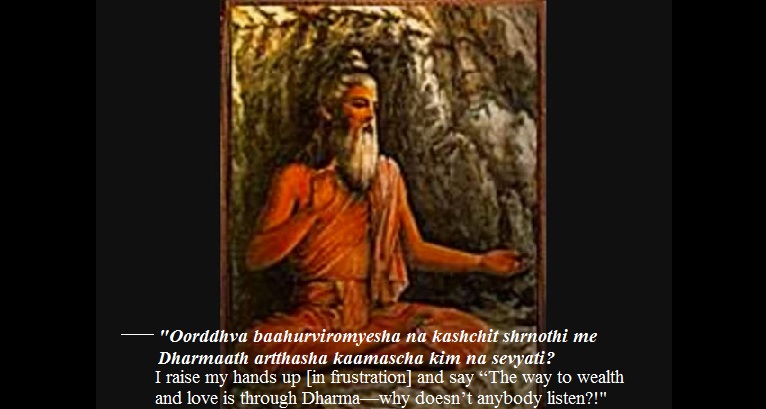
For democracy or republicanism to rise again in today’s materialistic system, the notion of civic duty must again come to the fore. And duty in Bhaarathavarsha has been and always will be centred around one concept:
References:
- The Ramayana
- The Mahabharata
- Sharma, Ram Sharan. Aspects of Political Ideas and Institutions in Ancient India. Delhi: MLBD. 1991
- Singh, G.P. Political Thought in Ancient India. New Delhi: DK Printworld. 2005
- Jayaswal, K.P. Hindu Polity: A Constitutional History of India in Hindu Times. Delhi: Chaukhamba Sanskrit Pratishthan. 2005
- Malampalli, Somasekhara Sarma. History of the Reddi Kingdoms.Delhi:Facsimile Publ. 2015
- Rao, C. V. Ramachandra. Administration and Society in Medieval Andhra (A.D. 1038-1538), 1976, Manasa Publications
- Sardesai, D.R. India: The Definitive History. Boulder: Westview Press. 2008
Brilliant,…, just utterly Brilliant!
There is so much I can comment on this piece, but one of my favorite parts of this piece was on how we can’t have poets (and people who are suppose to be “100%” sattvic) guiding Kings.
No doubt, flowery language and poetry sounds nice and beautiful. And No doubt, well-meaning sattvic Brahmins are a glue for Dharmic society (like all “4” varnas/many samudays are)
And despite how Sanghis may try to twist what I am saying, I am not saying Kings should not be cultured, Rajah Bhoja, Rajah Krishna Deva Raya, Maharana Kumbha, etc. we all fine patrons of the arts. – And ss you mentioned in your “Culture, the Cure for Stupidity” Article, we are not subscribing to the hyper-masculinity of the Sacred Band of Thebes or Amazons.
And of course, as we know from your Dhanurveda article, a king should have the ability to be inspirational and lead troops from the front, as Bahubali did when the army lost hope against the Kalakeyas.
But in general, I would say, I would not want a leader/King (especially in todays world) to have the poetic ability of people who are just suppose to be poets and/or fully sattvic.
As a real king should have the well-being of his people always in his hearts, and in todays cruel world, only a leader who can have a type of “rugged and steely spirit” in their heart can do what is needed to protect their people. Thats where the spirtuality of Shri Krishna comes in:
As a real leader does what is right, not what “looks” right. Its kind of like your mention to the Bulgarian quote in the “Koota Niti” article “To be a really good person, you have to be prepared to do a little bad”.
Its not that poets are not needed, they definitely are, leaders need them to rouse their spirits in times of hardships. But just like leaders need them, poets, brahmins and other such people need the protection of Kings to have the safety and calm needed to be able to delve into their creative spirit. That is true dharma- where we realize we are all interconnected as a Dharmic, Bharatheeya family.
Even today we praise “so called patriotic” ministers, some who even represent Bharat in the U.N. for speaking so “eloquently”, when behind the scenes they are gulamns to videshis. And while we should only be bhakts of Bhagavan, real leaders like Modi Ji, Yogi ji, Bipin Rawat ji, etc. who actually protected society, despite the constraints they are in, are sometimes not given the full credit they deserve because they don’t perhaps speak with the same “charisma” that pseudo-leaders do.
To end, I will say something that I actually mentioned in real life to some people recently. Not just in Bharat, but around the world, we endlessly praise the poets who describe the beauty of the forest, but forget about the firefighter(s) who perhaps may be a bit gruff, but actually put their lives on the line to protect the forest where there is fire.
Until we switch this mentality, we will keep living in a fake world with fake dharma.
Time to bring back the spirit of not Just Bhagavan Shri Ram and Bhagavan Shri Krishna, but also Maharana Pratap and Chhatrapati Shivaji Maharaj and bring back our dharma, together… and I know we can do it! Jai Bhavani!
Appreciate the kind words. Yes, it is apparent that many of those being entrusted with writing honest history are skewing the record and claiming credit for the achievements of others, while blaming others for their own sins. There is plenty of blame to go around to every community/region, but it is clear that kapalikas and kalamukhas masquerading as “traditionalists” are not only promoting “beef in vedas” & asura worship but harming the historical record. It is up to the real astikas and various classes of Hindu society, young and old, to correct this.
100%, Totally agree!