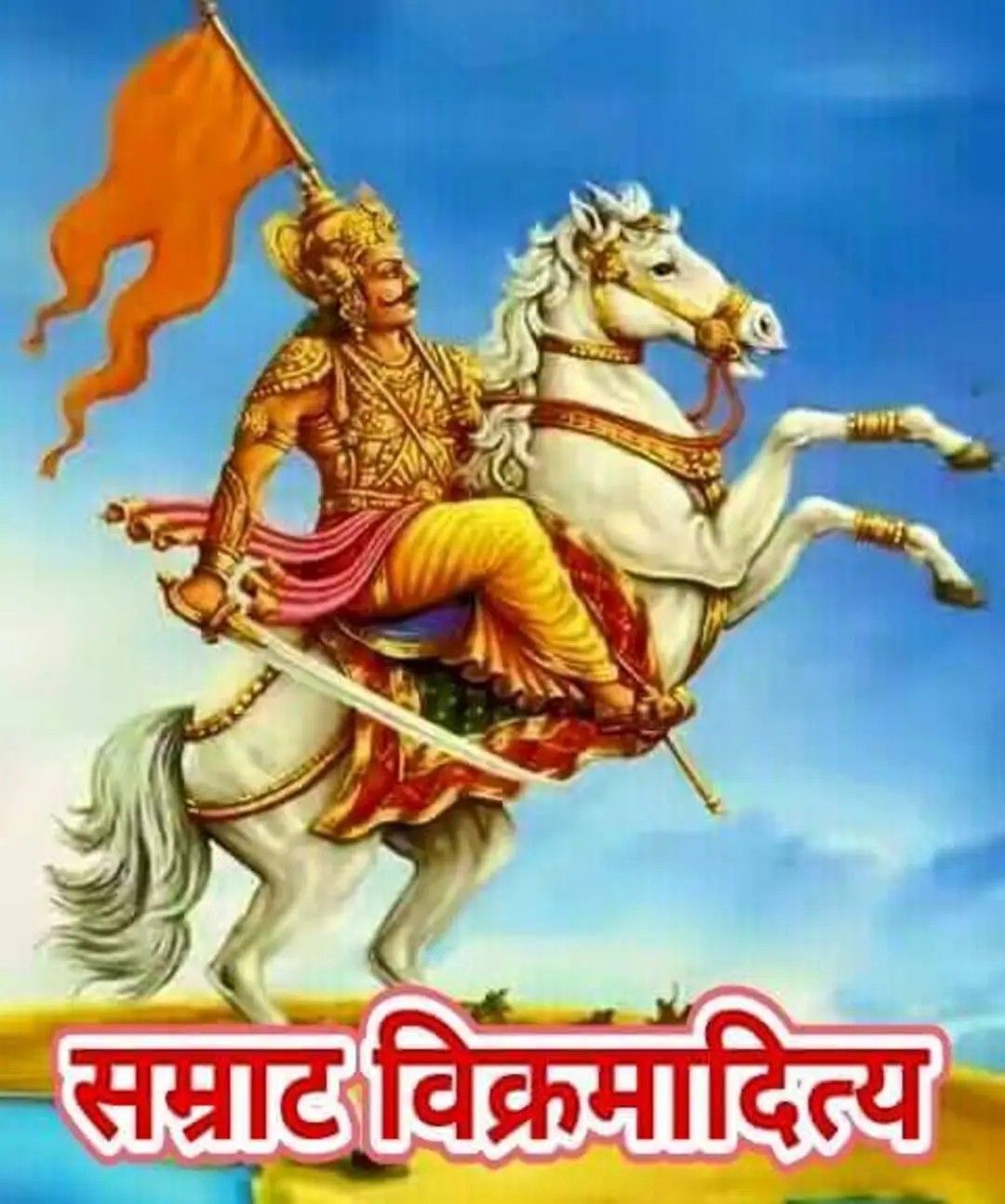
Subsequent to our article on the Agnivamsa, it is only natural that we then turn to its most illustrious icon. Few names in the History of Legendary India have as much cachet as Vikramaditya. And yet, as we wrote previously, there have been many Vikramadityas. The historical ones being Chandragupta II Vikramaditya and Sriharsa Vikramaditya. There is one, however, that is best known and most celebrated, and that is Vikramaditya Paramara.
Introduction
Perhaps the least known and least celebrated compared to the other 3 Agnivamsas (Prathihaara, Chahamaana, & Chaalukya), the Paramaara dynasty is not only the most brilliant, it is also the most iconic. No other clan cast as All-India an Imperial shadow as this one. Perhaps that is why the meaning of the name itself is “All-Slayer” (i.e. Para-maara). In turn, it’s most impressive King was “Sun of Valour”.
Although there is no doubt that Bhagvan Ram & Bhagvan Krishna will always stand head and shoulders above any ruler, in this portion of the Kali Yuga, there is one name that comes next only to them: Paramaara Vikramaadhithya. Alternately known as Vikramaditya Parmar/Vikramaditya Panwar/Vikramarka, he was the gold standard of kingship after the diamonds that were these Devas in Human form.
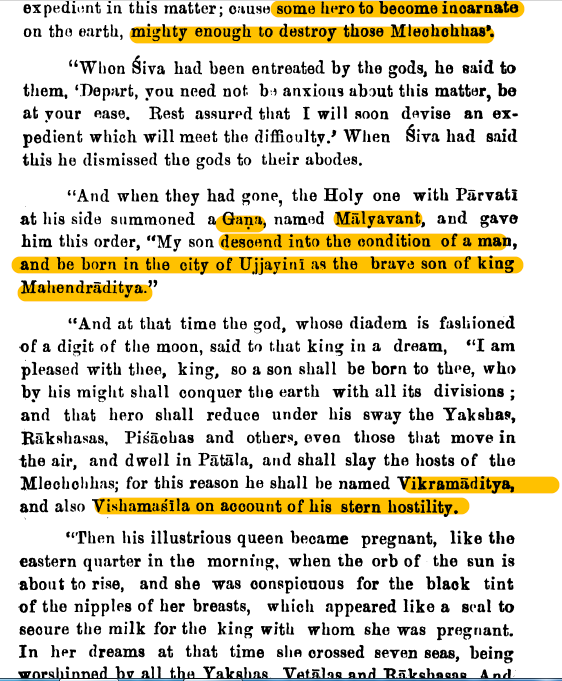
Contrary to Kapalikacharyas, Gana itself does not mean “republic”, nor does Gana Tantra. Ganarajya refers to “rule by host/group”, hence republic. Sangharajya refers to “confederation”. Ergo, Ganas are the host or army of Mahadev. This tendency for historians and distorians of the colonial era to turn everything into a parliamentary republic should be set aside. Vikramaditya Paramara was the Emperor (Samrat) of an Indian Empire (Samrajya).
Background
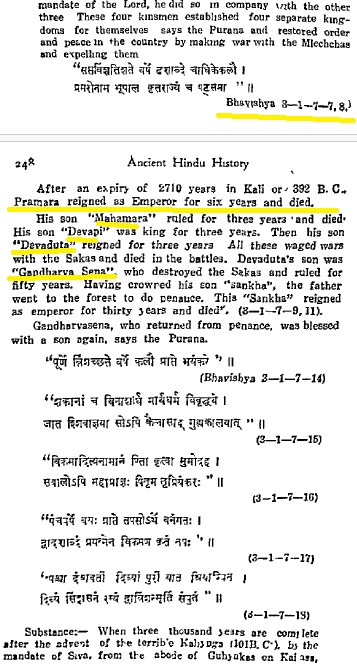
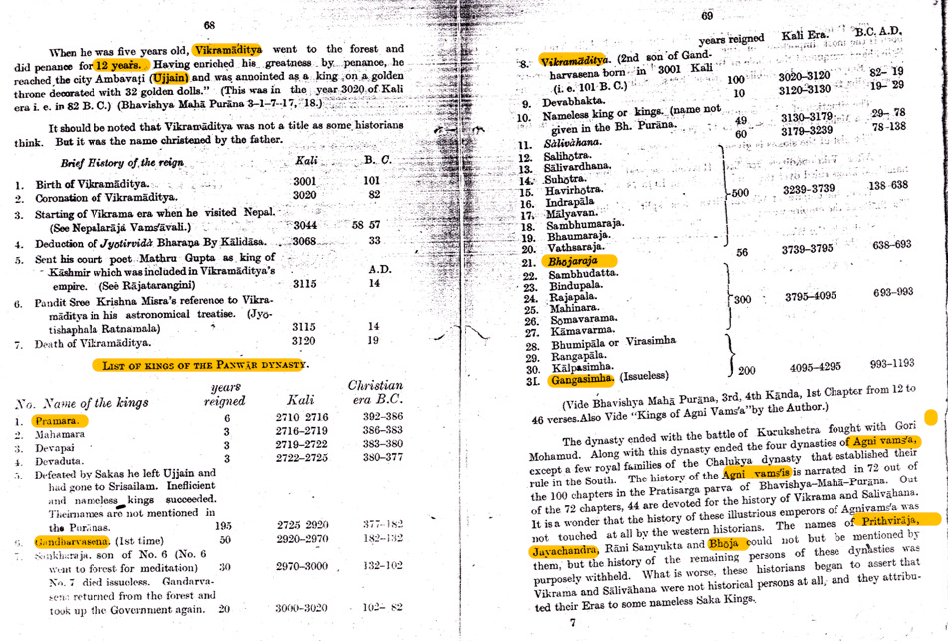
Gandharvasena Paramara (Mahendraditya) was father of Vikramaditya per the Brihat-katha manjari by Kshemendra. He was driven out of Ujjain in dubious circumstances. While some claim it was due to his own sins, others know that foreign invaders bent on atrocities need no invitation. Here were the Crimes of Sakas:
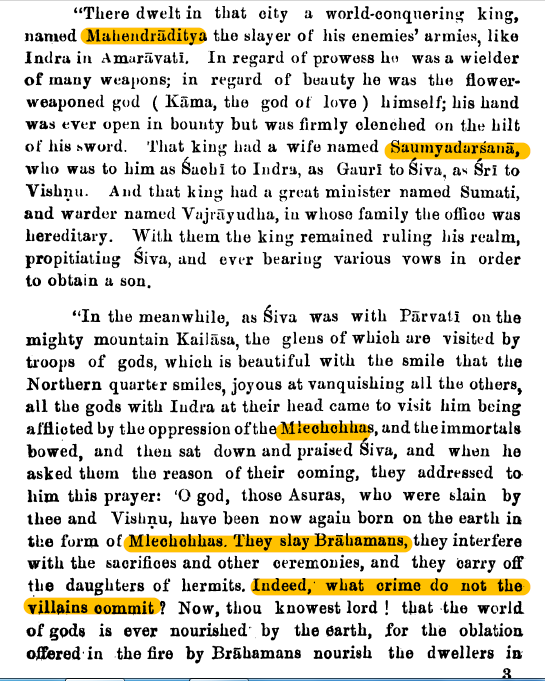
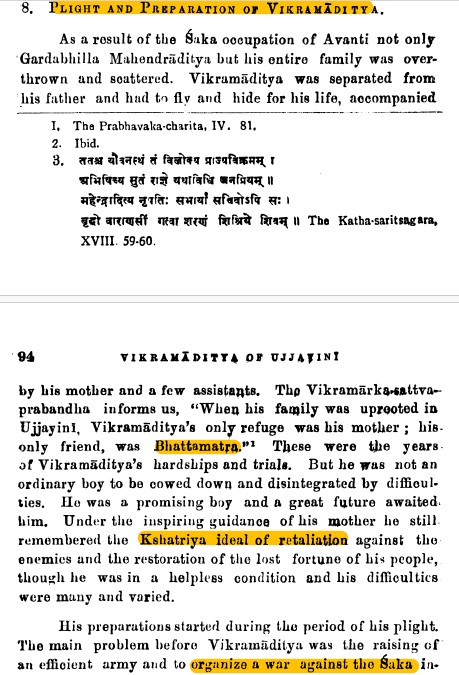
However, to what does middle India owe to this second Saaka invasion? In contrast to the full-spectrum slander of Indian masculinity, valour, and warfare, it was the shadyanthra (conspiracy) of a traitor. Only this time, rather than a Yavana Panditha Mleccha, it was a wronged and insulted Jainacharya.
Allegedly, his sister Sarasvathi, a Jain Nun of great beauty, was taken by Gandharvasena. That such an offence deserves punishment is without a doubt; however, is the most terrible option (fomenting foreign invasion) the correct one—even if punishment is merited?
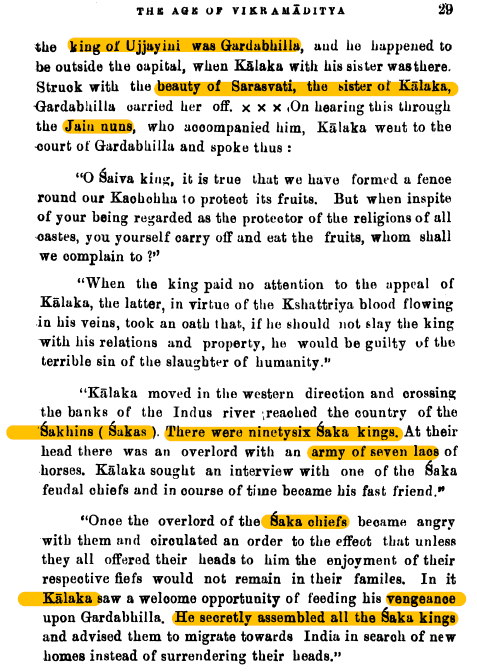
As we see again with the Brahmin Madhav Manthri who relied on delhi turks to overthrow the debauched Ratan Solanki, causing all of Gujarat to fall to thurushka invaders, here the Jain Kaalaka showed that one idiot’s need for revenge caused the suffering of countless people (Gujarat in both cases). The moral of the story is neither caste nor even religion, but rather that people not qualified to involve themselves in political affairs—should not. In Madhav Manthri’s case, he could have simply acted personally in revenge. If Kaalaka’s jain ahimsa prevented him from violence, then is not stirring up and aiding foreign invasion a worse violation of ahimsa?
That is the problem with selective morality and petty prathishodha—it leads to shadyanthras by the most cowardly and selfish people. Either seek prathishodha like a man, in person, or follow your own dharma and accept the whims of fate. Those who connive and conspire against their own countries are the worst among all traitors, and both Madhav Manthri and Kalanka should be seen in the same light. However, casteists who control history (like Kane & Altekar, who denied the existence of Vikramaditya) will prevent precisely that. [1, 33] Their goal, after all, is to rationalise their “jati’s” adharmic power without commensurate responsibility.
The Saaka invasion was naturally terrible, with consequences not only for the Kingdom of Malava/Avanthi, but for many other desas along the way. One man’s need for revenge (a Jain acharya at that…who should know better), eased the way for criminal invaders to oppress the general population and destroy the dignity of the Aaryas. This is a cautionary tale for prideful pandithas and conniving kautilyas who selfishly place their own needs above the public’s.
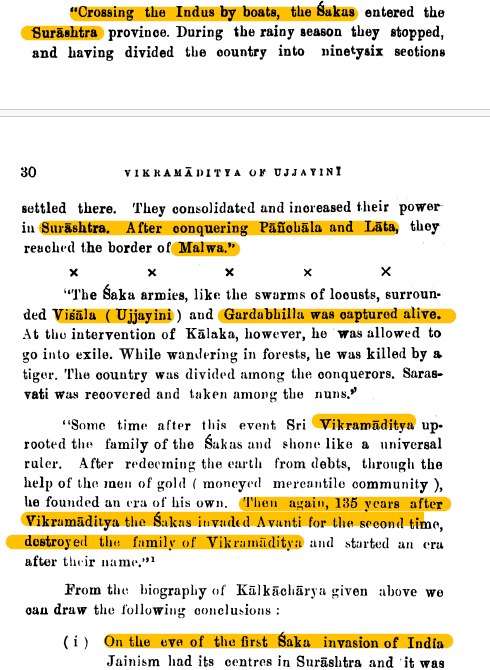
There is further testimony to this Saaka Invasion.
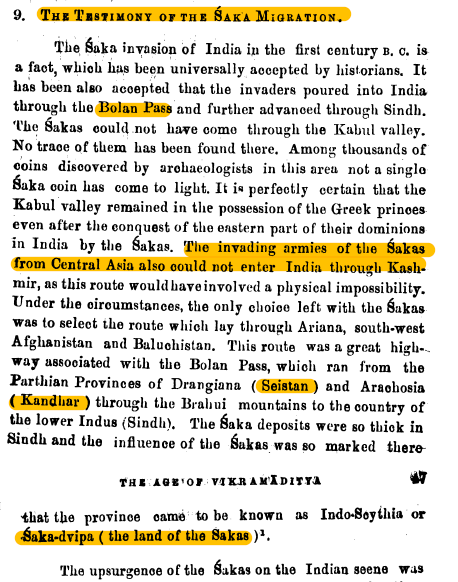
It is an odd piece of trivia today that there is a community that goes by the name Sakadhveepi—one wonders what role they had in this matter…
Vikramaditya’s Exile & Preparation
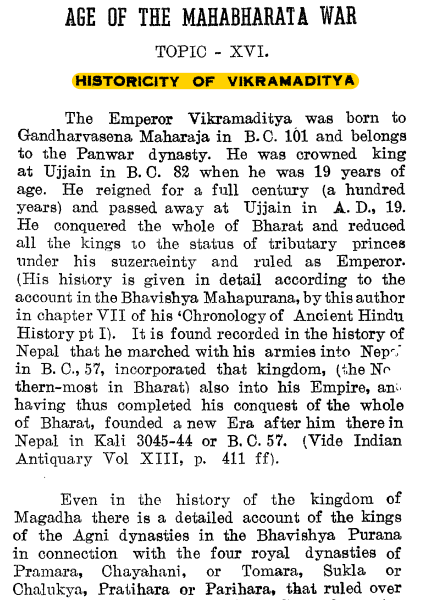
Born in 101 BCE and raised in the court of Avanthi, the Son of King Mahendraditya and Queen Saumyadarsana was slated to be next in line to the throne after his elder brother.
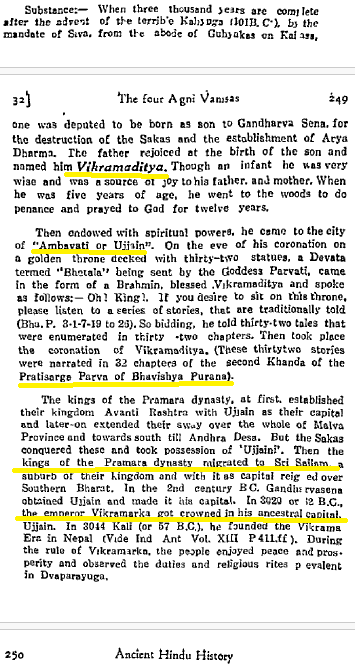
The defeat of his father by the Saakas, left a dejected Vikramaditya on the run, with his mother and friend. All of 5 years old at the time, he supplemented his school years, as per the Puraanas, by doing thapas. After 12 years, he returned to liberate Ujjain at the age of 17, and drove out the Saakas from Bhaarathavarsha.
Family Life
Like most of the kings and emperors of his time, Vikramaditya was much married. The 32 Tales of Vikramaditya’s Throne speak of various members of his harem, of varying degrees. Nevertheless, 2 of his 7 principal wives are mentioned elsewhere for their fidelity and lustre.
He had numerous children and was succeeded by his son Devabhaktha. However, his greatest descendant would be his great-grandson Saalivaahana.
Conquests
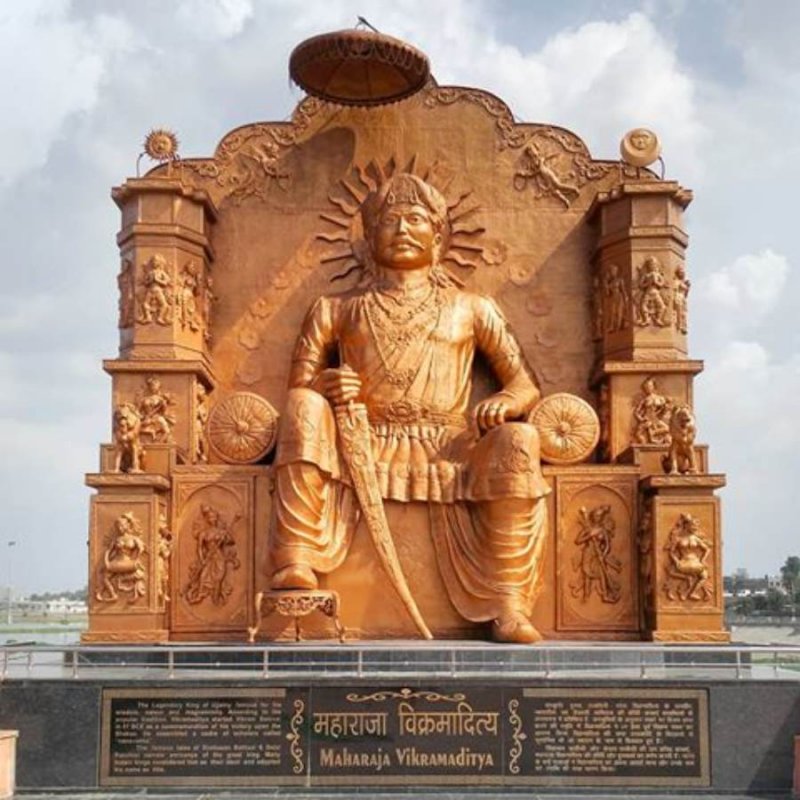
Vikramaditya organised a mighty Dharmic coalition in his camp. The names of these tributary kings run the breadth-and-depth of India. So formidable was this Imperial Host that even a Paarasaaka (Persian/Parthian) ruler Nirmooka is said to have submitted and join his host. Unlike the egomaniacally boozy bozos of today who praise mughal servants dying in heaps, this Paramara Emperor showed the true meaning of Dharmayuddha. Like Sri Krishna, he even brought over a Yavana Yuyutsu from the opposing side.
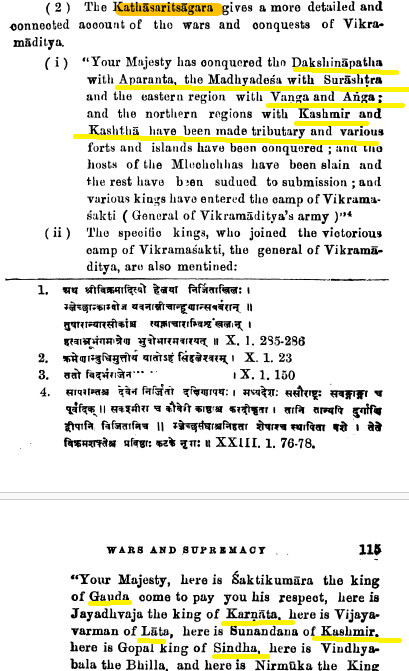
Along with Sinhala (Ceylon) and Kalinga (Odisha), Vikramaditya is said to have brought the Persians to heel. Indeed, their king was referred to as Nirmooka (meaning “dumb”) as his pahlavi/persian speech was deemed crude/unfit for Indians. This is in contrast to today where mughaliyas masquerading as raajanyas proudly bray about their knowledge of farsi. Both the Paramaras in the North and Sangamas in the South deemed Farsi as a harsh/guttural language unfit for Vaidikaaryas.
Indeed, learning was a matter of tremendous importance to not only Vaidikaaryas, but Vikramaditya himself. Unlike today’s kapalikacharyas who have the audacity to present Yoga Vasishta as somehow “completing the learning” or “enlightening” Sri Raama, who was Svayam Narayan in human form, the teachers of Vikramaditya’s era saw that they were merely occasions for his learning (i.e. as Sri Krishna merely gave the opportunity to his Acharya Saandheepani to “teach” him as part of his Leela). This is the danger of narcissism among braahmanas. The belief then grows that the student’s achievement becomes the teacher’s—which is not the case. It is a crooked conceit that dates back to Dronacharya, and deserves to die the literal dog’s death that he did.
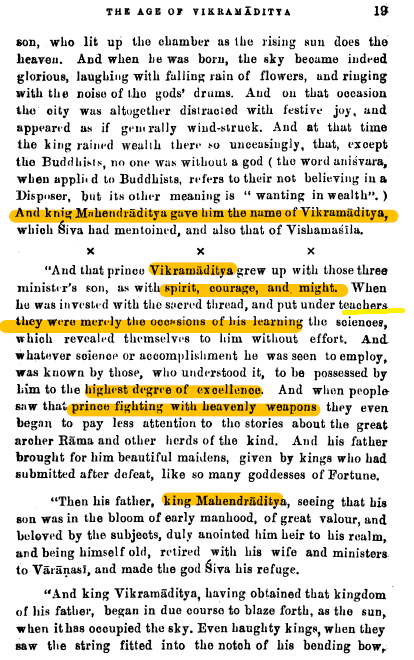
Maharshi Vasishta & Acharya Saandheepani were venerable instructors, but they were mere jeevaathmas in the presence of Paramaathma as Avathaara. However learned they may be, even Maharshis must humble themselves before the Supreme Being. It is only the atheist Charvaka Kapalikacharyas who have the boorish haughtiness to think themselves the tutors of “Tat tvam asi”. The “Sun of Valour” in many ways represents the return of the proper mentality of Vaidikacharyas among Vaidikaaryas. Anyways, we digress.
There are multiple sources for the real life facts behind the life of Paramaara Vikramaadhithya. They merit attention as not merely literary, but also Jain and Vaidika historical sources.
Sources
Jain Harivamsa
Jain Pattavalis
Prabandha-chinthaamani by Merutunga Soori
Prabandhakosa by Raajasekhara Soori
Kaalakachaarya Katha in Prabhaavaka-Charitha by Prabhachandhra Soori
Vikrama Charitha by Indra Soori
Vikrama Charitha by Deva Moorthi
Puraathana Prabandha Samgraha
Simhaasana Dhvathrimika by Kshemankara
Puraanas
Brhath Katha Manjari by Kshemendra
Katha Sarit Saagara by Somadeva
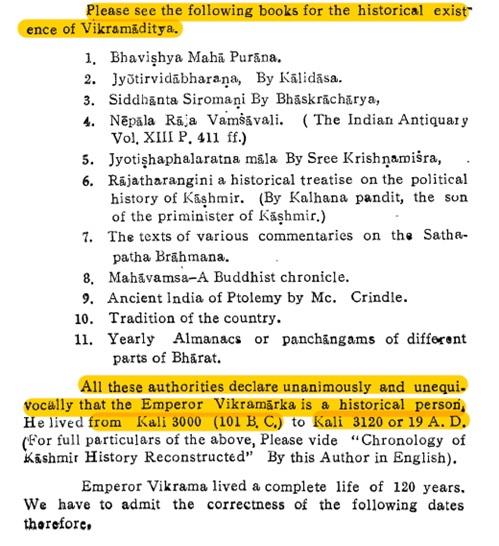
As one can see, the Puraanas are not merely “mythological”, but have a section that specifically contains historical data:
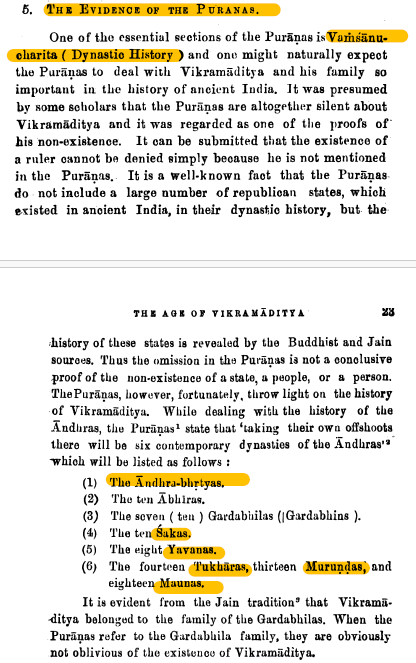
Thus, Vikramaditya Parmar is recorded not just by the semi-legendary Puraanas, but also by serious works of history and literature in the Jain tradition. And they should know, having played a central role in creating the adverse circumstances that led to Vikramaditya’s achievements. It is not that one community should be judged by one malefactor, but rather that one gain a correct understanding of criminal actors in history so that mistakes can be corrected and even prevented in the future.
Achievements
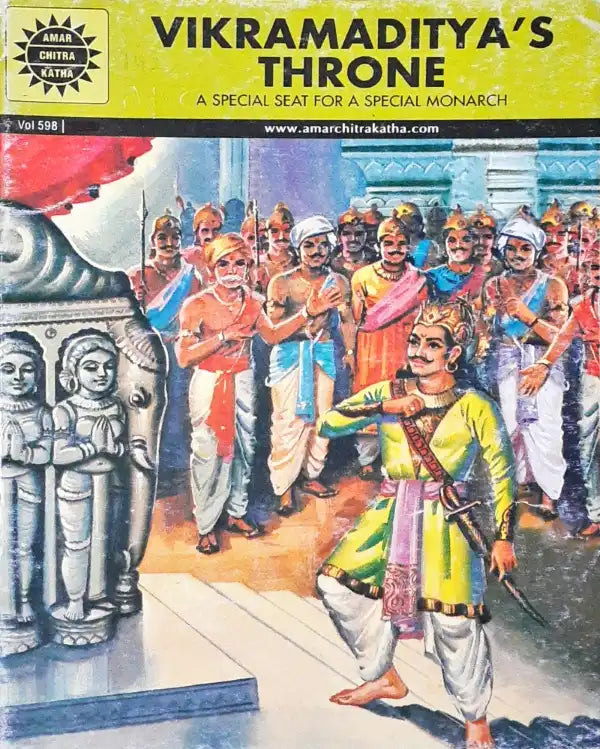
- Defeated and Drove out the Saaka invaders from India
- Conquered all of Bhaarathavarsha & ruled it under his Umbrella
- Crushed and reduced Persians/Parthians to submission
- Sent vast armies on Digvijay outside Subcontinent to establish Tributaries
- Re-established a dynasty that would finally destroy Saakas under Salivahana
- Ushered Cultural flowering at Ujjain via his Navarathnas (Nine Gems)
- Restored Vaidika/Aarya Dharma to prosperity & flourishing
Quite possibly no king has fired the imagination of orthodox Hindus more than Agnivanshi Vikramaditya. Is it any wonder that the jnu brigade had to pattern their beloved akbar and his nine gems on Vikramaditya’s original Navarathnas? “Raaja” Birbal is cast as a Rajput when his actual caste is yavan pandit—and even here, he is used to mock the mould of the great Tenali Ramakrishna of Emperor Krishna Deva Raya.
Vikramaditya’s most famous title was Saakaari or Saakaantha (‘Enemy’ or ‘Destroyer’ of Saakas).
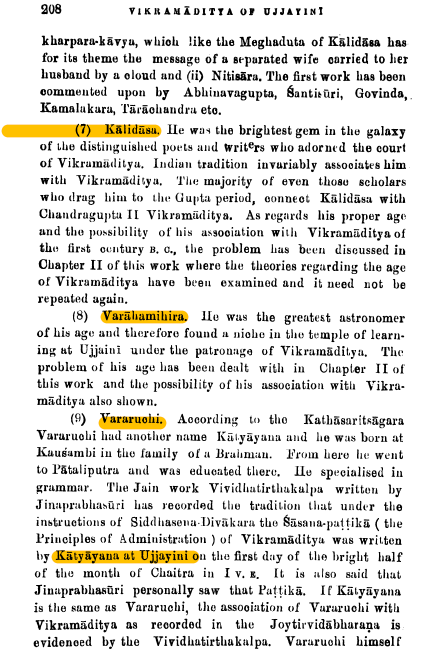
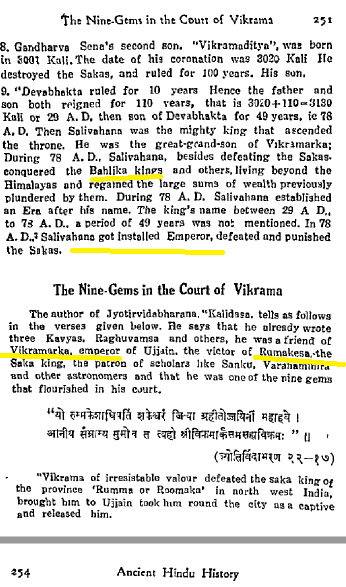
Among the Achievements of Vikramaditya is the cultural flowering at his court. Numerous luminaries populated Vikramaditya’s Sabha. These were Dhanvantari, Kshapanaka, Amarasimha, Samku, Vetalabhatta, Ghatakarpara, Kaalidhaasa, Vaararuchi & Varaahamihira.
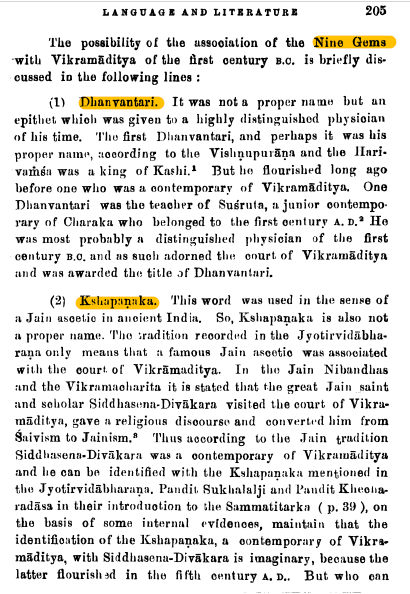
Their achievements span the breadth of learning, from Medicine and Poetry to Religion and Literature. The fact that there was a Jain acharya in his court even after Kaalakacharya’s betrayal, shows there were no hard feelings, and Jains were free of general persecution. In addition, the very word Amarakosha was underscored by this era.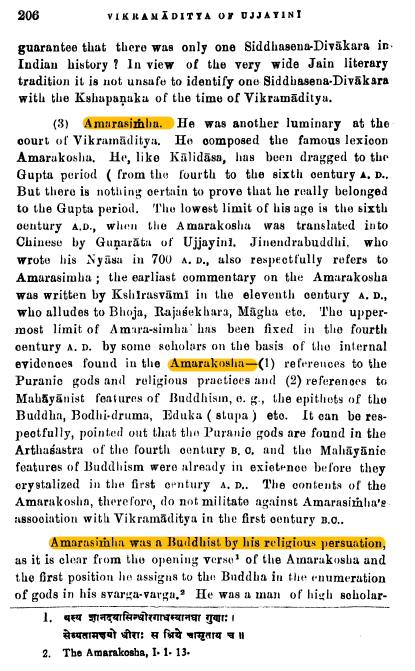 Other courtiers stood out for their mere presence and significance at the Imperial Sabha. The most interesting was the fact that there was a Vetalabhatta (perhaps the inspiration for the fantastical stories of Vikram & Vetaal).
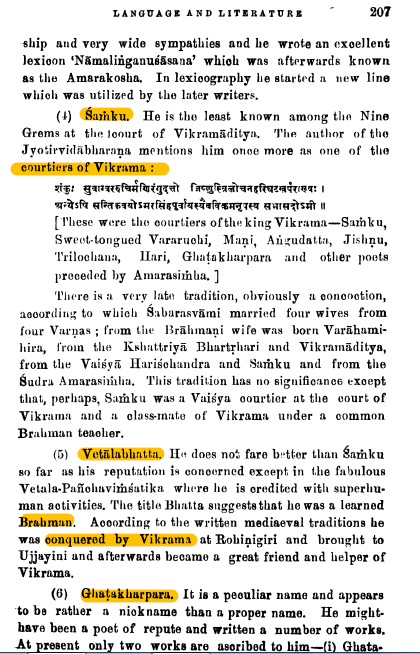
Even jyotisha and jyotihsastra stood out under Varahamihira.
What’s more, the prosperity of the Empire cannot be belied. With countless vassals and tributaries, the wealth poured in. As a skilled administrator, Vikramaditya controlled his bureaucrats sternly—rather than the other way around.
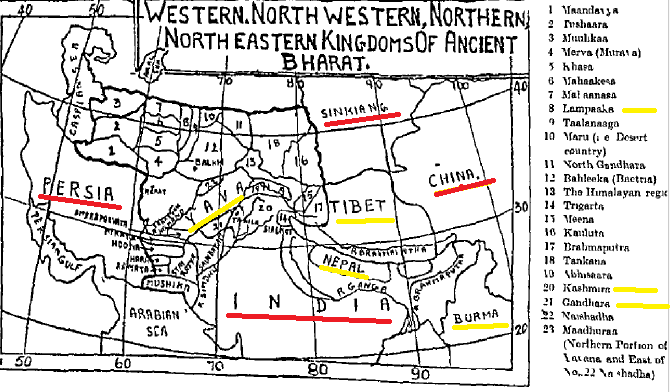
Provinces of the Paramara Empire
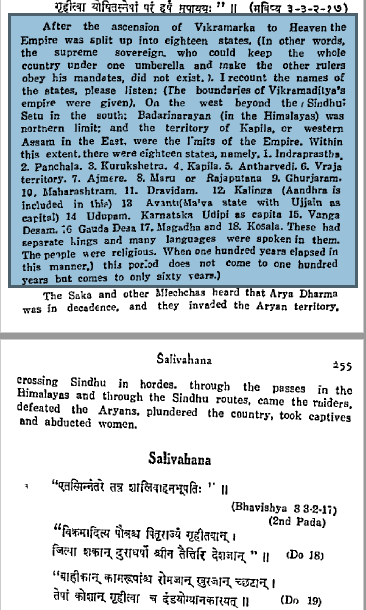
Under Vikramaditya, the Paramaras reached their zenith, with 800 Vassal Kings, numerous feudatories in the periphery, and tributaries as far as Persia. He had an army of an estimated 10 million, with 24,500 elephants, 1000s of horses, and a navy of 1000s of ships. It was the most formidable force of its time—no wonder the british sought to cover it up.
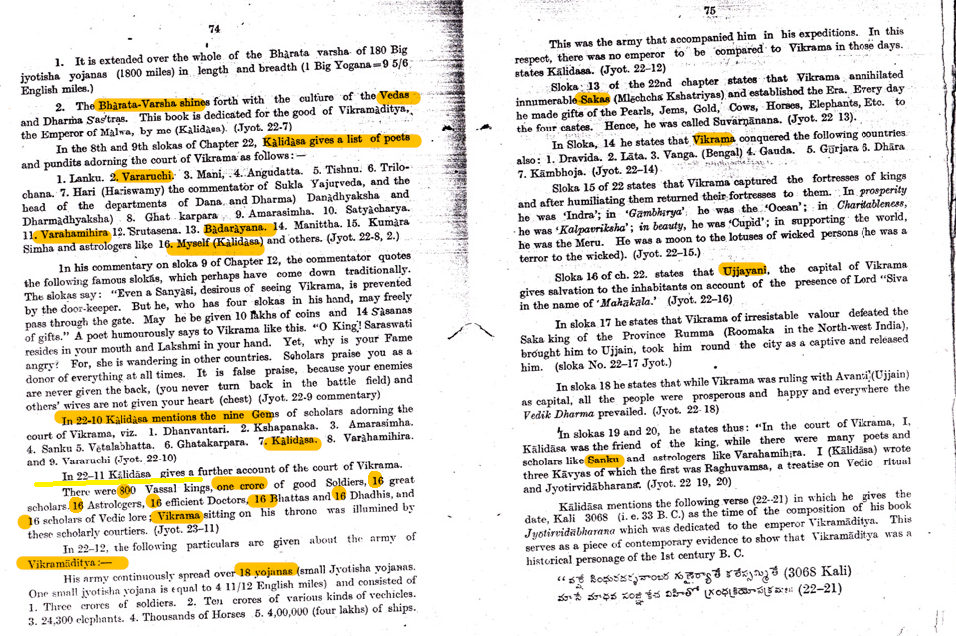
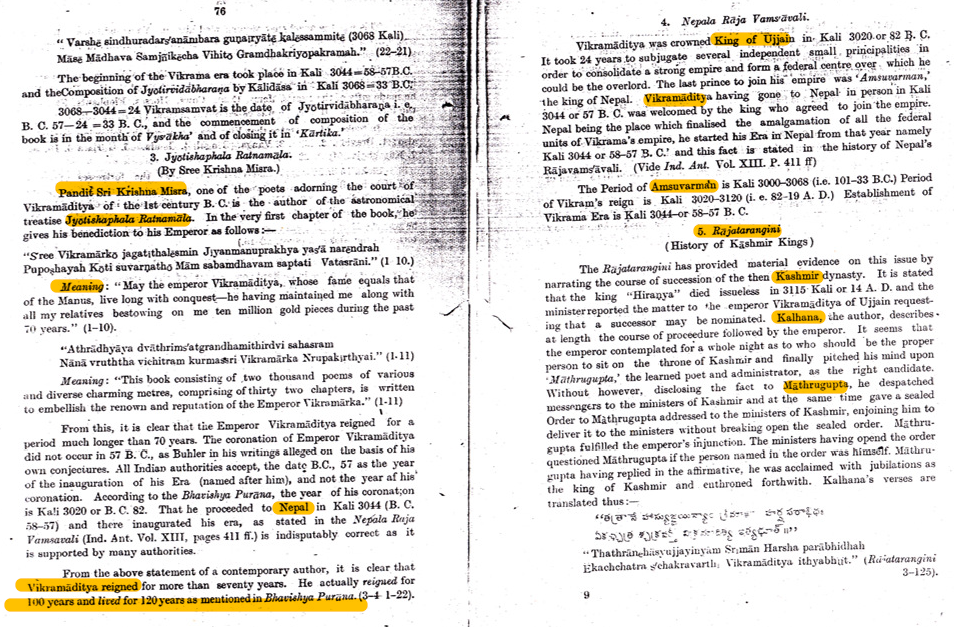
Ironically, William Jones (the “father of Indology” himself never questioned the historicity of Vikramaditya). Someone should send a memo to all the bureaucratic, beef-in-vedas “brahmins” like Kane, Altekar, and Bhandarkar (and their “avadhani” ilk today) that real Vaidika Braahmanas, from Pandit Krishna Misra to Pandit Chelam are clear about the real history of Hindus. Time to cast aside caste conceit and respect the contributions of the Raajas that liberated their people, rather than write hagiographies of mere colonial bureaucrats.
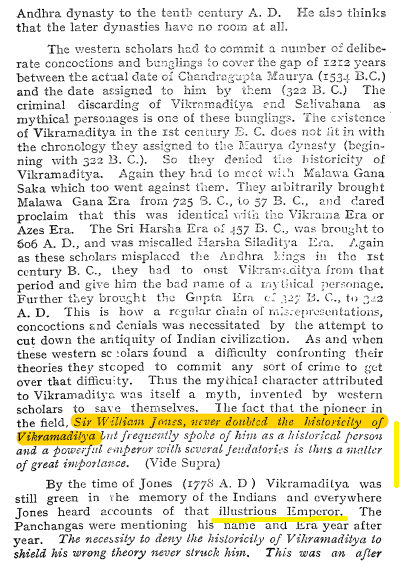
Nevertheless, the signal achievement of Vikramaditya Paramara was the defeat of the Saakas at Korur.
Battle of Korur
The Battle of Korur should go down as one of the most pivotal battles in Hindu history, for the simple reason that it was clear evidence of how the Saakas (like many other foreign invaders) were defeated by the home team, rather than just another visiting team.
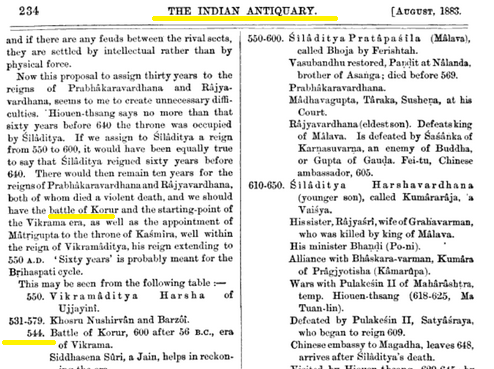
Long before the present crop of sellout aghori distorians, british indologists themselves acknowledged the existence not only of Vikramaditya Paramara, but the outstanding victory he won over the Saakas, at the Battle of Korur. As usual, any decisive victory is sought to be erased by self-proclaimed “sattvic” sepoys at the behest of their masters. Fortunately, our true Vaidika Braahamanas propounded what even the brits quietly recorded until quite recently.
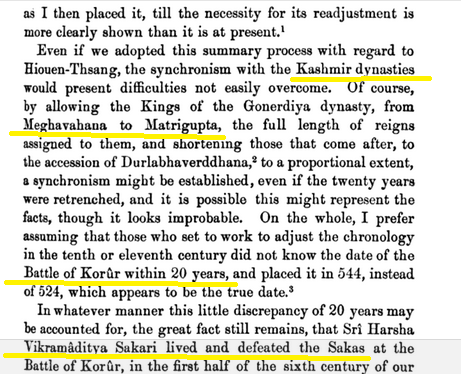
At Korur, Emperor Vikramaditya defeated the Saaka Roomaka. He then had him bound in a chariot and ritually humiliated, before releasing him across the Indus, to the latter’s shame.
Legacy
The legacy of Vikramaditya was the ideal yet practical ruler. His dynasty originated at the sacred Yajna at Mt. Arbuda, starting with its progenitor Pramara.
So meticulous was Vikramaditya in the observation of rites, that verily the fastidiousness of the Dhvaapara Yuga was recalled. He was also dauntless, stern, and resolute in the opposition of his enemies.
Finally, contrary to the attempts by indologists to deprecate the achievements of this dynast, Vikramaditya’s great grandson finally destroyed the Saakas once and for all.
Civilizational Impact
The Civilizational Impact of Vikramaditya cannot be minimised. From History to Literature to Cinema to Art, he captivated the imagination of Bhaaratheeyas. Countless stories, most legendary, are attributed to him. Here is one of the more fantastical ones, which is appropriate to cement his attachment to Truth.
To conclude, there is a famous legend about King Vikramaditya of Ujjain. The ever vigilant Maharaja was also a famed adherent of the truth. One night, when he was silently guarding his capital incognito, he saw a beautiful woman, verily a Devi, clad in red, leave the city. He stopped her, asking, “Oh Devi, who are you and why are you leaving?“. She responded, “I am the Goddess of Power. I am leaving this city as the citizens have become criminal, and it is no longer a fit abode for me“. “I understand“, replied Vikramaditya .
Then, another beautiful lady, clad in gold, began leaving. Vikramaditya asked her too “Oh Devi, who are you and why are you leaving?“. She replied, “Oh Maharaja, I am the Goddess of Wealth. I am leaving your capital as the citizens have become corrupt, and it is no longer a fit abode for me“. “I understand“, he relented again.
Finally, a third beautiful lady, clad in white, began leaving. Vikramaditya asked her too, “Oh Devi, who are you and why are you leaving?” She replied, “Oh Rajan, I am the Goddess of Truth. I am leaving your people as they have become immoral“. This time Vikramaditya said “Oh Devi, please do not leave. I can live a life without Power and Wealth, but I cannot live a life without Truth. I beg you, please stay in my kingdom“. The Goddess smiled, and said “So, be it“.
Soon, the Goddess of Wealth returned. Surprised, Vikramaditya asked “Oh Devi, why have you returned?“. She replied “I am the Goddess of Wealth, I reside where Truth resides“. Then finally the Goddess of Power returned. Amazed, Vikramaditya asked “Oh Devi, why have you returned?”. She replied “I am the Goddess of Power, I reside where Wealth resides“.
The moral of the story, of course, is that power, wealth, pleasure, all can be given up in the name of Truth (of which Dharma is the expression), because they are dependent upon it. This is because men and women of character can lose every material possession in the world, every opportunity for pleasure, every right of power, but their character is in their own hands.
A work on jyotihsastra, this astronomical treatise is oft-ignored by modernists, but considered to be written by Kalidasa according to traditionalists.
“This work Jyotirvidabharana, says Kalidasa, he began to write in the month Vysakha of 3068 Kali Era (or 33 B.C.) and was completed in the month Kartika of the same year.
In sloka (22-1), Kalidasa mentions one important trait of Vikramaditya. He uses the adjective ‘abhiprajaanandakara’ to Emperor Vikramaditya which means ‘he who pleases the people devoted to him.”
Conclusion
Vikramaditya Paramara stands as the archstone to both the old bridge of indology as well as the new bridge of Pauranic Charithra. 1 figure stands at the crossroads of not only the existence of an All-India Emperor, Vikramaditya, but also validates the Vikrama and Salivahana Samvats, Puraana Vamsanucharitha as historical source, as well as the autochthonous origins of Rajput Agnivamsas. Is it it any wonder then why Rajputs are the most vilified and defamed of all communities since the colonial era and even in modern India?
Unfortunately now, unionist/Mughaliya Rajputs have been deployed by brits via SOAS and pakis via Raawal-pindi (oh…the irony) not only to defame dharmic Rajputs (who are the forefront of Bhaarath Ganaraajya Sena) but to create useful idiots for re-colonisation. Nevertheless, there was no greater an anti-colonial force than the original Agnivamsa Kshathriyas.
Perhaps no dynasty has as formidable a name as the Parmars, as Para-maara means “All-slayer”. And that is precisely what this vansh forged from fire was to the Saaka invaders. From Paramaara Vikramaadhithya to Paramaara Saalivaahana, the Scythian menace was finally crushed under these great Emperors of India. And that is exactly what Vikramaditya Parmar was: Saakaantha. 1200 years of Hindu history was erased because the Parmar Empire was in fact all-India—even Kalidasa (recorded as Matrgupta in Rajatarangini) was placed as King of Kashmir, after being married to one of his royal daughters. This Imperium was not centralised, but had a vassal-king & tributary system, common in that era.
Here again, the penchant for Hindu hyperbole takes away from the actual historical facts of this erased empire. One need not roll out rajput unionist-mughaliya MS paint maps to acknowledge or praise Vikramaditya’s vast Empire. Despite being an Aandhrite, I am clearly pointing out that Salivahana was not Andhra Satavahana, but Parmaara Saalivahana (great-grandson of Agnivansh Emperor Vikramaditya).
So the key to history is not gassing up narcissistic egos with tall-tales or ethno-caste tribalism, but rather a genuine quest for the truth. That is how someone who used to prefer “Western Scientific” Indology, now prefers the Pauranic history. This is because Pandit Kota Venkatachalam mastered both English and Sanskrit sources, and was able to prove our essential unity (despite diversity), via not only puraanas, but also raaja vamsaavalis and prasastis/inscriptions.
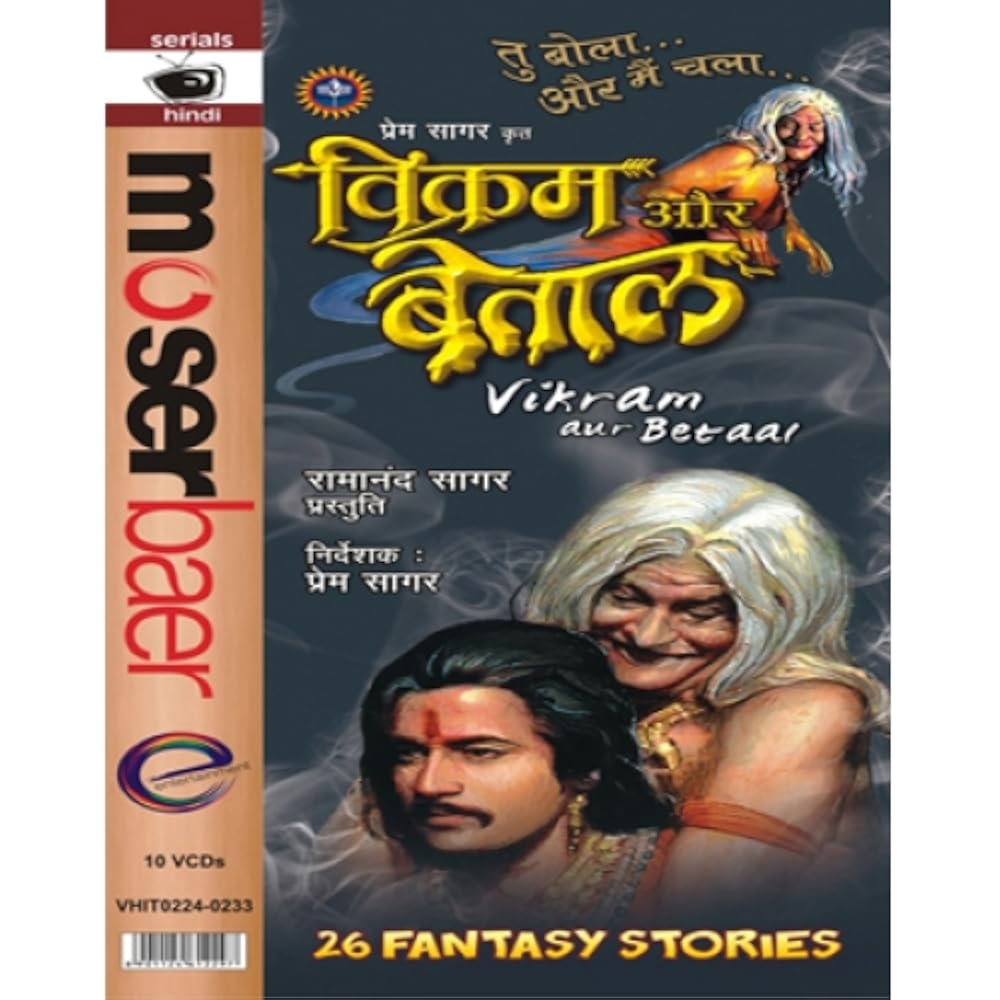
Leading with legends or Bikram aur Betaal won’t get you anywhere in the annals of serious history. One must take the Vamsanucharitha portion of Puraanas as serious history, supplement it with raaja vamsaavalis, and then use inscriptions/prasasthis to fill in the gaps. Speculative reconstruction only plays to narcissism of the lowest common denominator. But as Pandit Chelam wrote, the PV Kane’s of yesteryear and their beef-in-vedas progeny today much prefer their fake history to gas up their own heads. It is time to understand that there is in fact an ethnic issue within India—but it is not North vs South, or East vs West, but Northwest vs the Rest…and the Yavan Pandith Mlecchas will always plead caste unity, all while they collaborate (like Raghav Chetan) with foreign invaders (their real relatives by blood, marriage, or secret-kapalika cult).
Parmaara Vikramaadhithya, in his magnificent reign and glorious life, only made one obvious mistake. After relying on Deva-upaasana to defeat a kapalika who tried to kill him—he then pardoned and released the latter. It is time for the real ruling class of orthodox India—Vaidika Kshathriyas—to learn from this over-sentimentality and not make the same mistake again. Blood purity obsessions and caste unity jatiwad only ever lead to 1 result. Time to correct this, and get the bureaucratic betaal off our backs.
References:
- Kota, Venkatachalam (Pt.). Historicity of VIkramaditya & Salivahana. Vijayawada: Arya Vijnana Gandamala. 5052/1951
- Pandey, Raj Bali. Vikramaditya of Ujjayini. Banaras: Shatadala Prakasana. 1951
- Kota, Venkatachalam Paakayaaji (Pandith). Chronology of Ancient Hindu History Part I. Vijayawada: AVG. p.121-133
- Kota, Venkatachalam Pt. Indian Eras. Vijayawada:Arya Vijnana Grandamala.5057/1956
- Indian Antiquary. 1883
- Journal of the Royal Asiatic Society (Vol.12). London. 1886
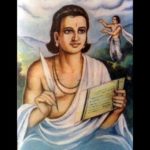
Great Tribute to Rajah Vikramaditya.
I think one of the greatest spirtual “coincidence” that truly shows how important Parmars have been to Bharat is that both Maharana Pratap and Chhatrapati Shivaji Maharaj first/principle wives came from Paramara lineage. (Maharanji Ajabde Bhai Parmar and Maharani Saibai Nimbalkar.)
Both played a lasting impact on both men, and were great beacons of support regardless of physical presence and were true representations of Naari Shakti.
Huge Shout out to Parmars, Kings who were truly forged by fire.
This is a deeply fascinating take on Emperor Vikramaditya’s lineage. Given how mainstream modern history often categorizes the Paramara dynasty to a much later medieval period, what are the most compelling epigraphic or archaeological findings that directly link the early 1st-century BCE Vikramaditya to the later Agnivamsa Paramara records? I’d love to read more on how we can bridge this specific chronological gap in academic discussions.