Continuing our Series on Vijayanagara, is a topic that is oft-discussed, but rarely analysed. Dedicated readers would recall our article on Andhra Economic History, with a fair share of simulacra online attempting the same for their own regions. In light of that, it is only natural that what is arguably the most consequential Empire in the history of Southern India, would necessitate a similar analysis.
Introduction
The economic history of a nation, a people, or an empire is not a simple collection of facts and figures or mere statistics. After all, there are lies, damned lies, and statistics. The sheer plunder and exploitation the br[u]tish empire wreaked on India over 190 years is still a matter of dispute, simply on the basis of racial narcissism. But racial, national, personal, or for that matter, caste narcissism cannot be the basis for construction or re-construction of a history or economic history.
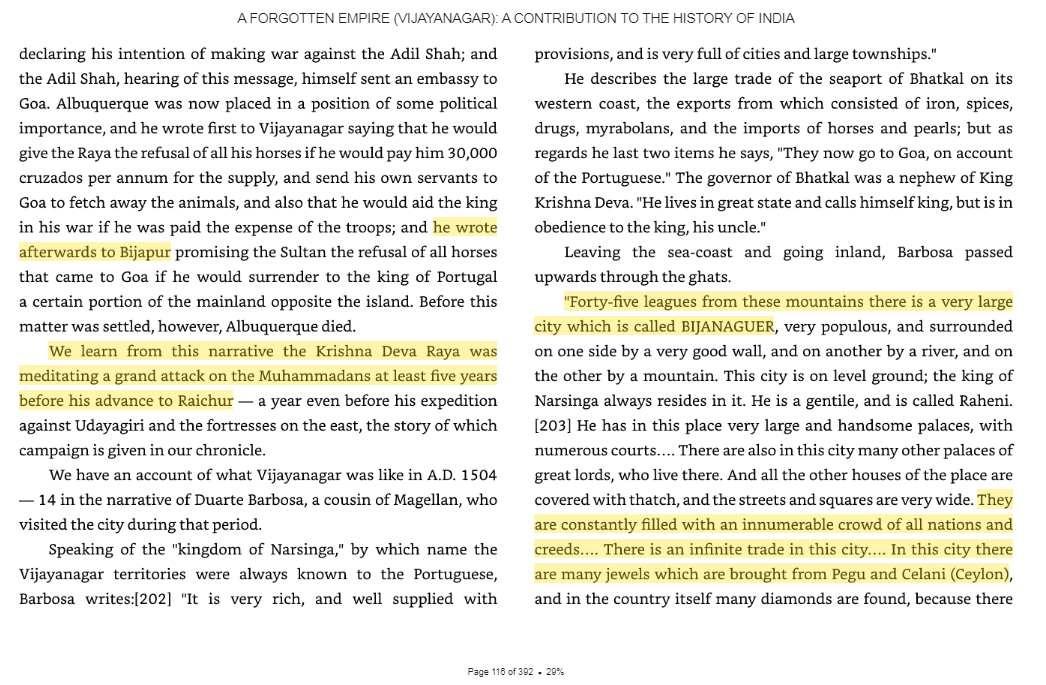
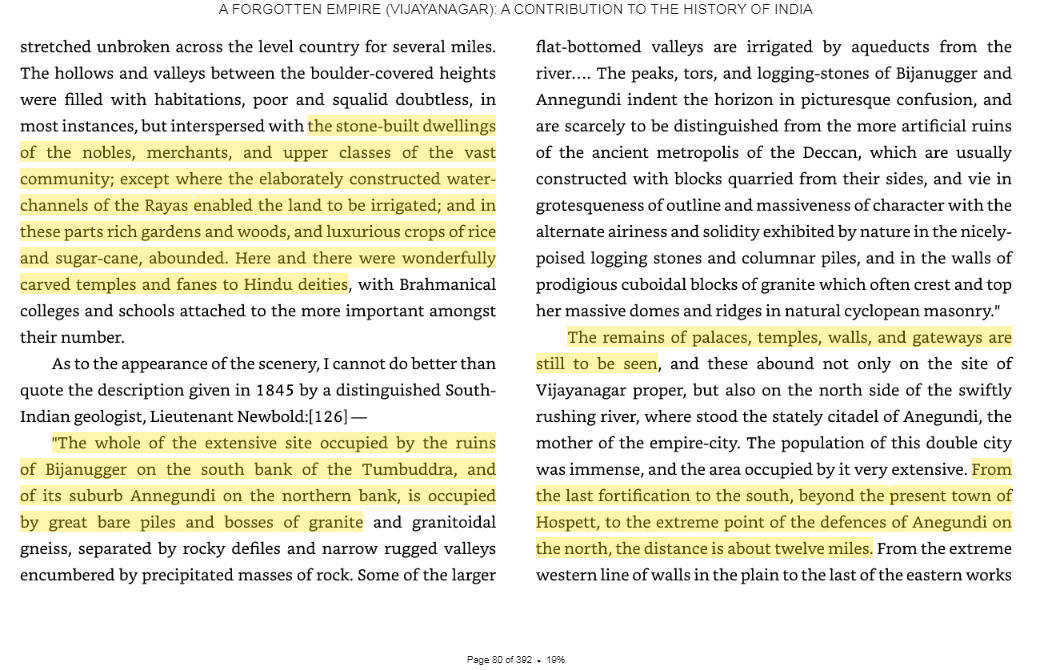
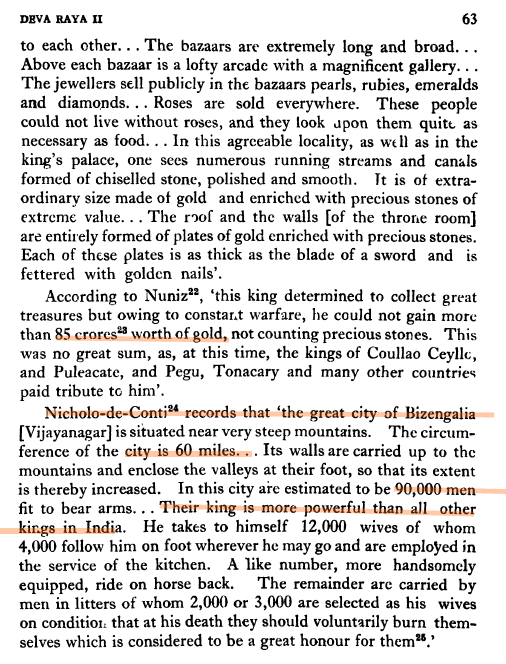
Cold hard objective truth must be evaluated, and wheat must be sifted from the chaff. It is easy to give in to the spectacular description of Vijayanagara for the simple reason that foreign travelers themselves exclaimed about just how spectacular it was. It was the best provided city of the age, and certainly the second largest (if not the largest) in the world.
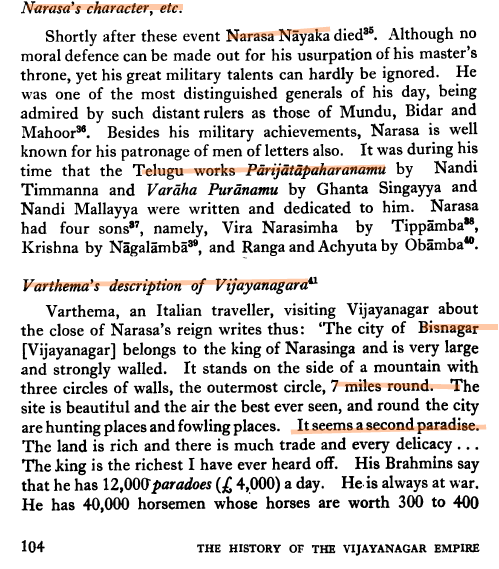
The wealth and prosperity was measured not just in gold coin, but in resources. Every kind of food or animal imaginable was present. Even the diamonds, erroneously attributed to Golkonda, were actually mined in coastal Andhra and Rayala-variseema, at the Kollur and Vajra-karur mines. This was the wealth of the populace and polity of Vijayanagara.
Indeed, contrary to the current-day commietariat, the influence of Vijayanagara spread far and wide, even into mostly secluded and insular Kerala (sorry, I mean Geralam).
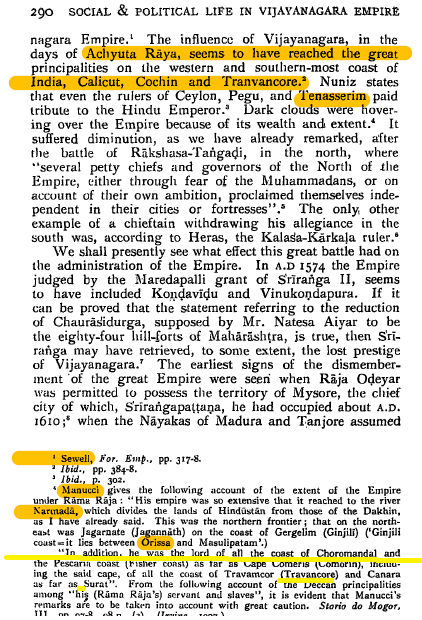
Tenasserim (Malacca) brought in resources, Pegu (Burma) brought in rubies, Travancore brought in tribute, and Surat brought in trade—such was the reach of the City of Victory.
However, a city is more than just its glowing descriptions by foreigners and would-be foreign invaders. It is constituted by various economic components that are an instrumental part of the political economy.
Economic Components
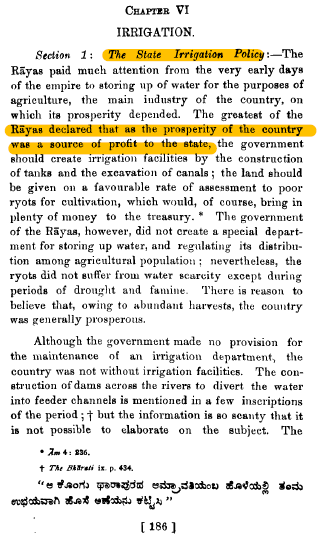
Commerce, or Vaanijya, has many aspects associated with it. However, as with the Arthasastra, the basics of Political Economy, rather than mere modern “economics”, lies in the Tax Revenue of an Empire. Rajyasastra (the correct name) advises kings to sip from the honey without oppressing the populace. It appears the Rayas of Vijayanagara practiced the same, as seen in works such as Rayavachakamu and Krishna Deva Raya‘s Amuktamalyada.
The central economic components are agriculture, manufactury, trade, mining, and fishery. However, before one wades into the nitty gritty, it becomes imperative to evaluate the finances of Southern India’s most famous Imperium.
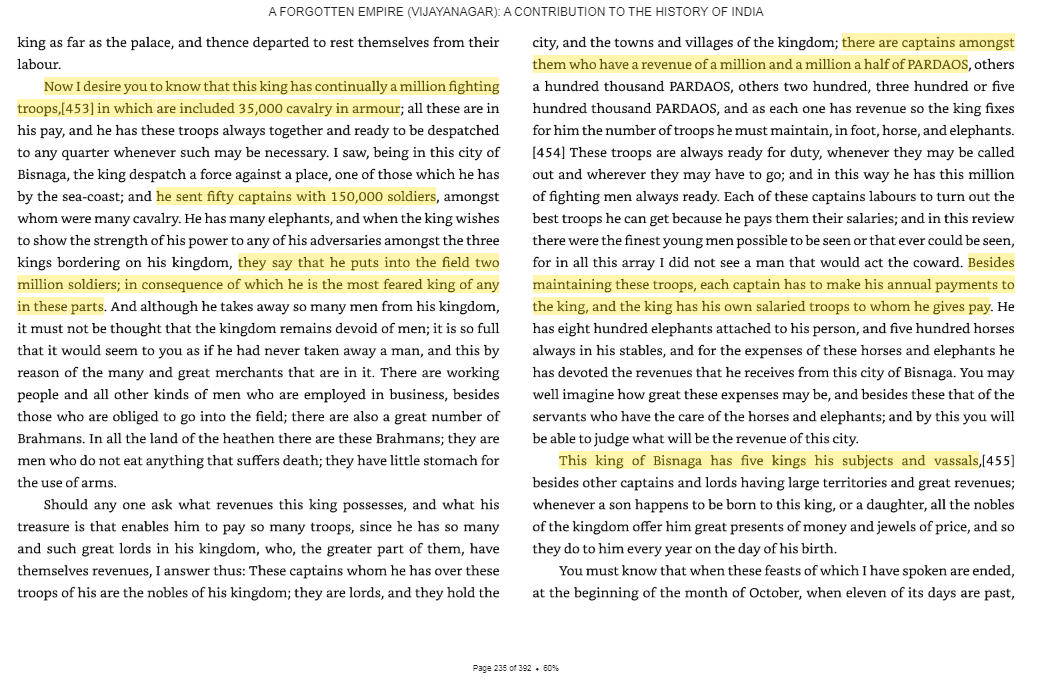
The annual revenues of the Vijayanagara empire are estimated to have been between 10 and 13 million varaahas/pardaos (gold coins). A million alone is said to have come from each amaranayaka (provincial governor).
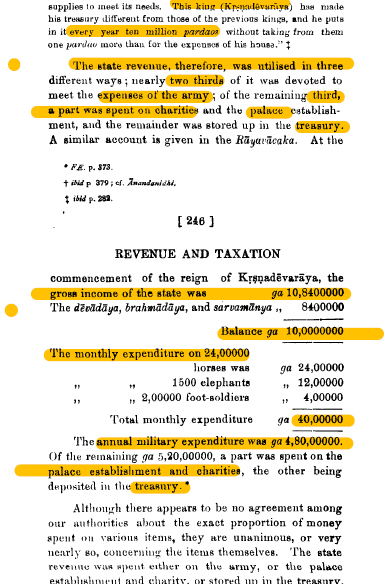
Expenses were considerable, and yet, in contrast to today’s debt-financed economy, the Emperor was careful in usage of funds. 67% or 2/3rds were allocated to the military, with the remainder to all other expenses. This makes sense as Vijayanagara, above all else, was the great shield of Southern India, and a military state at its core. Nevertheless, even the remaining expenses were carefully distributed, with the bulk being sent to the treasury.
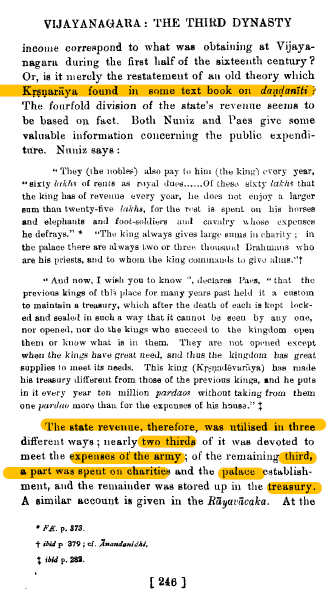
While the exchange rate is provided elsewhere, the fabulous wealth of Vijayanagara was the first to truly make an impression on the world at large. Both moor and crusader were confounded by the prosperity of a people whose masses lived so simply yet contentedly. This because in yesteryear, as in today, the bulk of employment was in agriculture and aquaculture. Food prosperity is the true root of wealth and the sine qua non of national wealth. Without it, all the gold and silver coins (or paper currency) is nought but dust.
Agriculture
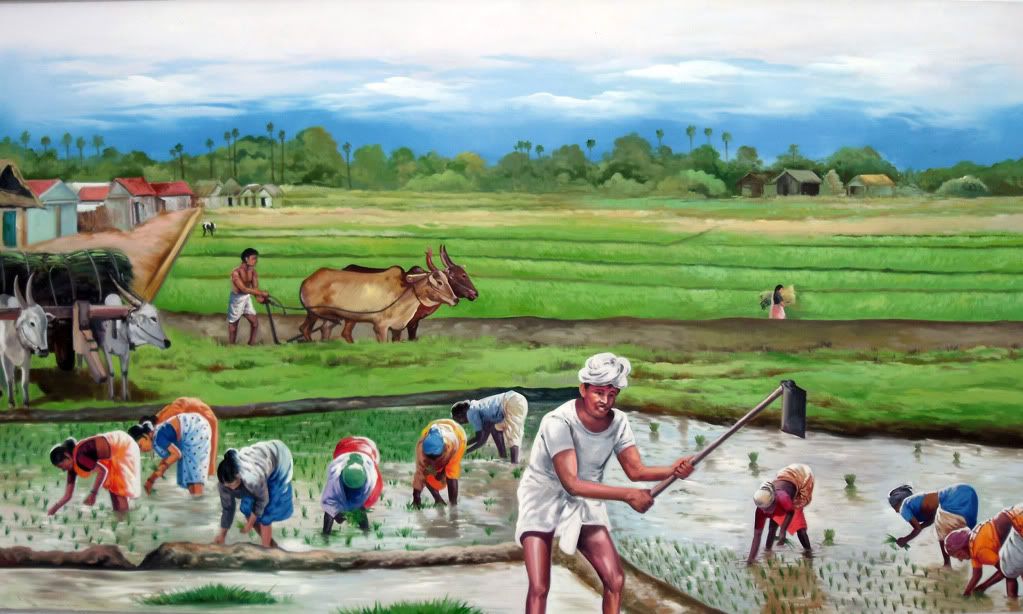
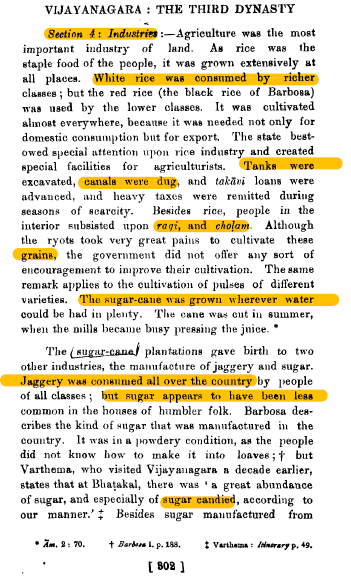
The wealth of a state is sustained by sustenance, and nothing else. And yet, all the crops and seeds and soil are useless unless water is there to nurture it. This is even more difficult in the deccan plateau, where large parts of central and the northern part of southern India are arid. With little rainfall, it is riverine and well-water that remain the primary source.
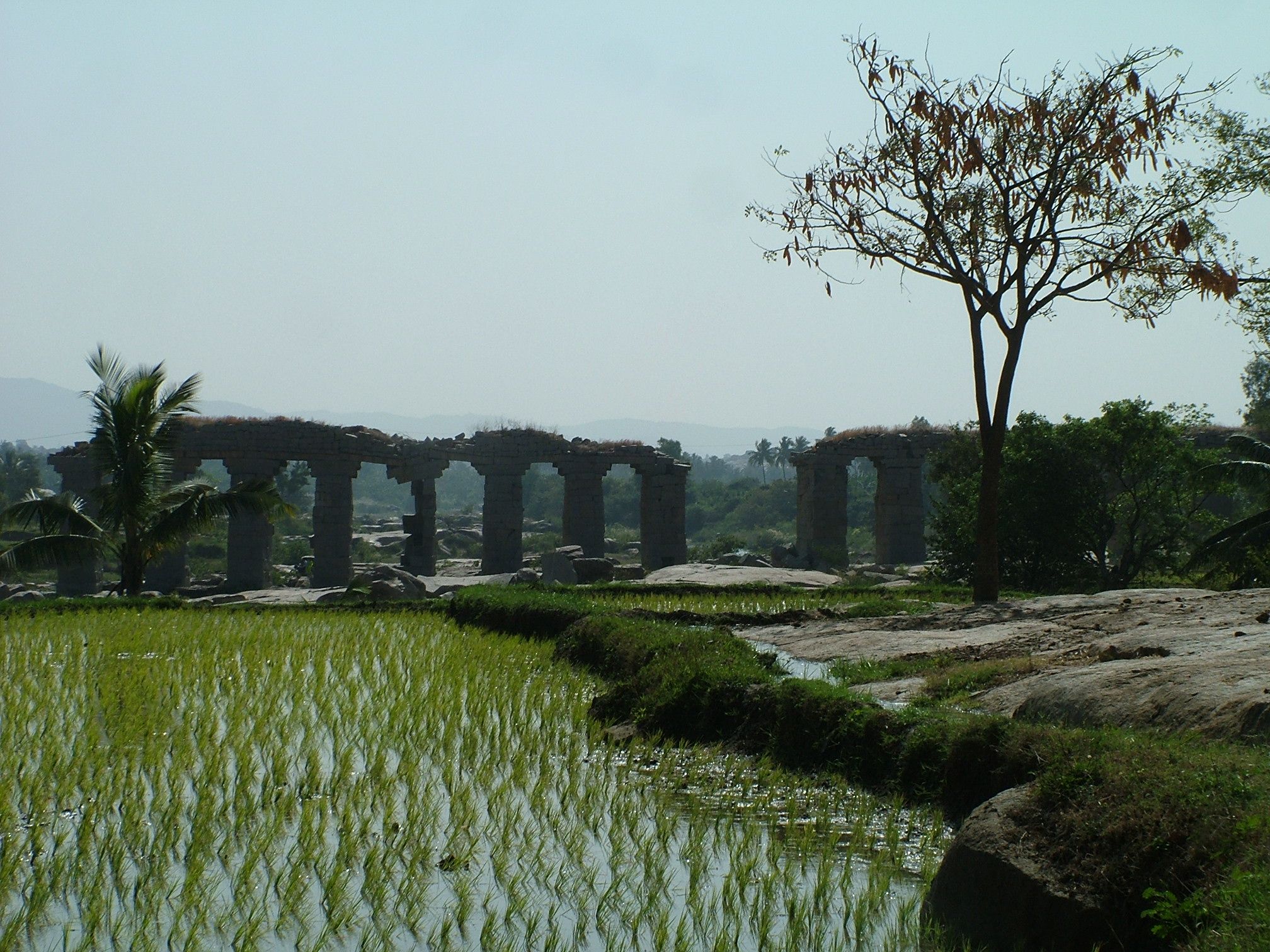
For this reason, Kings and Queens went to great expense to construct irrigation tanks, canals, and even aqueducts to preserve the population. Perhaps the best known modern project was in Raya’s Seema (Andhra Pradesh), where the Telugu Ganga was constructed in the former Land of the Raayas.
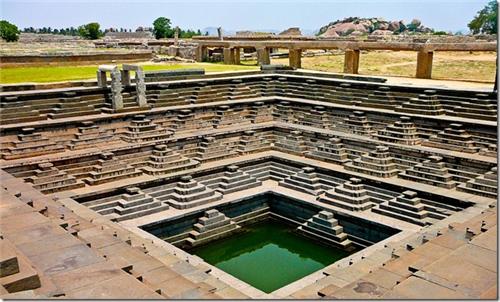
Vijayanagara specialised in royal tanks (featured above) to ensure both its wealth-generators and war-machine could be properly provisioned.
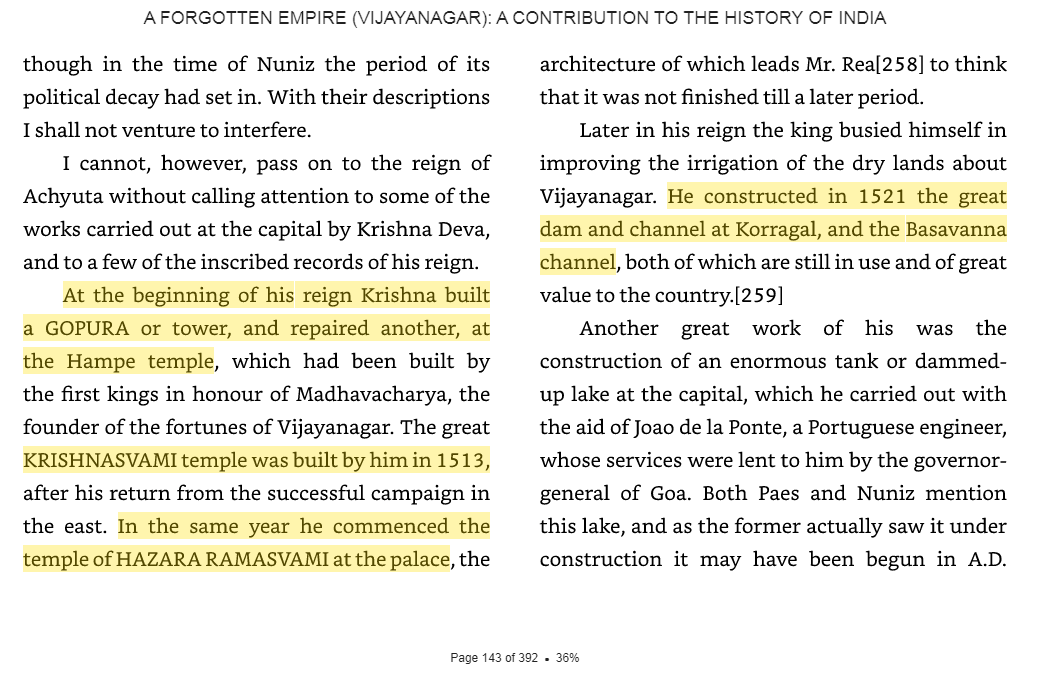
The fabulous wealth of Vijayanagara is often counted in coin; however, its true value was in its agriculture, and its ability to sustain it via various public works. The sowing and reaping of crop is truly foundational to political economy, something lost among today’s free market fundamentalism fools. Not only is it basic for the employment of the majority of today’s 1.3 billion people, but it is essential for its nourishing and sustenance.
There is, however, a difference between dharma and dharna (something all too common with today’s rabble-rousers). That is the value of land and agricultural land. Great aqueducts and dams were constructed to ensure its produce.
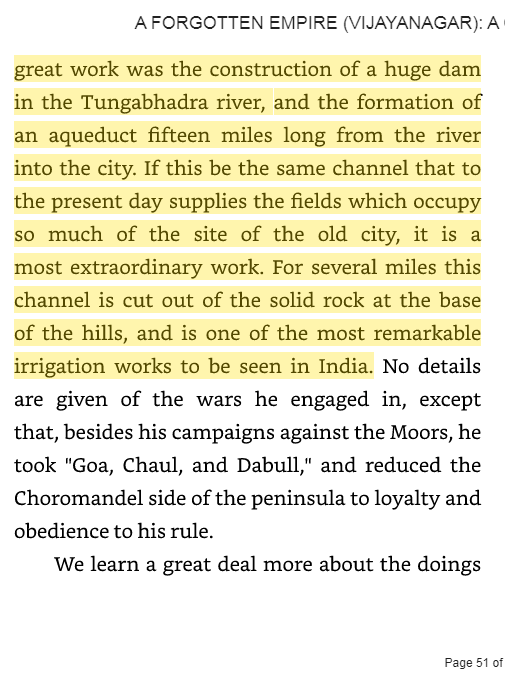
Most impressive, however, was the sheer variety of flora and fauna at the disposal of the Monarchs.
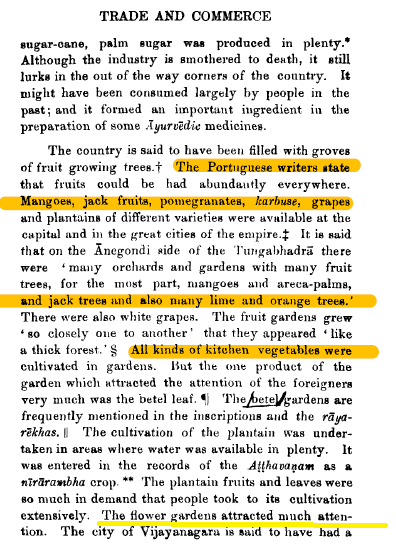
Nevertheless, effort was made to tend to them humanely without denuding the land—a difficult task in an era of scorched earth warfare.
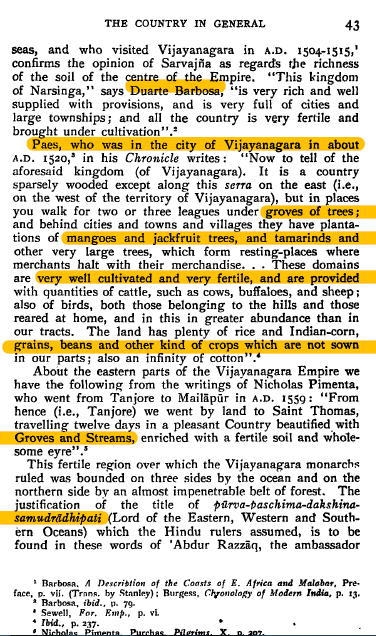
Nevertheless, agriculture is not the only sector. MSMEs (micro-small-medium enterprises) were as important back then as they are today. They were the backbone of the military might of Vijayanagara.
Town & Country Manufactury
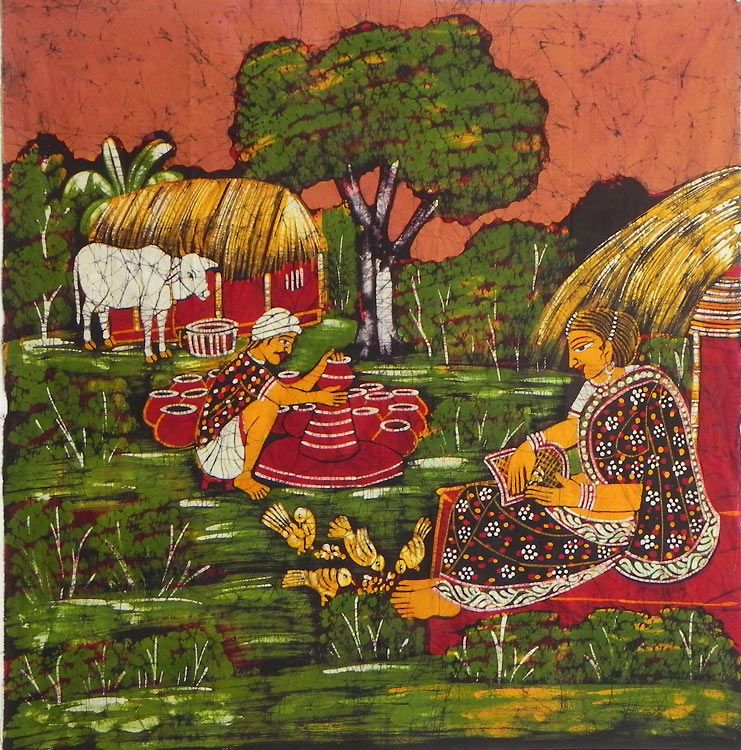
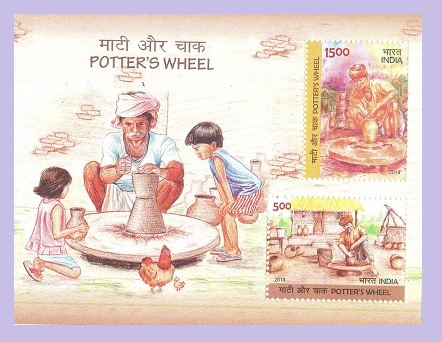
Artisanry is critical element to the political economy (artha vyavastha) of any polity. Whether it is pottery, edible oils, cloth manufacture, and so on, the village-based economic system was the foundation for India’s ancient industrial might.
The sheer range of crops and resources could then be redeployed towards various craftworks.
However, labour did not merely congregate in villages. It was more plentiful in the cities, and merchants from abroad would do brisk business with the guilds of the urbanities with all their vanities, that drove this commerce.
Metro industry & Commerce
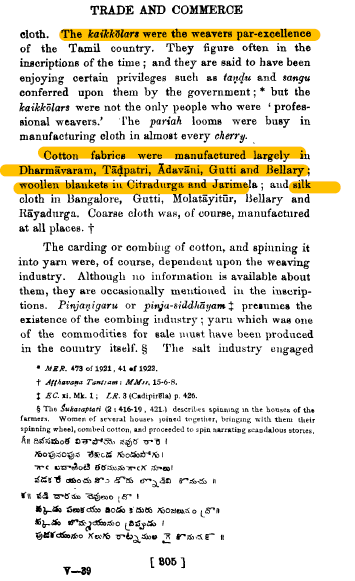
The metro commerce and industry was even greater. Large scale manufacture of iron products, fabrics, and various industrial goods are recorded. Interestingly, Dharmavaram was already a famed centre for sarees, even in those days.
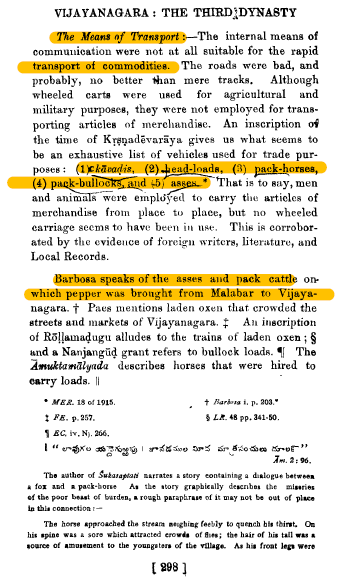
Both the sea-borne and overland trade were the drivers of this, necessitating many a pack animal.
Currency
The Varaaha was the Imperial Currency of Vijayanagara. This was corrupted in portuguese communications to the word “Pardao”.
The Currency System of the time:
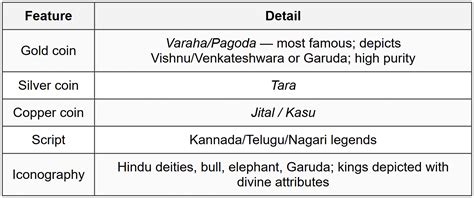
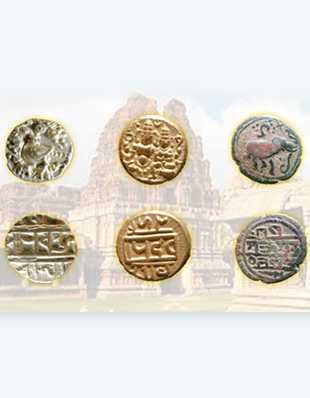
The unofficial exchange rate between Vijayanagara and the portuguese was as follows:
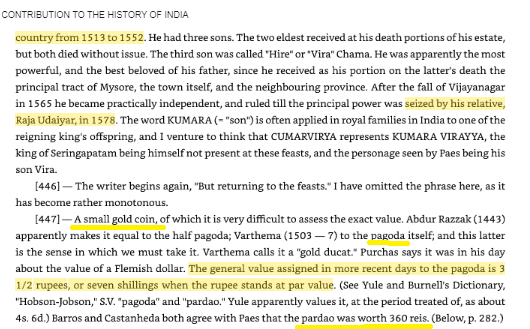
Here are some examples of the beautiful coinage produced by The Empire.
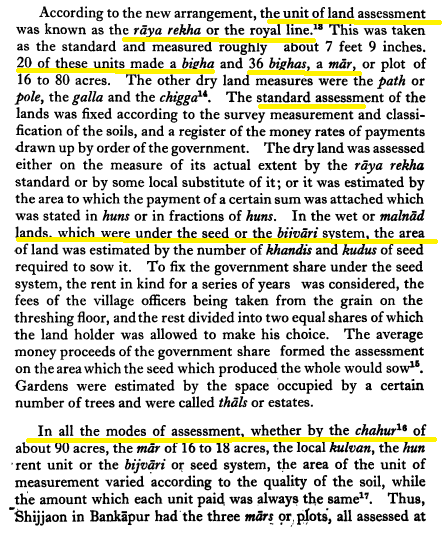
Weights and Measures are also an important part of any economic system. Pauthavam provides for a robust calculation of mensuration. Vijayanagara had its own modified version.
Credit
Credit and payment are pivotal portion of political economy. Without this lubricant, the well-oiled wheel of industry and economic activity cannot be greased. There were merchants a-plenty in Vijayanagara, but the guilds were the primary purveyors of payment in the polity. The use of hundika (bills of exchange) from one end of the far-flung empire to another was indeed a credit to the financial sophistication of the era.
The Emperor was said to have had an income of 12,000 pardai (varaahas) per day. [7, 243]. Much of this was in fact afforded by guilds. This is all-the-more intriguing as the major guilds had the power of taxation over their members. [5, 309]
Customs duties & Tax Code
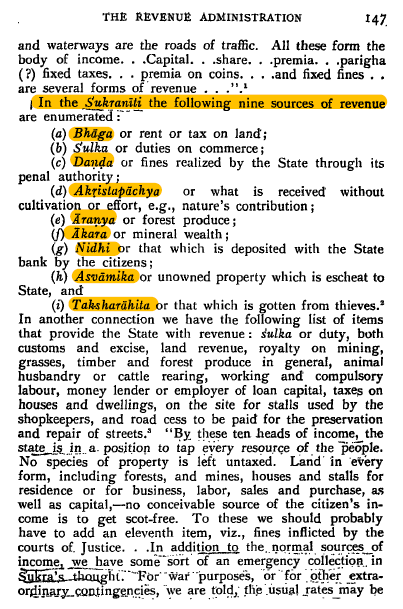
Taxes are an invariable aspect of governance. Without this, it becomes impossible for any government or administration to function. There have often been questions as to whether Vijayanagara over-taxed its citizenry. It must be recalled, however, that Turkic invaders (and the british) were far more extractive in their demands. Cultivators were literally pillaged by one and plundered by the other. In the wake of such extortionate regimes, it is only natural that the standard tax rates would simply not do. As a garrison state, Vijayanagara had to finance a million-man army, and therefore, could be excused for most of its tax impositions on the populace. Historically, the Vedic rate of taxation was 1/6th the produce of a farmer in return for royal protection. There were myriad other taxes on merchants et al, but that is another matter.
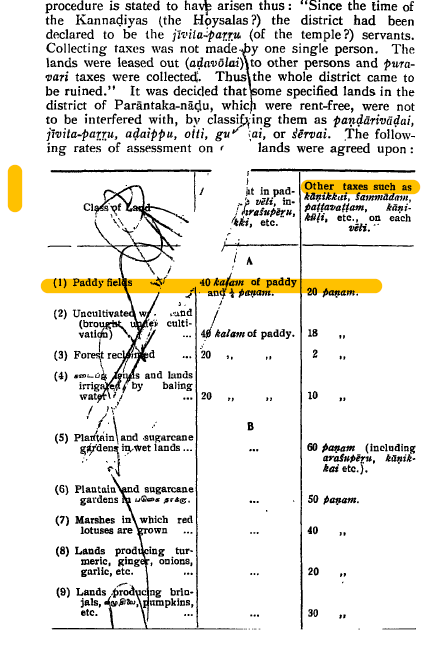
Exports & Imports
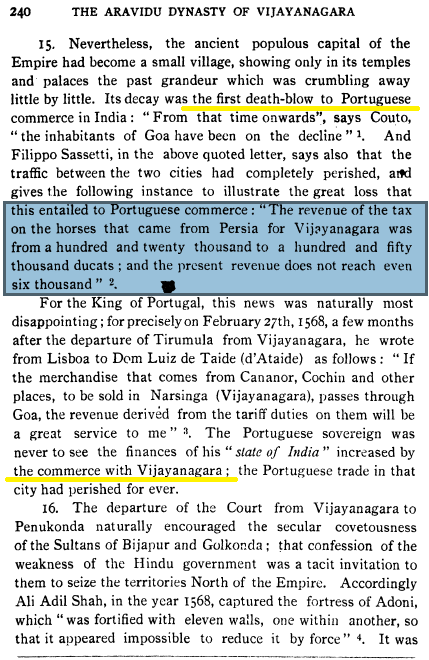
The value of the Vijayanagara trade, particularly the horse-trade, was incalculable to the portuguese, as shown above. It is enumerated in ducats below.
However, there were many more trading partners at the abundant ports of the empire. Here is a plethora of the produce proffered at said ports:
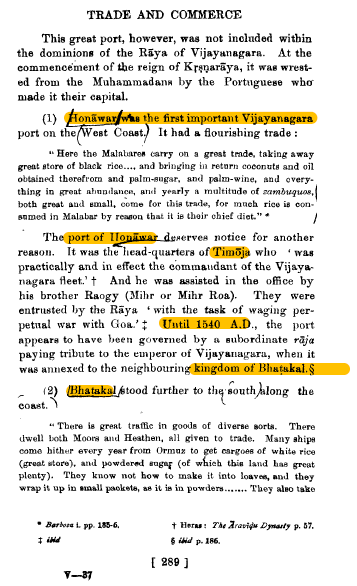
The actual exchange of goods, however, must have been mind- boggling. Here is a sample.
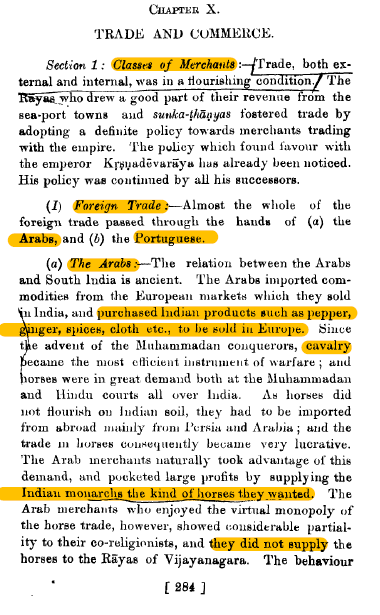
This of course is a mere drop in the ocean of the oceanic trade that Vijayanagara did, of virtually every time of product imaginable. Much of this better covered in the industrial section.
Guild Privileges
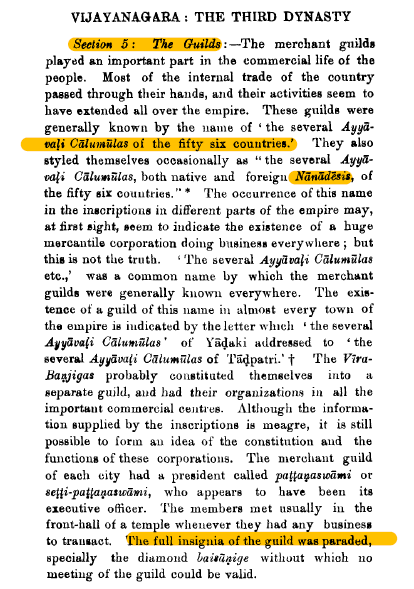
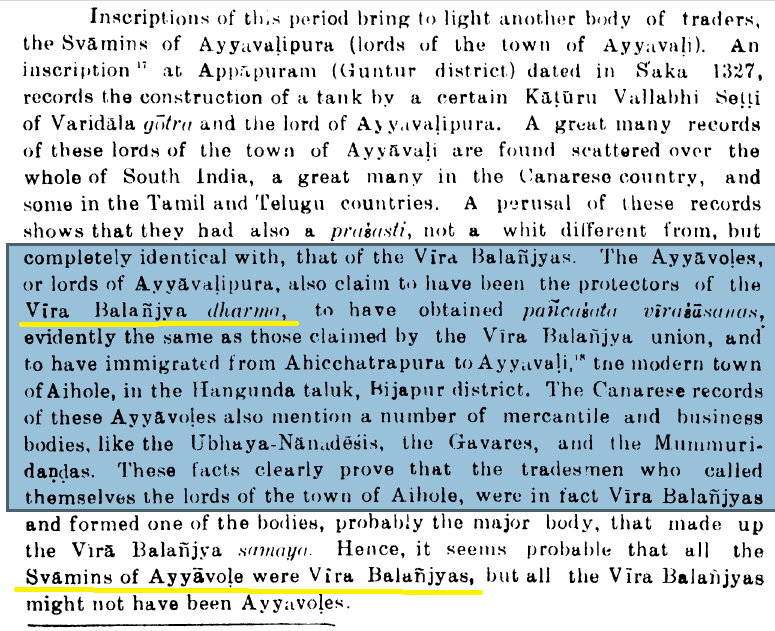
The Srenis of ancient and medieval India remain an impressive feat even by today’s Multi-National Corporate standards. Perhaps none stand out more than the famous 500 Svaamis of Ayyavolu (Aihole). Connected with the Balija Naayaka community of Aandhra, they were instrumental in the land and sea-borne commerce of medieval India. That many of them were later promoted to Nayak status under Krishna Deva Raaya remains a colourful quality of these merchants-warrior.
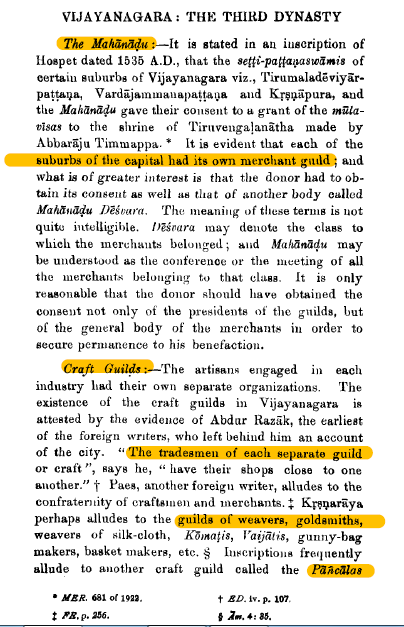
There were said to be 2 main types of guilds, the first being industrial/financial (above) and the second being small time crafts based. These include the various potters, blacksmiths, goldsmiths and so on.
Vijayanagara Economic History
The Economic History of Vijayanagara begins with the History of Vijayanagara. It is often thought, mostly due to the efforts of Sringeri and its acolytes, that the City was founded automatically on 1336 CE with the alleged “reconversion” of Harihara and Bukka Raya by Madhava Vidhyaranya, who then “guided them” to build a Hindu Empire at Vidhyanagari. However, a number of Indian scholars themselves have questioned both this account and the validity of these inscriptions. It appears the british, portuguese, and ferishta are not alone in forging history.
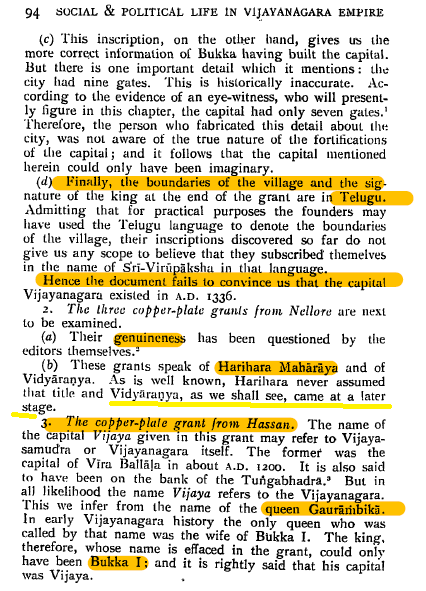
This of course is not to say that Vidhyaranya did not have an impact—he did. But this is the danger of ‘athisayokthi‘, by self-aggrandising and self-proclaimed “sattvic” bureaucrats: the actual accomplishments of real Vaidika braahmanas are occluded in the attempt to credit-hog. Sringeri certainly had an important role as a key spiritual sect in the Empire, and some of its Sankaracharyas did in fact serve as “Rajgurus”. However, the first “Rajguru” was in fact Kriyasakthi. Vidhyaranya Svaami himself is not recorded to have entered Vijayanagara until construction was completed around 1378, by Bukka Raaya. The second monarch of Vijayanagara is said to have founded the city sometime between 1350 and 1368 CE (when there are confirmed inscriptions). The First Capital of Karnataka Saamraajya was at Anegondi (also known as Kunjarakonda-pura).
However, whether it was Vidhyaranya or Kriyasakthi who advised the shift to Vijayanagara is not as relevant as the fact that the agency of the 5 Sangama Brothers (Harihara, Kampana, Bukka, Marappa, and Mudda) was instrumental and self-motivated in its founding.
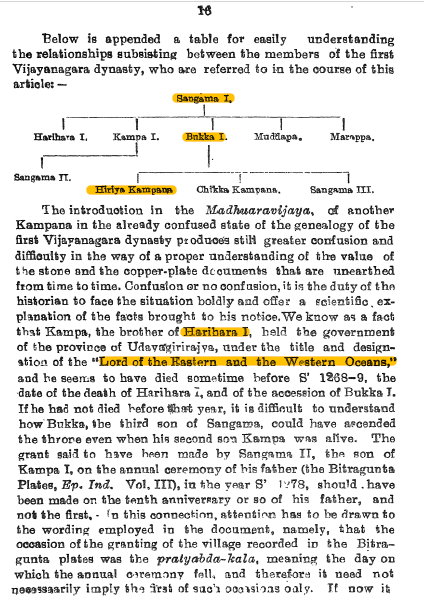
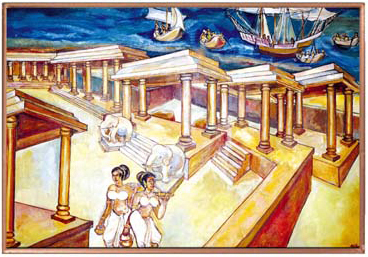
The founding of The City aside, there were a multitude of cities and entrepots up and down the coasts as well as in the inland of the peninsula. There were, by the account of portuguese travelers, no less than 300 ports the size of Calicut in Vijayanagara, with 18 principal ports. Honavar was the most beautiful and Bhatkal the largest.
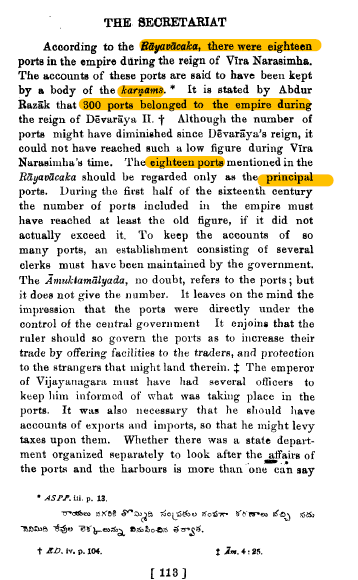
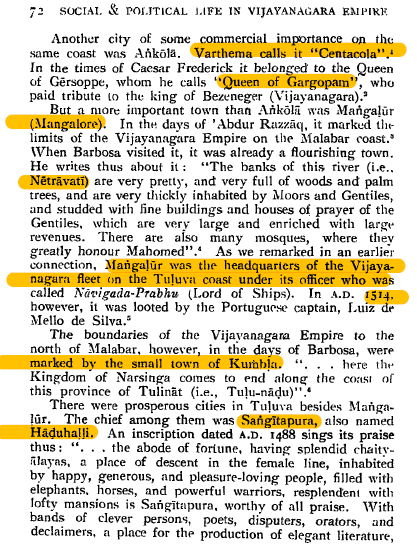
Mangalore, incidentally was the headquarters for Vijayanagara’s Western Fleet.
Indeed, it is oft-remarked that the prosperity of the portuguese ‘Estado da India’ rose and fell with the fortunes of the City of Victory. Post-1565, these were not the same, and the portuguese took readily to piracy (even more so than at the beginning…)
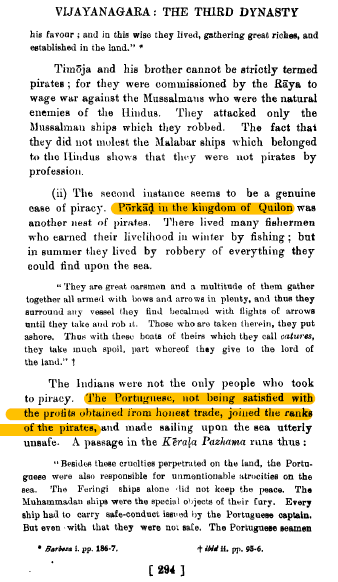
It is said that they organised 45 ships with 27 captains to plunder Tirupati—before the Araveedu Regent strengthened the local garrison in a timely fashion.
Nevertheless, the wealth of the city beggars description. And its economic history is best summed as follows:
Administrative Structure
This history of Vijayanagara, as with the history of any other Indian city, is often plagued by excessive exaggeration and credit-claiming. Indeed, the foundation of the Empire is often deemed synonymous with the City of Victory, when the first capital was in reality Anegondi. It is only around 1368 CE that Vijayanagara-Hampi was founded/reasonably constructed and 1378 CE by the time the Sankaracharya of Sringeri, Vidhyaranya Svaami, was recorded to have visited—disproving the notion that he was the “rajguru” ruling and commanding Harihara and Bukka by proxy.
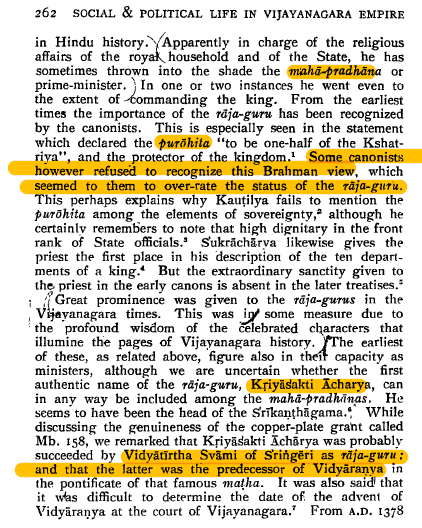
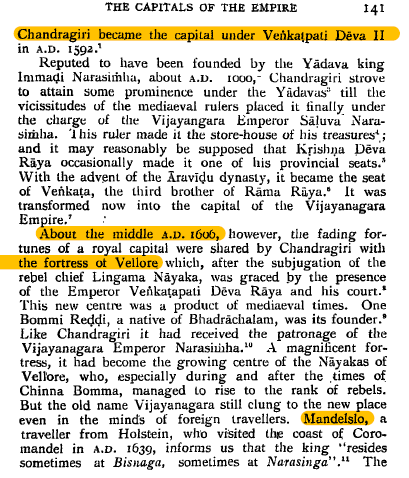
In actuality, the family priest was Acharya Kriyasakthi, a concerning point as he was a known Kapalika. Although Vidhyatheertha of Sringeri would later assume the role of “Rajguru” (itself a questionable innovation of Kautilya), the baleful influence of the aforementioned kapalikas would continue until the time of Thaathachaarya, the Visistadhvaitha Sri Vaishnavite Guru, when the capital was removed by Venkatapati Deva Raya to Chandragiri.
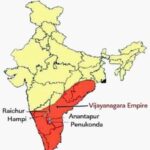
The ancient name of Hampi was in fact Hasthinavathi. Although Thirumala Raaya attempted to re-settle Vijayanagara soon after, by 1567 CE, this project was abandoned due to frequent attacks. Penukonda was designated as the new capital.
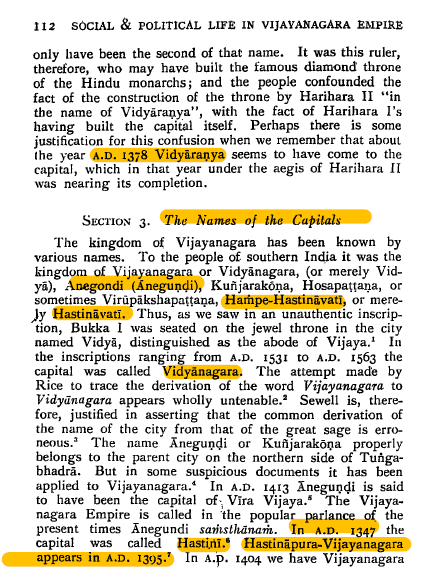
The capitals of Karnataka Saamraajya, that is the Vijayanagara Empire, were successively Anegondi, Hampi-Hasthinavathi, Penukonda, Chandragiri, and Vellore.
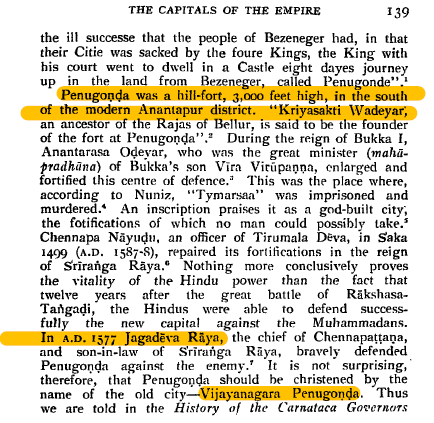
Penukonda was an ancient fortress town, positioned 3,000 feet above sea-level, making ideal as the tertiary capital of Vijayanagara. For a time, it is said that it was referred to as Vijayanagara-Penukonda, lending credence to the view that over time, the shift from Karnataka to Vijayanagara became commonplace nomenclature. It is why southern Tamil Nadu was referred to as Carnatic. However, the original name was Chola-mandalam, hence the later other anglicism of Coromandel for the southeastern coast. Incidentally, it is here that one will find the final capital of Karnataka Samraajya, which was Vellore.
The Emperor was no doubt the head of the administration. However, the mess of bureaucracy being what it is necessitated numerous ministers. Prime ministers were termed Sarva sira pradhaana. We have already shown how the idea of a Thimmarasu occupying all positions as pm, generalissimo, purohith and poet-at-large is nonsense and a product of the bureaucratic yavan pandith playbook making all kingdoms somehow a proxy-rule to be “guided by” poets/purohits/prime ministers/rajgurus. In fact, as per varnashrama dharma, the ministries typically were assigned to mixed castes (such as Soothas), but preferably to unambitious Kshathriyas…good luck with that….
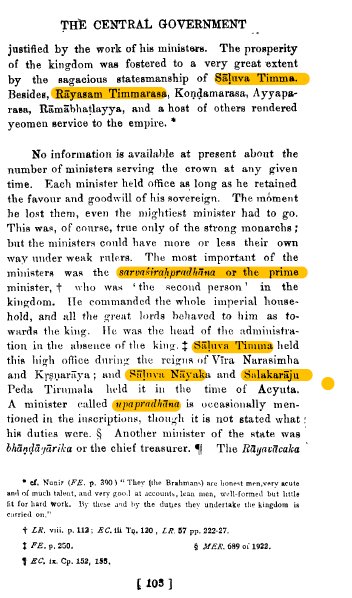
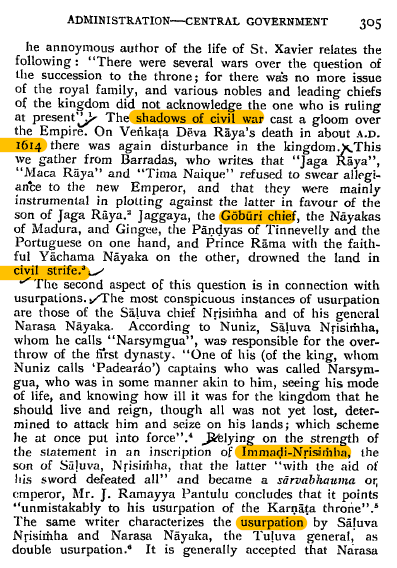
Saaluvas and Salakams are both kshathriya Prime Ministers who inter-married with the Tuluva/Turvasu Chandravamsa dynasty of Krishna Deva and Achyutha Raaya. Unfortunately, the ambitions of those families created the civil strife that was the cause for the weakening and downfall of the empire. However selfish the later Nayak kings became, particular Madurai’s mad ruler, the role of the upper aristocracy in rivening the royal family and ill-timed claims to the royal throne were ultimately what undid the Empire.
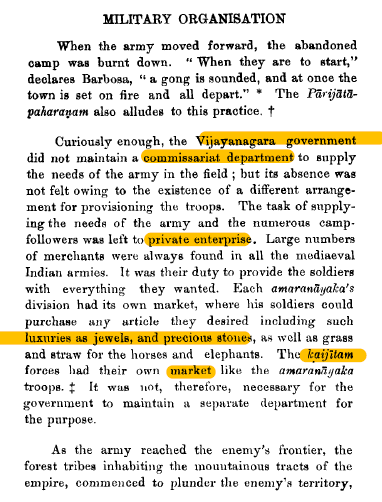
Regardless, this, the best-provisioned city then in the world, managed to captivate the imagination of travelers and merchants the world over. An interesting aspect is that there was apparently no commissariat dept, all private quartermasters to supply the very well-organised Vijayanagara camp.
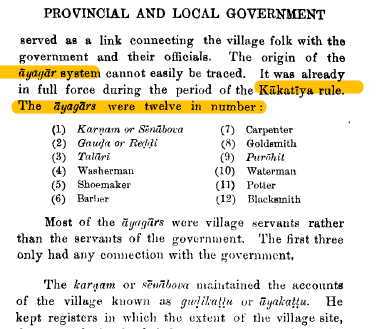
The Empire itself was divided into raajyas (vice-regalties), naadus (provinces), seemas (districts), and graamas (villages). Each village had approximately the following administration.
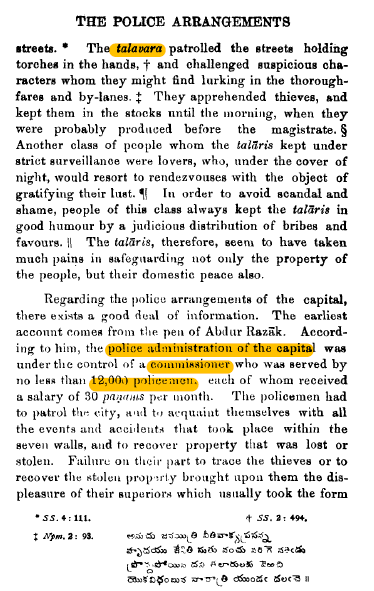
There would be no less than 12,000 police at the capital itself.
It was the Law Courts that made all of this ultimately operate smoothly. They ensured that merchants were confident enough to take the considerable financial (and personal!) risk that international trade and commerce often commands. Vijayanagara therefore maintained a robust judicial system and commercial code, which ensured justice to labour and capital alike.
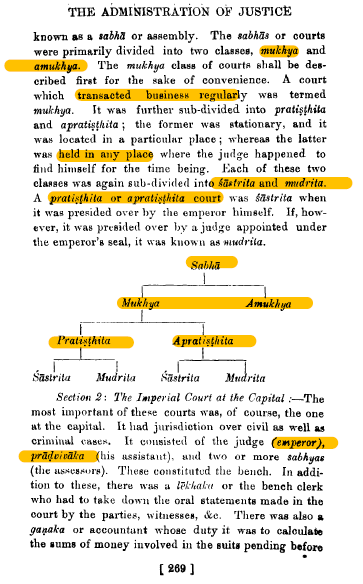
It is here that Vidhyaranya Svaami’s contribution stands out. His Vyavahaarakaanda for the Parasaara Madhaveeya provided a current law code for the very medieval times in which Vijayanagara found itself.
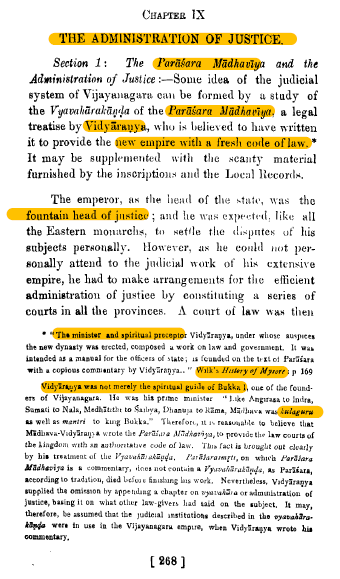
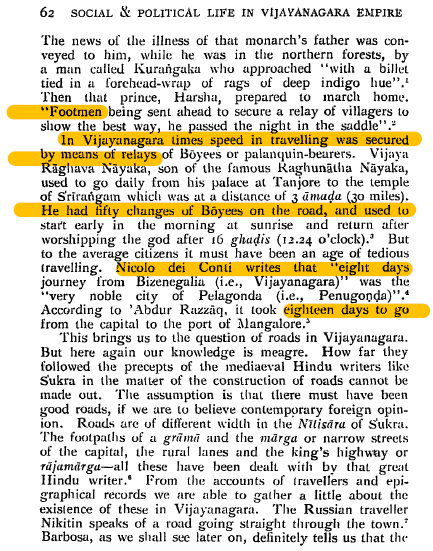
All of this was knitted together by logistics and communications. The City of Victory stood out curiously in its use of relay runners (rather than the more common cavalry) to transport communications overland. Whether this was merely used for general communications or even for administrative purposes is certainly a question worth asking. Such literal snail-mail might explain the periodic intelligence failure that medieval and modern India…are famous for (in contrast to ancient Persia which stationed horse-borne mail carriers every hundred miles). No doubt the Royal household would have had household cavalry to send sensitive despatches. But such missives and their rapidity remain a mystery in more modern times.
Conclusion
Understanding the economic system is fundamental to understanding any society. It helps us separate the signal from the noise in all the din of propaganda over who is spiritualist, when following the finances will show us who is actually materialist.
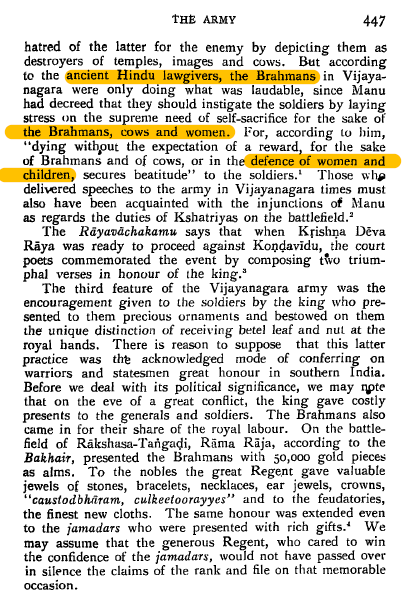
Vijayanagara’s wealth was not merely from international trade, inland commerce, or town manufactury, but also from the considerable rents (khandaaya) and produce tax that comes from agricultural lands. Traditional devadeyas (temple lands), brahmadeyas (agraharas), and sarvamanyas (new or tribal lands) were exempt from taxes. However, temples could be required to donate to defensive wars or in times of disaster to the King (i.e. the famous Thurushka-dhanda) and brahmins who took to secular trade and non-varnashrama vocations were taxed meticulously.
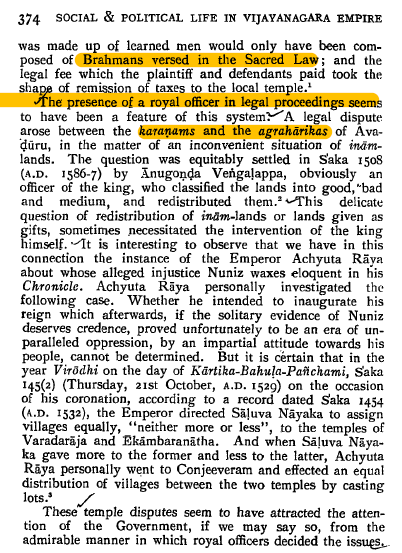
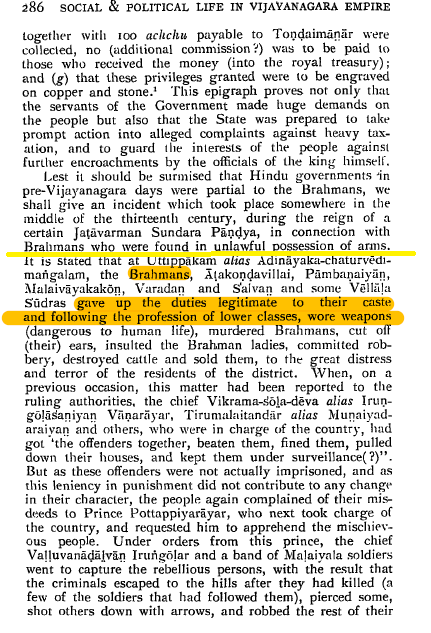
Indeed, there remain questions to this day about how well varnashrama dharma was in fact implemented by those who were its greatest advocates. The sacred law is after all, sacred. The matter of the decline and fall of Vijayanagara can perhaps be traced to that hypocrisy…from all sections, rather than just 1.
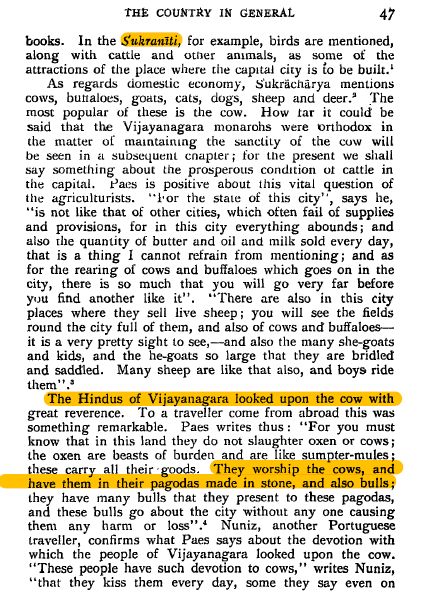
There appear to be many such today. However, the most important of laws, was the sanctity of the cow and bull, both of which ensure agricultural prosperity. Perhaps nothing sums up the Economic History of Vijayanagara and India than that.
References:
- Rao, Venkata Gutty (Prof.). “Vijayanagara Empire”. CH.16 of Vol. 5 of ‘ A Comprehensive History of India’. New Delhi: People’s Publ. House. 1970
- Sharma, R.S. History of the Vijayanagara Empire.
- Sewell, Robert. A Forgotten Empire. 1st Edition.
- Heras, Rev. Henry. The Aravidu Dynasty of Vijayanagara. B.G.Paul & Co: Madras. 1927
- Sastri, Ed. K.A.Nilakantha & N.Venkata Ramanayya. Studies in the History of the Third Dynasty of Vijayanagara. U of Madras.1935
- Sastri, Ed. K.A.Nilakantha & T.V.Mahalingam. Administration and Social Life Under Vijayanagar. 1940
- Aiyyangar, S.Krishnaswami.Social and political life in the Vijayanagara Empire: U of Madras.Vol 1. 1933