After an extended break, we return to the topic of Literature. Kavya Sastra, sometimes seen as synonymous with Alankara Sastra, is at the core of communication of our culture and heritage. Indeed, one of the areas long neglected by the Aaryas of today is the topic of poetry in particular. Due to the lazy ways of too-clever-by-half, half wit koopasthamanduka kautilyas, they have ignored the essence of sringara and the criticality of poesy in promoting it. Having surrendered it to mlecchas of paarasika provenance, is it any wonder that urdu shayari and rekhta rule the roost even today?
This is the danger of dindutva, an ideology that makes pretence to everything but at a societal level, accomplishes nothing. Oh, politically they are certainly calling the shots, but to what benefit?—minimal. The specialty of these stupid idiots, after all, is infighting, which they pass off as “chaanakyaniti!!!”. They are in fact lulling to sleep vulnerable vaidika brahmanas in particular and vaidikaaryas in general. Due to the slow motion effort of these uthsaha and veerya bereft khaiyars, the digital onslaught that Indians in general and Hindus in particular are facing online, is only ever very slowly, very lazily, very clumsily countered. It is precisely why poets are more proficient for parlours and parlour tricks rather than politics, and courts “gUidEd bY” them. They are better suited to their favourite pass-time, itihaas-chori of more martial communities. If defeated by superior intellects, they then specialise in stealing the scholarship of their betters. Numerous poets of yore also complained of such sophists and snakeoil salesmen (literal in hindutva’s case).
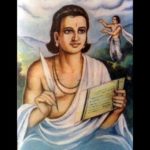
As such, one must turn to a medieval master of poesy to make sense of such stupidity masquerading as scholarship. Today’s article is on the rhetorician and poetician par excellence—another pandit out of Kashyapa-mira, the great Kuntaka.
Background
“It is unfortunate that like many of his counterparts of ancient India, Kuntaka did not take care to give much per-sonal information about him anywhere in his work. Hence his date hast to be fixed on the basis of external evidence.” [1,2]
Few know of the accomplished Kuntaka, and fewer details still are known about his life. What is known is that he lived between the 10th and 11th Centuries CE, and was very likely a Kashmiri Pandit. He was granted the title ‘Raajanaka‘, an overbold epithet nevertheless commonly bestowed by overly magnanimous Kings on the people. This era saw countless Kashmiri Pandits contributing to Sanskrit Literary Theory in tremendous ways, so much so that often even non-Kashmiri scholars have been claimed by them, such as Kalidasa, Dandin, Abhinavagupta, and Nagarjuna.
Nevertheless, this intellectually accomplished community has produced countless luminaries, making that fact alone worthy of regard. One such of course was Kuntaka (better spelled Kunthaka) who was known for introducing the concept of Vakrokrthi, meaning ‘oblique expression’, more commonly known as ‘twist’. M.Night Shyamalan fans may demur, believing their apotheosised director to have been the pioneer of the cinematic art (with…um…uneven results), but Kunthaka proves otherwise. His work Vakrokthi-jeevitha propounds vakrokthi as superior to Anandhavardhana‘s dhvani (resonance), and the true soul of poetry. Though this author does not agree with the assertion, and others still have asserted rasa (sentiment) at the centre (Abhinavagupta), there is some merit to his contention.
The more audacious of authors and rhetoricians have averred that Kunthaka was merely rebranding dhvani. While there might be some similarities between the two, conflation of them is clumsy. If Dhvani is the Ocean, then Vakrokthi is the Sea that flows from, to, and out of it. It is the most powerful producer of dhvani as it creates maximum resonance (naadha). This in turn creates aesthetic delight, or light (prakaasa), which is at the core of poetry. If dhvani is the soul, then vakrokthi is the spirit, and the structure of rasa is the body—with sringaara rasa naturally at its heart. There is, of course, also the school of vyanjana/anumaana, but it is more of an also-ran in the grand scheme of modern-day sanskritic literary theory. Alamkaara, after all, is less of a school and more of a division of Kaavyasaasthra. In short, as has been defined since the days of Bhamaha, poetry is aesthetic delight produced by combining sound and sense.
“Since he cites some verses from the Baalaraamayaana of Raajasekhara, the Dhvanyaloka of Aanadavardhana, and the Kaavyaalankaara of Rudrata, he must be later than the first quarter of the 10th century. Since he is quoted and criti-cized by Mahumabhatta, he cannot be later than the middle of the eleventh century.” [1,2]
Achievements
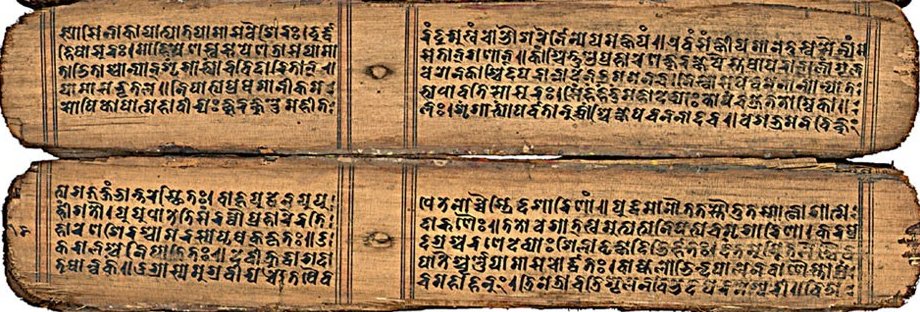
While little is known of Kunthaka, there is no doubt that he must have been very well-educated and well-trained. He was certainly well-read and well-regarded.
“We see the honorific title ‘raajaanaka’ prefixed to Kuntaka’s name as in the case of Aanandavardhana and Mahimabhatta. This shows that he was a Kashmirian, since the title, meaning ‘almost a king’ and signifying some royal position was given to people of distinction in ancient Kash-mir. Evidently, Kuntaka seems to have received some royal patronage. No other work of Kunt[a]ka has been recovered so far. Nor are we in possession of any detail about his parentage or education.” [1,3]
Indeed, textual analysis of his own composition seems to indicate his accomplished scholarship:
“Kuntaka seems to be an erudite scholar judging by the number of works with which he was acquainted. He cites several authors such as Udbhata, Dandin, Dhvanikaara, Bhattabaana, Bharata, Bhavabhoothi, Bhaamaha, Manjeera, Raajasekhara, Raamananda, Rudrata, and Saravasena. The works cited by him include Uttararaamacarita, Udaattaraagahava, Kiraataarjuneeya, Kumaarasambhava, Krtyaraavana, Chalitaraama, Taapasavatsaraaja, Naagananda, Paandavaabhyudaya, Pushpadoothika, Pratimaaniruddha, Baalaraamaayana, Mahaveeracarita, Maayaapusphaa, Maalatimaadhava, Mudraraakshasa, Meghasandesa, Raghuvamsa, Raamacarita, Raamaabhyudaya, Raamaayana, Vikramorvaseeya, Venisamhaara, Saakuntala, Sisupaalavadha, Setuprabandha, Hayagreevadha and Harshacarita.” [1, 4]
Nevertheless, it is natural that the crux of the composition be centred around his most famous contribution, the literary theory text known as Vakrokthi-jeevitha (‘life of obliqueness’).
“An interesting feature of the Vakroktijeevita is the fondness of Kuntaka in using the word spanda, which is a key term of Kashmir Saivism brought into prominence by philosophers like Vasugupta through works like the Spandakaarikaa. Utpalachaarya,, in his Spandapradeepikaa derives spanda from the root spadi kinchiccalane (slight movement, ‘pulse’) and the movement in the context of the Kashmiri Saiva philosophy stands for the tendency of the impassive supreme soul to manifest it-self everywhere.” [1,3]
The origin of the universe, according to Kaulachaara, that is the erroneously termed practice of “Tantra”, is raktha-bindhu (prakrthi) and svetha-bindhu (purusha) merging to form parama-bindhu, resulting in vibration (spandhana), which leads to naadha/dhvani (sound/resonance), which creates Brahmaanda (Galactic Egg/Universe). As a result, the inclusion of vakrokthi as essential to poesy inculcates not only spandhana at its centre, but Kashmiri Saivism itself.
“Further, like Aanandavardhana, Mammata and other fellow Kashmiri poeticians he also uses a metaphor of light to name the chapters of his work. When Aanadavardhana uses Udyota and Mammata the term Ullaasa, Kuntaka uses the term Unmesha or ‘flash’, to denote a chapter. This may be due to his affiliation to the tenets of Kashmiri Saivism which regards light (prakaasa), along with self reflectiveness (vimarsha), a feature of the Absolute.” [1, 4]
However, the most essential question that is asked focuses on teleology:
“Kuntaka starts his treatise on poetry with a discussion of the purpose of poetry suggesting that if poetics has to be meaningful, poetry itself should have some meaning. True to the tradition of the court culture of ancient Indian literary art, he assumes that poetry addresses itself to kings and princes and other members of the royalty. He avers that poetry is a means of attainment of the aims of life like virtue for them. But more than else, it is aesthetic delight which it causes in the reader which should be regarded as the chief aim of poetry.” [1, 7]
The comprehensiveness and sophistication of his theory is seen in his depth of analysis.
“Kuntaka further avers that the harmony emanating from cohesion should be present not only at the vertical level, between a word and its sense, but at the horizontal level also, between one word and another and also one concept and another. In other words, he conceives cohesion as a feature both intra segmental and inter-segmental.” [1, 10]
Vakratha (obliqueness/crookedness) should come naturally to the nakli pandit yavana vakrabuddhis masquerading as Vaidika Braahmanas. Before taking them to task, one must understand the concept of vakratha which animates vakrokthi. The rhetorician at hand defines Vakrokthi with thoroughness and suppleness: “ he divides the obliquity or figurativeness of poetry into six heads, viz., phonetic (varnavinyaasavakrataa), lexical (padapoorvaardhavakrathaa), grammatical (pratyaya vakrathaa), sentential (vaakyavakrathaa), contextual (prakaranavakrathaa) and compositional (prabandhavakrathaa). ” [1, 24]
This closely resembles Anandhavardhana’s typology for dhvani. “This has led to the allegation of Mahimabhatta that Vakrokti is noth-ing but Dhvani theory in disguise. In defense of Kuntaka, it may be pointed out that Vakrokthi is more comprehensive than just a variety of Dhvani and some varieties like prakaranavakrathaa do not have exact parallels in the Dhvani theory.” [1, 25]
This theory was not air-dropped out of nowhere. The cultivated Kunthaka navigates the ocean of literary devices (alamkaara) that had developed in the centuries before him:
“Kuntaka maintains that Alankaaras are modes (prakaara) of expression (Abhidhaa). They remain as ancillaries of poetry and provide a particular luster to poetry. In general he follows the list of Alankaaras given by Bhaamaha in his Kaavyaalankaara but revises and redefines them ‘to attain greater precision and clarity in analysis’. The figures accepted by him are twenty-one in number and include Rasavat, Deepaka, Roopaka, Aprasthuthaprasamsaa, Paryaayoktha, Vyaajasthuthi, Uthprekshaa, Athisayokthi, Upamaa, Slesha, Vyathireka, Virodha, Sahokthi, Drsthaantha, Arthaantharanyaasa, Aakshepa, Vibhaavanaa, Sansadheha, Apahnuthi, Samsrsthi, and Sankara.” [1, 40]
The calling card of Kunthaka, nevertheless, is the position that poetic sound and sense must be united in poetry characterised by the oblique or figurative function (vakrakavivyaapara) of the poet. “Here Kuntaka maintains that the word and sense assume a figurative stamp from the poet’s imagination which makes them different from ordinary language. To Kuntaka, it is this figurative mode of expression (vakratha), a unique form of linguistic expression (vicitraiva abhidhaa) which constitutes the very essence of all poetry. All figures of speech are comprised under Vaakrokthi. They are not elements added for extra beauty.” [1, 14]
What is traditionally referred to as reethi (style), Kunthaka rather inaccurately terms as maarga (poetic path). It is ironic nonetheless as masrga (spiritual) and desi (regional) are the the 2 primary types of music, and thus, only natural that the higher one be referred to as the poetic path by this poetician. “Kuntaka examines the problem of poetic style in an exhaustive manner and views critically the earlier theo-ries like that of Vaamana on the topic. According to Vaamana, who avers that poetic style (Reethi) is the soul of poetry, the style is based on the presence and absence of certain ‘quali-ties’ (gunas). Of all, Vaamana speaks of three Reethis, viz. Vaidarbhee, Gaudeeya and Paanchaalee. The Vaidarbhee style, which is given the pride of place is characterized by the presence of ten qualities, viz, slesha, prasaadha, maadhurya, sukumaarathaa, arthavyakthi, udhaarathaa, ojas, kaanthi and samaadhi and generally associated with the poetry of Kaalidhaasa. It balances opposite extremes. On the other hand, the Gaudeeyaa style, ass[]ociated with poets like Bhavabhoothi shows a preponderance of quali-ties like Ojas and Kaanthi and the Paanchaalee style shows a fond-ness for sweetness and tenderness. These styles are examples of extremes and Vaidharbhee alone tries to strike a middle course, by avoiding monotony and providing poetry with a richness of variety.” [1, 15]
In contrast, Kunthaka does away with all of this and propounds his own poetic theory:
“Kuntaka refers to three poetic styles, which he calls Sukumaara (tender), Vicitra (variegated) and Madhyama (in-termediary) which seem to be more or less new appellations to the old Vaidarbhee, Gaudeeyaa and Paanchaalee styles respe-ctively, accepted by poeticians like Vaamana. Among these, the delicate style is characterised by natural elegance which is fresh and little ornamented. ” [1, 17]
One finds here again the accusation that Kunthaka, as with dhvani and vakrokrthi, was merely rebranding region-based nomenclature (vaidarbhi, gaudiya, and paanchaali) with characterisation based ones (vichithra, madhyama, and sukumara). However, nuance is of import here. Kunthaka’s rejection of regional identities as the basis for poetic styles, a not wholly accurate one given the reputation of gauda’s bhadralok…, stands distinct. Furthermore, the notion that style itself ought to be at the heart of poetry is a notion which both Kunthaka and present author reject as well. Therefore, the uniqueness of the theoretician and his theories is clear—albeit primarily a slight variation. [1, 17]
Legacy
“The predicament of Kuntaka, one of the most gifted aestheticians of Sanskrit was no different. Kuntaka comes to the scene of Sanskrit literary theory after Aanandavardhana, evidently the greatest poetician of Sanskrit who literally revolutionized poetics by turning it from an arid manual of rhetorics to a profound philosophical doctrine. Aanadavardhana, through his Dhvanyaloka gave shape to a stimulating doctrine of literary theory and thus won the well-deserved title as the trend-setter in Indian poetics. Many poeticians in Sanskrit believed that since he had found the ‘soul’ of literature, there was not much left in literary to investigate.” [1,1-2]
What is perhaps most interesting about Kuntaka, unlike like the modern pedantic poseurs of today, is that he acknowledge the greatness of Anandavardhana, while remaining true to himself and his own original thinking. He credits his predecessor whenever necessary, but sets upon creating for himself. His most outstanding creation was of course the theory of Vakrokthi, found in his composition Vakrokthi-jeevitha.
Writing because you have something original to say, rather than merely seeking to aggrandise yourself and join an already crowded cacophony is a lesson for the budding, buddying, and bastardising digital rags passing themselves off as “path-breaking” today. Inaptly wielding concepts beyond their comprehension, these non-aapthas specialise in the very same left-hand tantra techniques that tragically consumed Kashmir and its Kashmiri Pandits at the onset of the Turkic invasions. Indeed, rather than the Kashmiri kings being defeated (having successfully opposed the invaders), it was the unqualified ministers (ineligible per dharma) who did it in and handed the kingdom over to Shah Mir, setting off the first of the “thurushka” dynasties (though the former was in fact a Punjabi convert).
The lesson therein is that the legacy of a people and a self-anointed “intelligentsia” lies in actual intelligence (rather than rote-recitation) and integrity. In acknowledging his predecessors and their achievements, despite disagreeing with them, Kunthaka’s own place in literary history was assured.
“Kuntaka also exhorts connoisseurs ‘to taste the honey in the flower of the sentence after contemplating the beauty existing in the foliage of words.'”[1, 39]
Selections

Rather than rote-recite Kunthaka’s Vakrokthi-jeevitha, we proffer selections in reference to or associated with his theory, starting with the first:
“Vakraanuraanjinimukthim chanchoomiva mukhe vahan |
Kuntakah kreedathi sukham keerthisphatikapanjare ||
Kuntaka happily plays in the glass-cage of fame holding beak-like speech which is charming and curved in nature.”
— Bhattagopaala in Saahityachoodaamani
§
“Tato’runa-parispandha-mandheekrthavapuh sasee |
Dhadhre kaama-parishaama-kaamineeganda-paanduthaam ||
‘Thereupon, the Moon, whose body became weary at the time of the rise of the sun, bore the paleness of the cheeks of a damsel pallid due to love-sickness.” [1, 10]
— Kuntaka in Vakrokthijeevitha
§
Kuntaka repeatedly quotes Kalidasa, the master of upama, this time via Meghadhootha. “According to Kuntaka, the self-description of the cloud addressed to the wife of the Yaksha in the following verse is particularly significant:
O unwidowed lady, know me as the Cloud, the carrier of water, a dear friend of your husband who has come to you with his message stored in my heart, as the per-son spurring the host of weary travelers to rush back to their homes to unlock the unkempt hair of their beloved ones.” [1, 67]
§
He cites the Raghuvamsa as follows:
“Pravrddha-thaapo dhivaso thimaathramathyarthameva kshanadhaa thriyaamaa |
ubhau virodhikriyayaa vibhinnau jaayaapathee saanusayaavivaasthaam ||
In this beautiful verse, Kaaliadhaasa likens the hot summer day to a man and the slender night to his wife, who, being separated from each other in quarrel, are deeply repentant out of mutual regard.” [1, 65]
§
In a riposte to the detestable digital rags and their rogis and anuraagis passionately composing a “defence of aghora“, Kashmirian Kunthaka makes reference to the hero Maadhava, who condemns the Aghoraghanta “headhunter” attempting to kill his beloved Maalathi.
“How do you dare to make the universe devoid of its essence, three worlds
Stolen of their gem, people devoid of sight, kinsfolk taking recourse to death,
The love god humbled, the eyes of people vain, and the earth a decayed forest!”
Wise words to fisk the foolish and disgusting practicioners of secret Narabali. They too will face their fate in due time like the Aghoraghanta, in Maalathi-Maadhava. [1, 11] Fittingly, this is offered as an example of vakrokthi as the forest is seen an oblique and unfitting expression counter to the beauty of the heroine.
§
For the Ravan-bhakts, there is even more chiding. To illustrate this, he quotes the following verse from Kaalidaasa‘s Raghuvamsa describing the exploits of Kaarthaveeryaarjuna:
“Even Raavana who could defeat Indra had to spend his life in the prison of Kaarthaveerya, with his hands rendered motionless due to being bound by the bow string, and and faces giving out sighs, until he was granted pardon.” [1, 66]
§
Lastly, Kuntaka proffers this as an example of kaaraka-vakrathaa, which explicates the transfer of the instrumentality of action from the person to the instrument.
″No, the Ikshvaakus have not learned begging, which de-lights in self-humiliation.
When has there been a servile folded hand fixed in the crest of the Raghus?
But all this has been done; still the ocean has not re-lented
Hence, what else? My hand rushes to touch the bow.” [1, 37]
§
References:
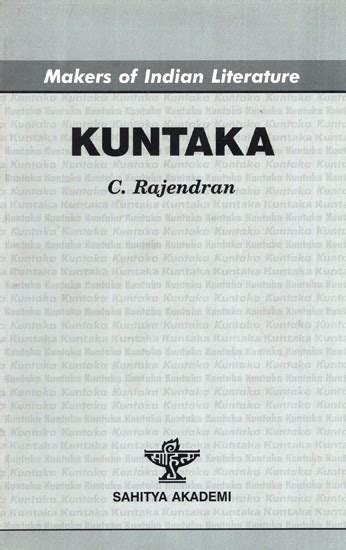
1. Rajendran, C. Makers of Indian Literature: Kuntaka. Sahitya Akademi: New Delhi. 2011