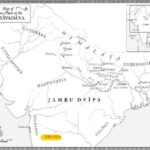
In the present time, much has been made about sub-nationalism and regional identity. Improper understanding of ancient history has led to the grafting and proliferation of westphalian notions onto Indian regional differences. But not every cultural region need automatically be assigned a “nation-state”.
Introduction
As stated profusely, Ancient India did start off as one ethnos/nation, but then had multiple offshoots. What started off as the Ancient Vedic Mega-ethnos (AVM) split off into Arya and Yavana. However, rather than importing westphalian identities, we should recognise that all individual states in the Republic of India were not automatically separate nations. Ours was IVE, the Vaidhikaarya ethnicity (people of the 4 varnas), next were the Yavanas (IYE) across the Indus, then the Kiraathas of Nepal, the Sinhalas of Sri Lanka, and the Naagas of the Northeast (one can also add the Saakas of Scythia to the mix).
Internally, the Indo-Vedic Ethnicity (IVE or Vedic Indian Nation (VIN)) produced peripheral tribes who were not external to us, but liminal to us and not seen as orthodox (i.e. Nishaadha, Bheel, etc). True, we also had desas (countries), i.e. Aandhra desa, Anga desa, Vanga desa, and today’s Karu desa, but just as the ancient Greek nation was spread over multiple city states (or modern Greeks over several countries like Cyprus etc), so too was the Vaidhikaarya nation spread over multiple desas. By some counts, this was as many as 56 desas. By our count, although historically in flux (like the later Gurjara desa namesake of modern Gujarat), it was probably closer to ~38 desas. So modern Bhaaratha raashtra has about 30 (pra)desas or upa-raashtras (constituent states of the Federal State of India).
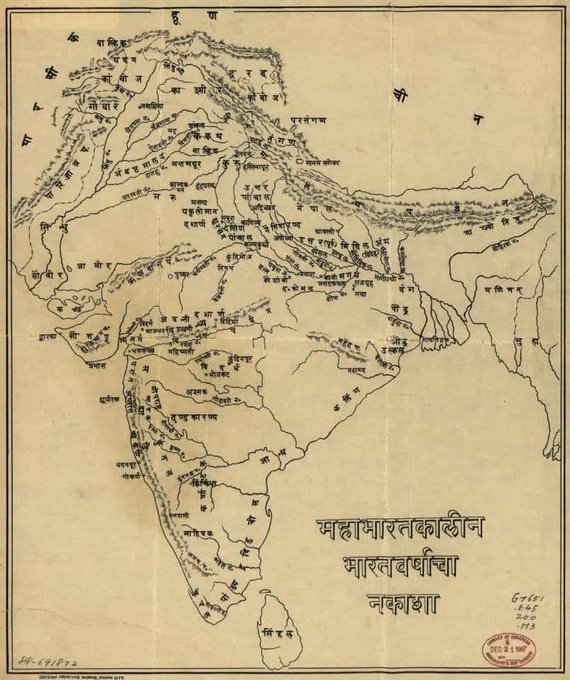
These desas today have been correctly agglomerated as linguistic states to preserve linguistic identity. Gujarat is an agglomeration of Laata (Saurashtra), Aanartha (Kathiawar), and Kacchi-speaking Kutch, while Maharashtra is of Asmaka & Vidarbha, and Tamil Nadu of Chola, Chera, and Paandya desas. Part of the reason for old Andhra Pradesh’s bifurcation was that it grew into overly large portions taking from surrounding desas. Rather than being bifurcated, had portions been sliced off into Kalinga or added to Vidarbha, then the ahistorical concept of “Telangana” need not have been imposed on the united Andhra (which is Sanskrit for Telugu) desa. Similarly, modern Karnataka is actually a combination of northern Kunthala desa and southern Karu desa. But make no mistake, this is not an argument for North Karnataka, but rather just the opposite.
Karnataka should remain a united state to preserve the Kannada language. Dravidianism is the outlier that proves the rule. Lack of respect for linguistic identities actually leads to separatism. The issue is that Dravidianism suffers from Caldwell just as Punjab suffers from Macauliffe. Otherwise, Tamil and Punjabi languages should in fact be the administrative languages of those states—with Hindi as mere Central Administrative Language. Without foreign interference, both should be prosperous and well-integrated.
Karnataka has historically been both. The current flux there is again due to foreign agendas but also due to internal migrant disrespect for the local language and crude commentary on India’s social media. This Telugu-speaker is a language snob, but even I have no problem saying “Hengidiri…Chennagadinipa”, when in Karnataka. If one is a long-term resident of state, one should learn the local language, whether it is Gujarati, Punjabi, Tamil, Telugu, Bhojpuri, or yes…Kannada.
The same nation can have different provinces (pradesas), which have sub-nationalities or “provincialities”. Such difference are there even in the nation of Italy, which has Napoli, Sicily, and Piemonte, which speak almost different languages. A better comparison would be the of the Teutonic/Germanic ethnos, which speaks not only German and Dutch, but also English (and some might argue French and Spanish). So an ethno-nation can be spread out over several countries, which behave as provinces under a common government. That is why Ancient Andhra desa is correctly dubbed as Andhra Pradesh today—Aandhra is the provinciality within the modern Indian nation as well as the ancient Vedic Indian Nation.
Similarly, Kannadigas, who have lately been flirting with secessionism, should also understand the fissiparous forces that seek to brand them as “separatist”. By all means, assert your linguistic rights and keep Karnataka united, but do so within the Indian Federation. Separatism itself will lead to others pointing out that modern Karnataka is today a combination of Tulu Nadu, Kuntala desa, and yes, Karu desa. Preserve Kasturi Kannada through proportional and reasonable protest and education—not through rowdyism and short-sighted separatist rhetoric.
As for those insulting the Kannada language, you should know that people who speak a persianised-pidgin as their provincial patois, should not be putting down others given your own guttural provenance (even with the allegedly “shuddh” register of the language). Hindustani is the actual original language (descending from khadi boli & persianised Turkic) as anyone acquainted with basic philology knows—Hindi and Urdu are mere registers of said language (hence the mutual intelligibility). In contrast, Kannada has an ancient heritage that its speakers rightly have esteem in. Pride is wrong for anyone, but esteem and self-respect is well and good.
Hindustani in the Shuddh Hindi register is merely the First Official Language per the Constitution and Central Administrative Bhaasha (a CAB), to get from place to place. While it is important for Indians to have a common language other than the International English, for national integration purposes, this does not give carte blanche to “native” Hindi speakers to throw their weight around in Bangalore, as they would be better off preserving their own real languages of Avadhi, Bhojpuri, Pahadi, Rajasthani, etc presently degraded as “dialects”. Tamils, Punjabis, and Kannadigas might currently be going overboard with the protests, but they do have a point—we each have our own provincial identities (respect them or buzz off).
This then leads to the next question, what is the identity of Karnataka?
Terminology
- Hampi—Hosapatnam (Hasthinavathi)
- Bhatkal—Battakala
- Bidar—Badhari/Bedhada
- Bijapur—Vijayapuri
- Kulbarga—Kaalaburagi
- Adoni—Aadavaani
- Aanegondi—Kunjarakonapuri
- Karnool—Kandhanavolu
- Coromandel—Cholamandalam
- Jinji—Chengiri
- Honavar—Honnavooru (Hanuvara)
- Malkhed—Manyakheta
Legendarium
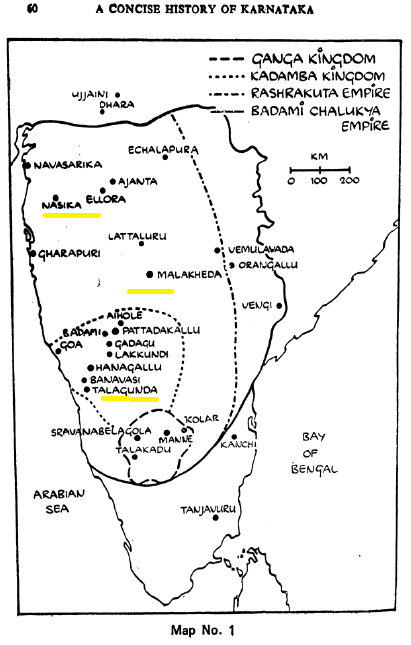
The etymology of Karnataka is typically traced to Karu desa and the Kannada language. The first archeologically dubbed historical dynasty, however, is the Kadamba vamsa.
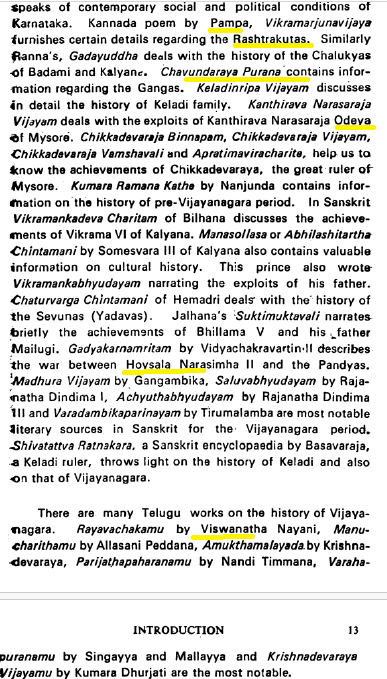
Kavirajamarga is considered the first Kannada work. However, there have been a litany of others that have followed.
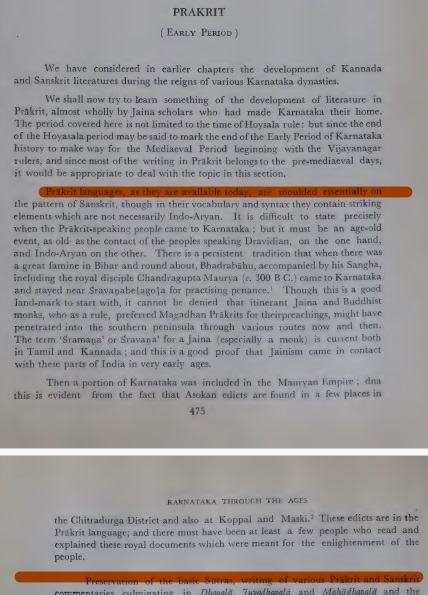
However, no mention of the Kannada language is complete without tracing the influence of Sanskrit and Prakrit.
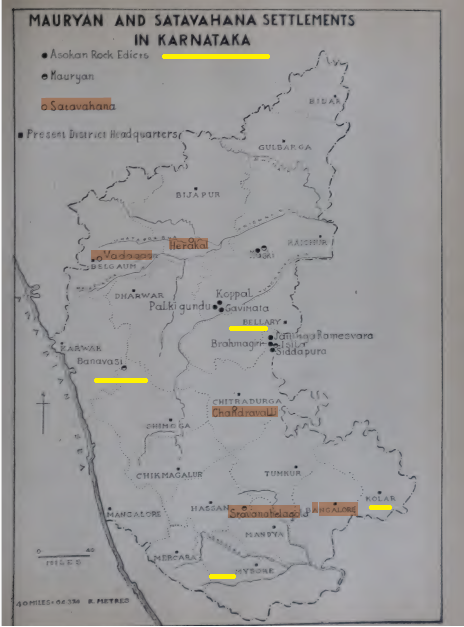
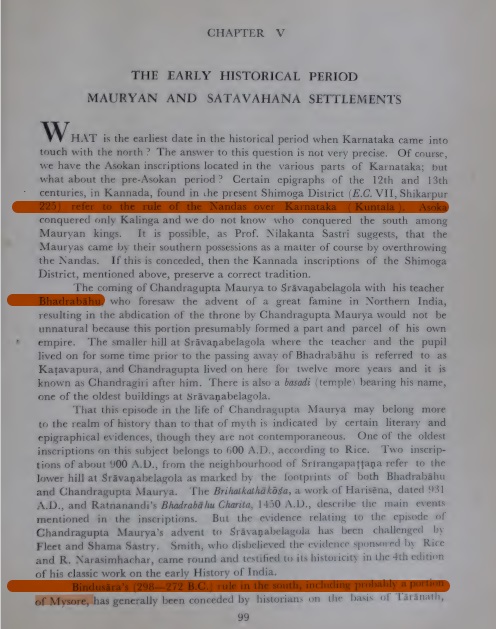
This necessitates tracing the archaeological record back to the Mauryas.
The geography of Kuntala desa and Karu desa united to form modern Karnataka. However, rather than being seen as a separate nation, it should be viewed as an ancient tribe and provinciality that can be traced back to the Vedic and Pauranic records.
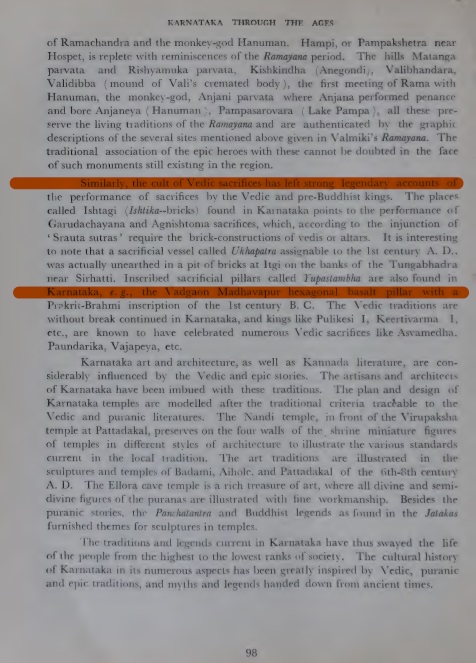
To bring things back full circle: if the first native “historical” dynasty of Karnataka was the Kadambas, then they in turn trace their descent to the Vedic Manavyas.
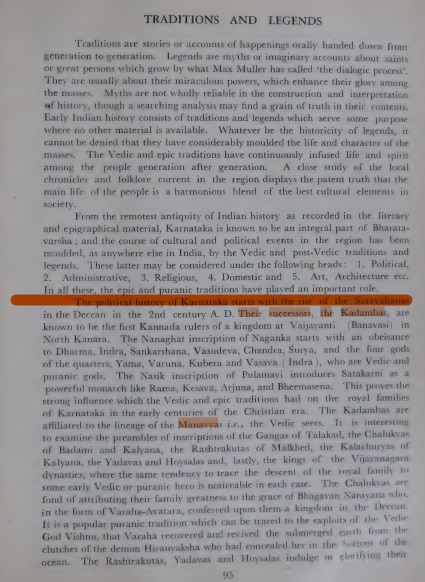
Chronology
- Kadamba
- Vakataka
- Imperial Chalukya
- Imperial Rashtrakuta
- Western Chalukya
- Hoysala
- Karnataka Saamraajya (Vijayanagara)
- Nayaks of Ikkeri
- Nayaks of Keladi
- Kempegowda of Bengaluru
- Wodeyars of Mysuru
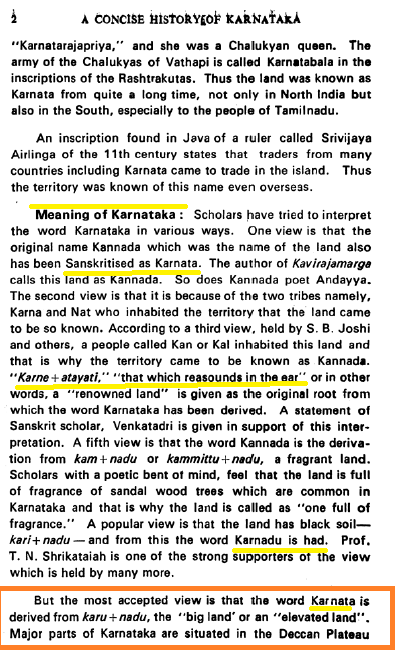
Karnataka comes from the word Karnaata, which originates from the term Karu Naadu, meaning “Elevated” or “Renowned Land”. As such the elevated land of the volcanic deccan traps of the Dakshinapatha became the renowned land of Karnataka. It was home of numerous empires from the Imperial Chalukyas to the Rashtrakutas to the eponymous Karnataka Saamraajya of Vijayangara itself.
Kadamba Dynasty
The antiquity of Karu Desa is traced back to the Kadamba Dynasty. It is said to have ensconced itself in North Kanara and ruled as far south as Kerala.
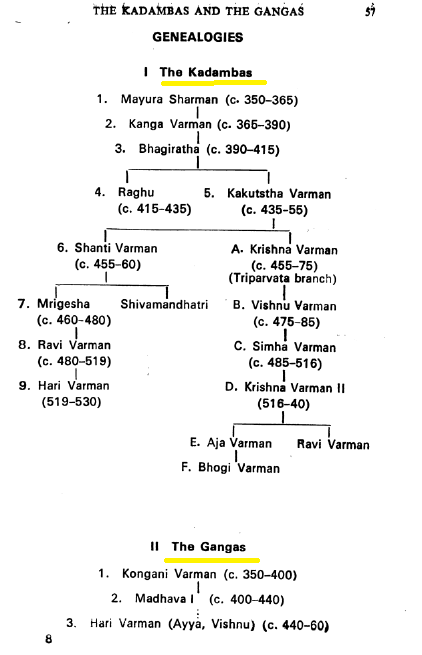
However, the origins are traced back to a different direction and dynasty.
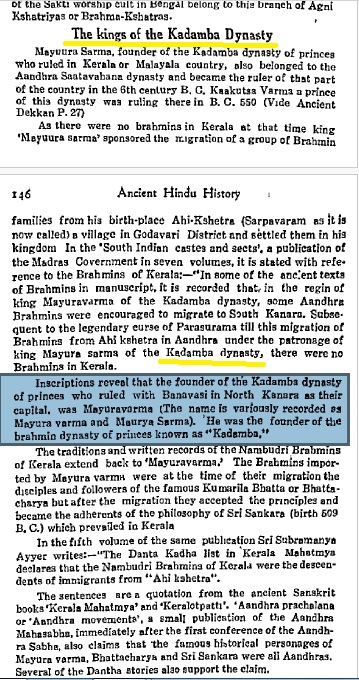
Andhra Satavahana dynasty split up into 12 divisions after being overthrown by Guptas:
“Pallava Cheta Sena Kadamba Rashtrakuta Vishnukundina Brihatpalayana Baana Ganga Hosala[Hoysala?] Rajaputra Salankayana Vakataka Vallabhi [Maitraka?] Vardamba Nolamba” [AHHi. 144]
“Agnivamsa Brahma-Kshatras: Bhavisya Purana Pratisarga parva declares Paramaras were from Saama Veda, Chalukya from shukla Yajur, Chahamana were Trivedis, Pratihara attached to the Atharvana. In 392 BCE, these sages performed Yajna on Mt. Arbuda to be imbued with Kshatriya tejas.” [AHHi. p. 139]
Prince Aandhra dates back to the Ramayana. This is because Romapada was a Kshathriya of the Lunar dynasty. He adopted the daughter of Dasaratha—her name was Saantha (married Rishi Rishyasringa). Romapada was a descendant of Usinara (7 generations removed). Usinara’s brother was Titiksu. 6 generations after Titiksu was prince Aandhra. Pandit Chelam asserts Aandhra and Dasaratha were contemporaries. Ramayana refers to Aryan Andhras as well. [AHHi, p. 139′
This Ancient Puraanic Connection is what facilitates the historicising of Karnaata Country. It demonstrates not only dynastic origins but also why it is a futile effort to perennially squabble over which dynasty originated where. It is ultimately all the same nation of Vedic Indians (i.e. Vaidikaaryas), just different countries/provinces, which in this case is Karu Nadu or Kaaru Desa.
The Kadambas would play a pivotal role in the punditry of Malayali Country.
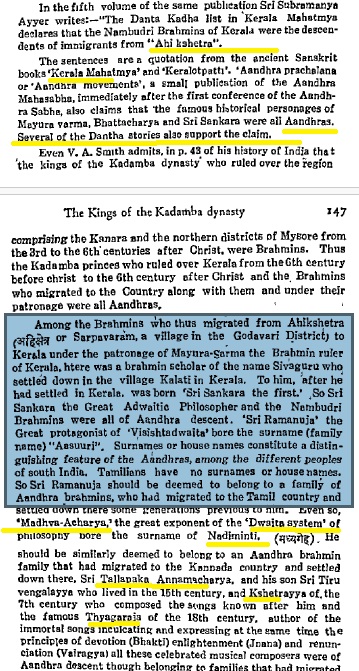
One dynasty impacts another. One preceptor hailing from one region spiritually counsels a King in another region. While language and regional culture are both important, whether Aandhra or Karnaata or Maraattha or Dravida all trace our origins back to Brahmavarta on the Sindhu-Sarasvathi River, as per the Rig Veda and Maanava Dharma Saastra.
Beef-in-Vedas “brahmins” working for Western Indology have no authority and indeed deserve to be bahishkar’d for all the lies and miseducation they have facilitated. But that is another issue for another time and something for Spiritual Authority to decide.
Speaking of Spiritual Authority, the famed Spiritualist of Vijayanagara, Vidyaranya also hailed from another region. Nevertheless, he would play a pivotal role in the fates of the Karnataka Saamraajya. 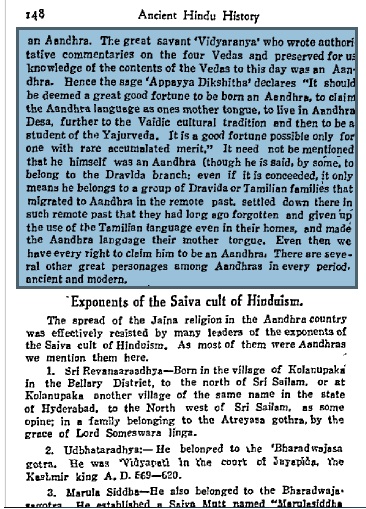
Western Ganga Dynasty
The Next Dynasty of note is that of the Western Gangas. It is interesting that Pandit Chelam traces the origins to the Satavahanas. Elsewhere both the Western Gangas of Karnataka and the Eastern Gangas of Odisha are traced to Kshathriya origins from the North instead.
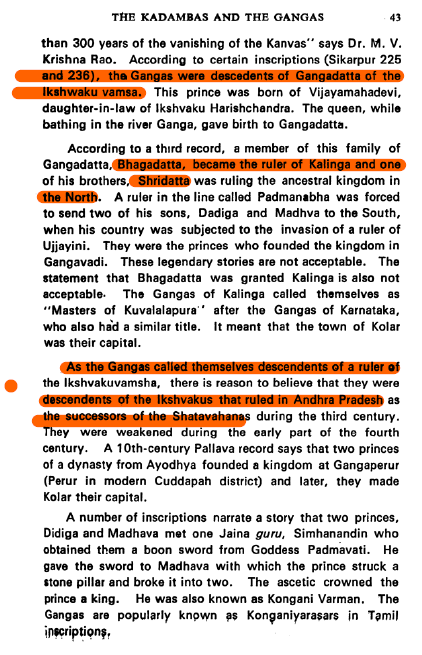
Following them come the rise of the great Agnivamsa dynasties claiming descent from the North, but achieving empire status in the South. As such, there is no doubt that the Imperial Chalukya (Chaalukya) clan was Kannada, and spread to the rest of the Dakshinapatha including Aandhra (via their Eastern branch) from there.
Imperial Chalukyas
Famed for such luminaries as Pulakeshi II who defeated Harshavardhana Siladitya on the banks of the Narmada, the Imperial Chalukyas would have a tremendous impact both in the South and in neighbouring Gujarat. A feudatory branch would later rule under Avanijanasraya Pulakeshi and defeat an Arab army at Navsari (the other was done in by the Prathihaaras).
Kubja Vishnuvardhana was the younger brother of Pulakeshin and would be installed as ruler of Aandhra following the Chalukya uprooting of the Vishnukundins. The Eastern Chalukyas were first Viceroys, then feudatories, then independent rulers of the Telugu country, and would give it tremendous patronage and development.
Nevertheless, no clan would strike such fear or cast such All-India shadows more than the Paramount Rashtrakutas of Manyakheta.
Imperial Rashtrakuta Dynasty

Claimed by many communities, but deserved by one or none, the Paramount Rashtrakutas were theorised to be an earlier branch of the Chalukyas themselves. Regardless, they were vassals, then feudatories who turned fierce competitors and ultimately overthrew their Chalukya overlords. “The drums of the deccan” would then beat in the North. The Imperial Rashtrakutas defeated both the Palas of Bengal and the Rajput Pratiharas of Rajasthan, reducing the once supreme Paramara dynasty to feudatory status.
Such an impact would they have that Bengal (Sena Dynasty) and Nepal would both feature branches hailing from the Rashtrakuta (Raashtrakoota) neck of the woods.
Karnataka dynasty (reason for Pasupatinath Temple Priesthood).
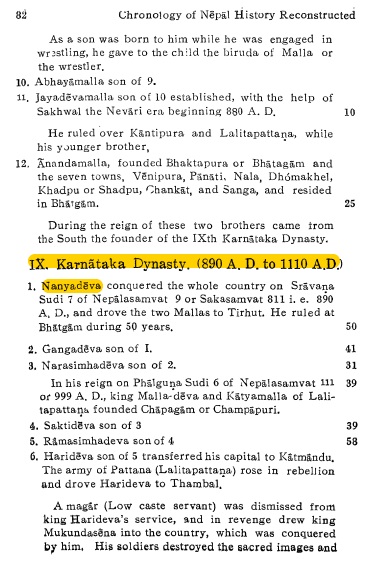
How did Karnatas get there?—Raashtrakootas defeated Prathihaara Vathsaraaja.
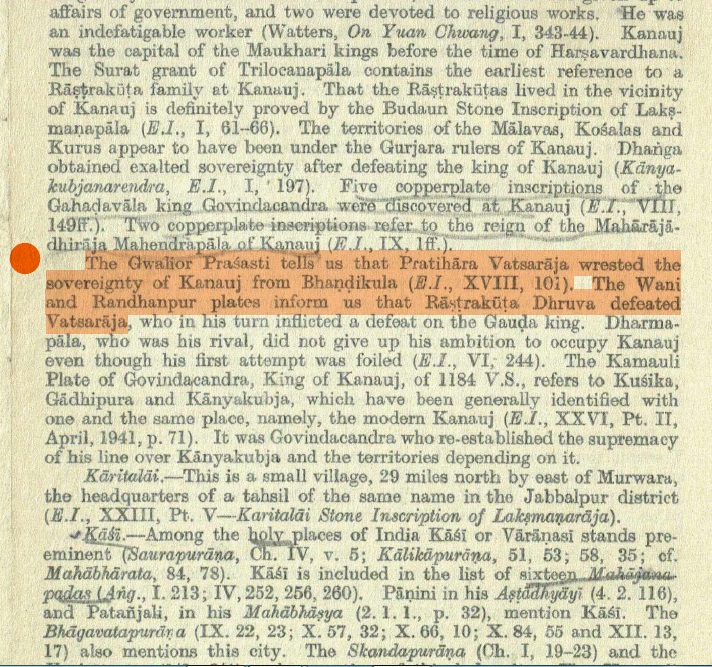
In fact, the Rashtrakutas would have many victories over the Pratiharas. While the Rashtrakutas would later teeter and find themselves challenged by the Western Chalukyas and then finally sacked by their rebellious vassal Paramara Siyaka, they would be known for their All-India Ascendancy.
Western Chalukyas of Kalyani
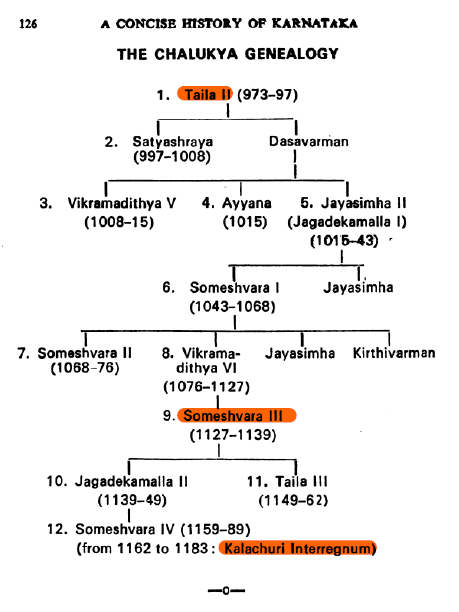
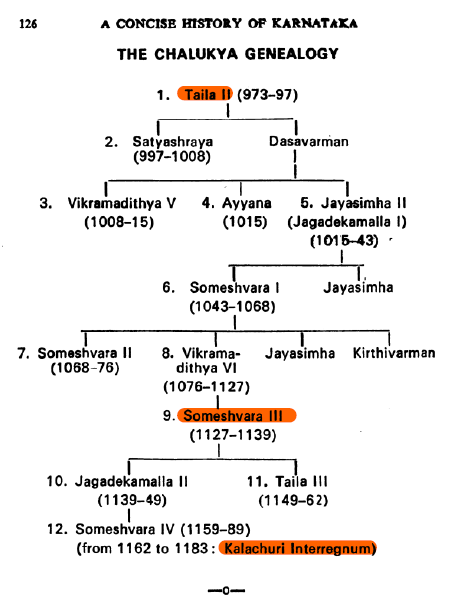
The Later Chalukya restoration would herald punitive campaigns waged on refractory rulers who escaped vassalage. Indeed, Chalukya Taila (Chaalukya Thaila) would defeat and capture Paramara Munja, and execute him some time after.
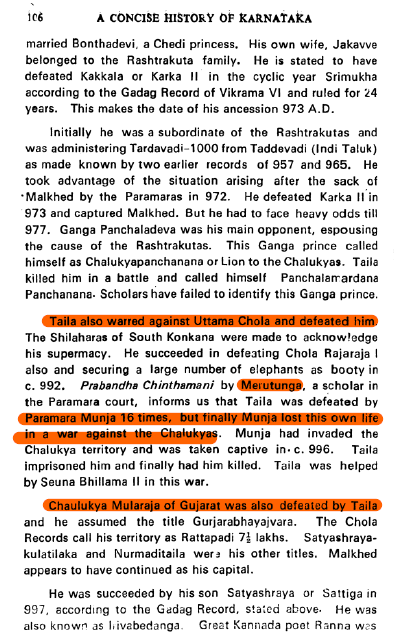
They would never rise to the Imperial heights of earlier Chalukyas of Badami (Vathaapi), but would nevertheless have a tremendous cultural impact. They are perhaps best known for the Abhilaasartha-Chinthaamani, better known as the Manasollasa of Somesvara III. Their later rulers would then be challenged by their erstwhile vassals. Western Chalukyas, temporarily displaced by Kalachuri Bijjala before being restored to the throne.
The dynasty was finally replaced by the Hoysalas of Halebidu.
Hoysala Dynasty
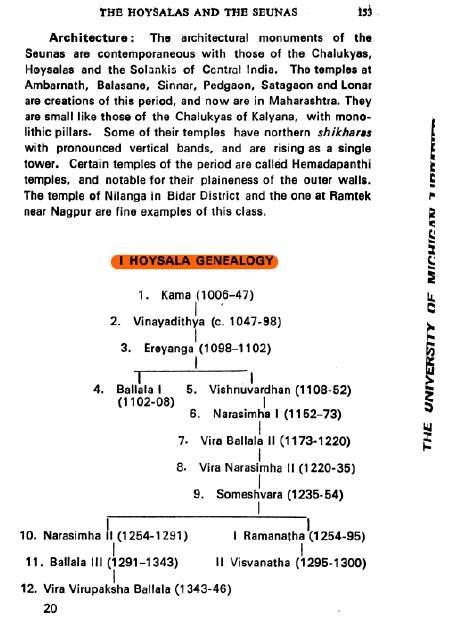
The Hoysala dynasty of Dorasamudra (Dhvaarasamudhra) would be (like their splendid statuary at Halebid) etched in stone alongside the neighbouring Kakatiyas of Warangal, the Pandyas of Madurai, and most notoriously the Seunas of Devagiri.
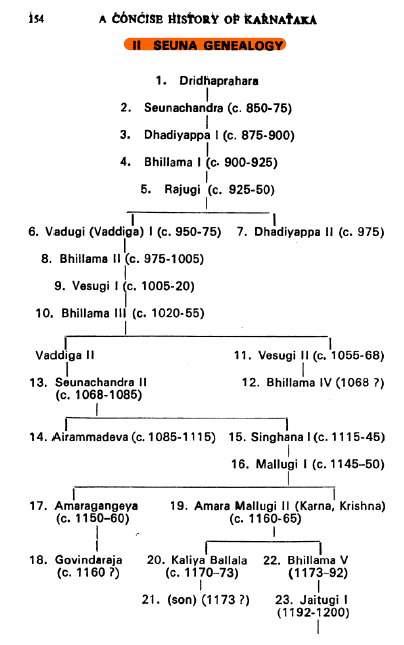
These genealogies would define the fates of the Dakshinapatha for dhasaabdhas (decades) before being uprooted by the Delhi Turkics. The pointless competition and one-upsmanship between them at a time of civilizational extinction will forever reflect poorly among the elites (both brahmin and kshathriya) of the time. They show what sanctimonious, selfish, and supercilious pride can do to a society whose pontificating elites prefer poetry (and perverting history) to uniting against a common enemy. Indeed, there should be little else to do while the Aryavarta was occupied by mleccha-vidharmis. This is what happens when there are too many chaanakyas at Chanakyapuri and not enough sensible rulers with real and practical comprehension of realpolitik.
They Hoysalas would compete with others and resist the Delhi Turkics as best they could. They would feature an heroic, if tragic, figure in Veera Ballala III, who a remained flayed alive and once-living embodiment of defeat from the jaws of victory at Madurai. Nevertheless, the fall of Dorasamudra and its beautiful artwork would herald the rise of a greater Imperium, which understood the civilizational threat it faced. Indeed, it was verily worthy of the name Vijayanagara—City of Victory—though locally known as Karnataka Saamraajya, as it was founded in Karnataka.
The history of that empire has been recounted in our article here. Instead we will make mention of the undeniably Kannada heroes it had in the Keladi and Ikkeri Nayaks, not to mention most notable of all all, Kempegowda of Bengaluru and the Wodeyars of Mysuru.
The Queens of Karnataka were no slouches either. Perhaps the most famed and favourite ones today remain Rani Abbakka of Ullal and Rani Chennamma of the state of Kittoor.
The Karnataka is also prominent for having the largest communities of Jains in the South. In fact, Chandragupta Maurya is thought to have abdicated from his throne then retired at Sravanabelagola. This site features one of the largest monolithic statues in the world in the image (Gomateshvara) of the original Bahubali.
No laggard in the cultural department, Kaaru Desa has produced many important figures. King Basavaraaja of Keladi (also in Karnataka) was another such who wrote on a wide range of topics, including food, in his Shivatattva-rathnaakara. There is also the Soopa Sastra of Mangarasa III, King of the Kannada state of Kallalli, who wrote in Old Kannada.[1,88] It appears the Kings of Karnata were exemplars at promoting the culinary arts
Of course, no mention of Kannada cultural contributions is complete without mention of Purandara Dasa. Widely considered to the Pitamaha of Karnataka Sangeeta, he is its earliest known exponent and veritable embodiment.
Conclusion
The history and culture of a country Karu Desa and Civilization Bhaarathavarsha is defined by more than just a the political history of a government (Republic of India) or the views of its erstwhile colonisers. For too long have Bhaaratheeyas in general and Kannadigas in particular celebrated those who have suppressed Kannada (tipu) and attempted to disconnect Karu desa from its true history (in Puranas, Vamsavalis, etc).
Kannadigas are wasting their time trying to battle with other Indians dreaming of a foolish sub-nationality on the obvious cusp of World War 3. This Prapancha Samgraama is no longer just a laughing matter for India’s childish commentariat that bickers and behaves like LKG students. It is a serious matter that is evolving, and attempts at secession will be treated as part of the evolving 3 front scenario (some would say 5), and crushed.
However, this does not mean Kannadigas should accept the injustice that was done to Andhra Pradesh, where specious claims of ethnic difference were created due to Nizam-razakar slavery. The RSS and INC are 2 sides of the same adharmic coin, and both teamed up to bifurcate Andhra Pradesh, assigning debts by population and revenues by geography. The same is now in store for Karnataka and even the Sangh’s home-state of Maharashtra (because the peshwai was always famous for backstabbing their own supporters to benefit the british). However, creation of North Karnataka and separate Vidarbha state will work to destroy the local languages of Kannada and Marathi to benefit the brothers-in-law of bajirao peshwa (of mastani fame): Nizam Hyderabad.
Indeed, there has already been a push to rename Telangana to Hyderabad state, after which detaching portions of Maharashtra and North Karnataka will be even easier. Such is the plan afoot.
The Sangh has long been trial-ballooning this effort as evidenced by this map. Bipolar Indiots drunk on “chaanakya niti!” need to be able to think beyond option 1 vs option 2. Between bifurcation and secession is the middle ground of federalism. There is such as thing as constructive dissent and loyal opposition. The Indian National Congress and (true to its name) the Rashtriya Swayamsewak Sangh are as self-serving as it gets. They team up to destroy regional parties, and then go at loggerheads to destroy the actual nation—the Bhaaratheeya Vaidikaarya one. They do so by dissolving regional language and culture 1 by 1. They did it first with Kashmiri, Sindhi, and Punjabi (in Pakjab), then followed with Rajasthani and Magahi and a host of other languages demoted to mere “Hindi” dialects. Kannada, Telugu, and Marathi are naturally next. Only Tamil—due to the Caldwell virus—holds Hindi at bay with extreme threats of secession.
Contrary to the Raashtriya Svayamsevak Sangha, is no such thing as “Rashtra Dharma” as it effectively translates to Statism which is essentially Stalinism. People are accustomed to hearing about Nazis and Fascism, but that is merely National Socialism (NAZI), as there is also International Socialism (Communism) which Mao and Stalin best represent with a legacy of 100 million dead. Both types of socialism must therefore be opposed. Capitalism is certainly corporate colonialism, but that is why the true definition of dharmanomics was defined long ago.
You Kannadigas, therefore, should be cautious. There is a congi/sanghi plan to unconstitutionally split your state like they did AP. They joined hands to hand telangana to razakars and doras. Massive illegal population from mideast to Hyderabad since then. This must be opposed tooth and nail rather than waste time bickering with Hindi-wallahs, Telugus, and Tamils over provincial matters when the very possibility of religious oppression returning stands obvious. What is the point of learning all your history by-heart and stubbornly making dynastic claims when you can’t even learn from history’s mistakes?
The history of Karu Desa and Kunthala desa are clear: the culture and language of an ethno-religious people are best preserved in such linguistic boundaries. Just as Vijayanagara-Hampi is clearly within historical Karnaata Desa (and rightly de-limited), so too is modern Karnataka necessary to preserve in its current boundaries to preserve the Kannada Language, culture, and people.
References:
- Kamath, Suryanath U. A Concise History of Karnataka. Bangalore University. 1973
- Divakar, R.R. (Chairman). Karnataka Through the Ages. Bangalore: Govt.of Mysore. 1968